Why I Stopped My Own Workshop Halfway Through
Sep 08, 2026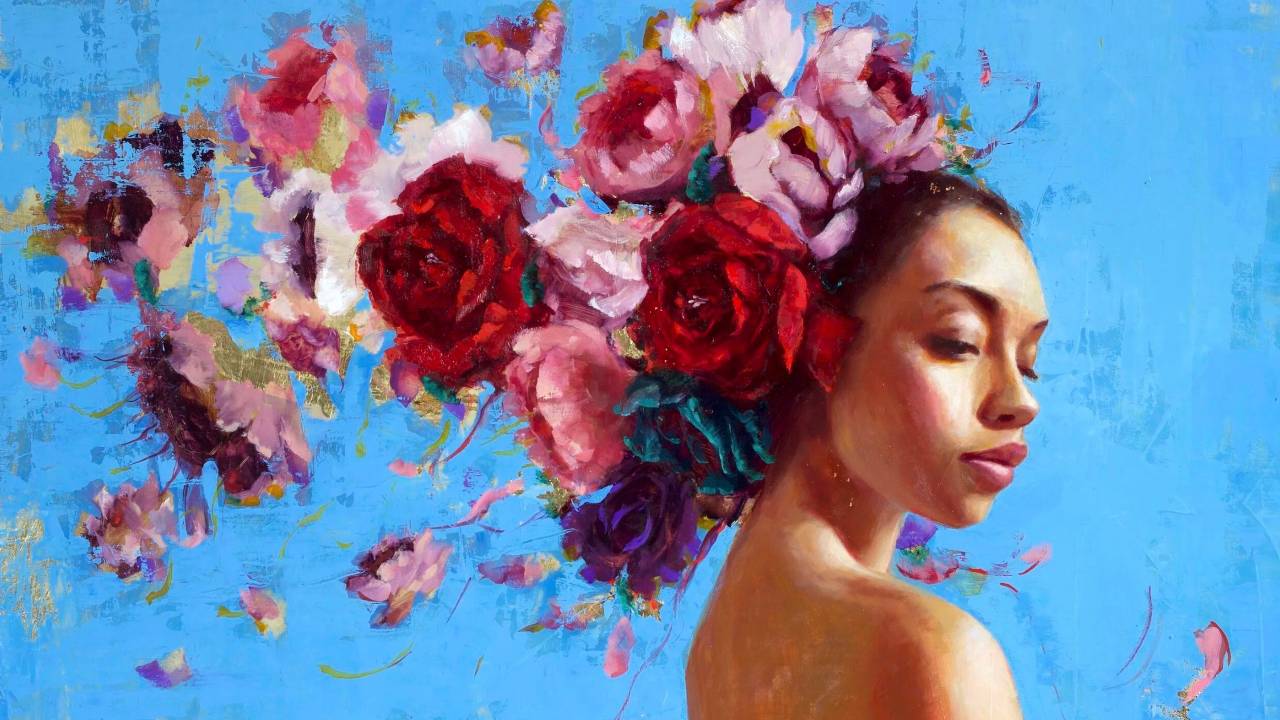
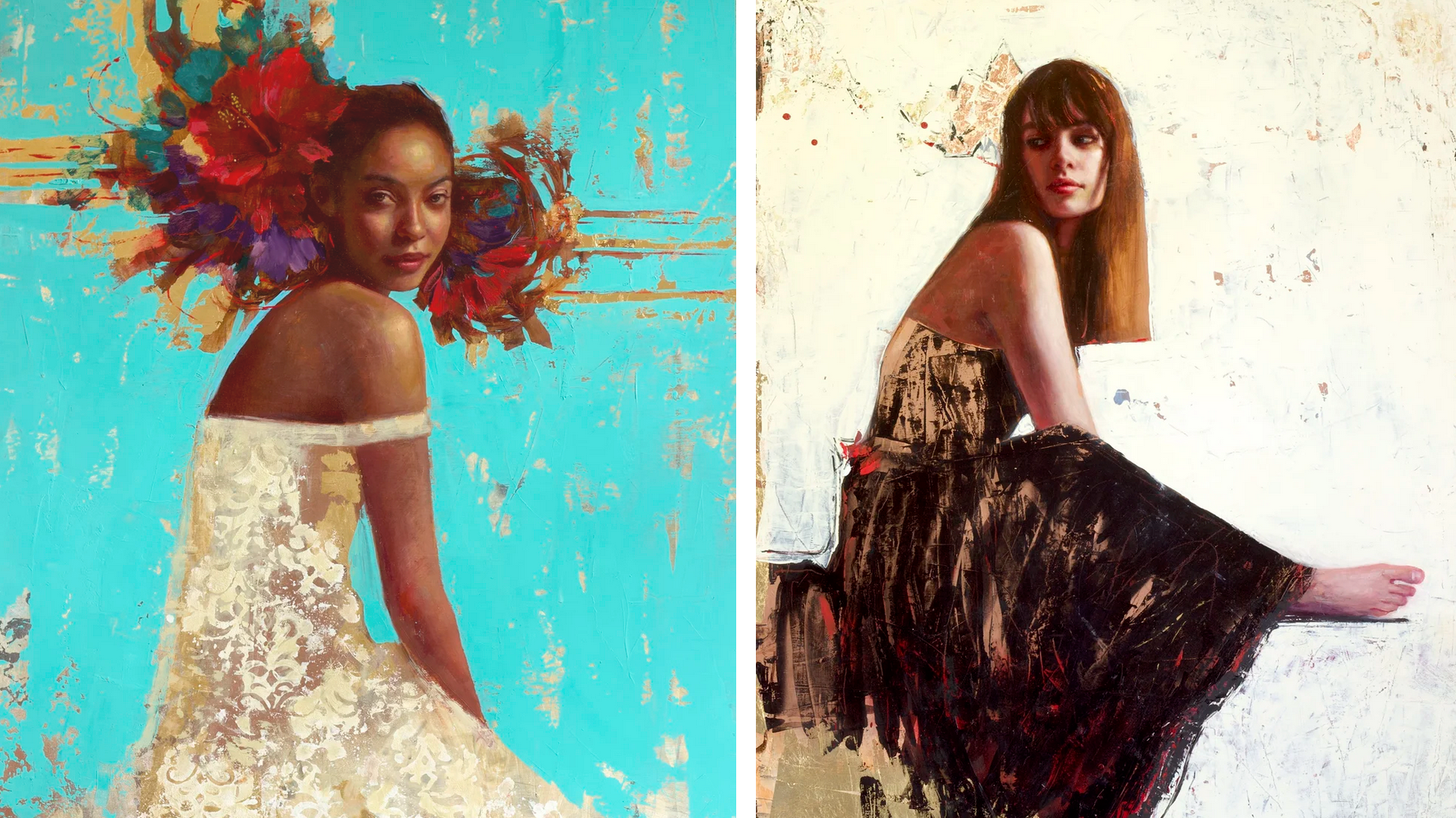
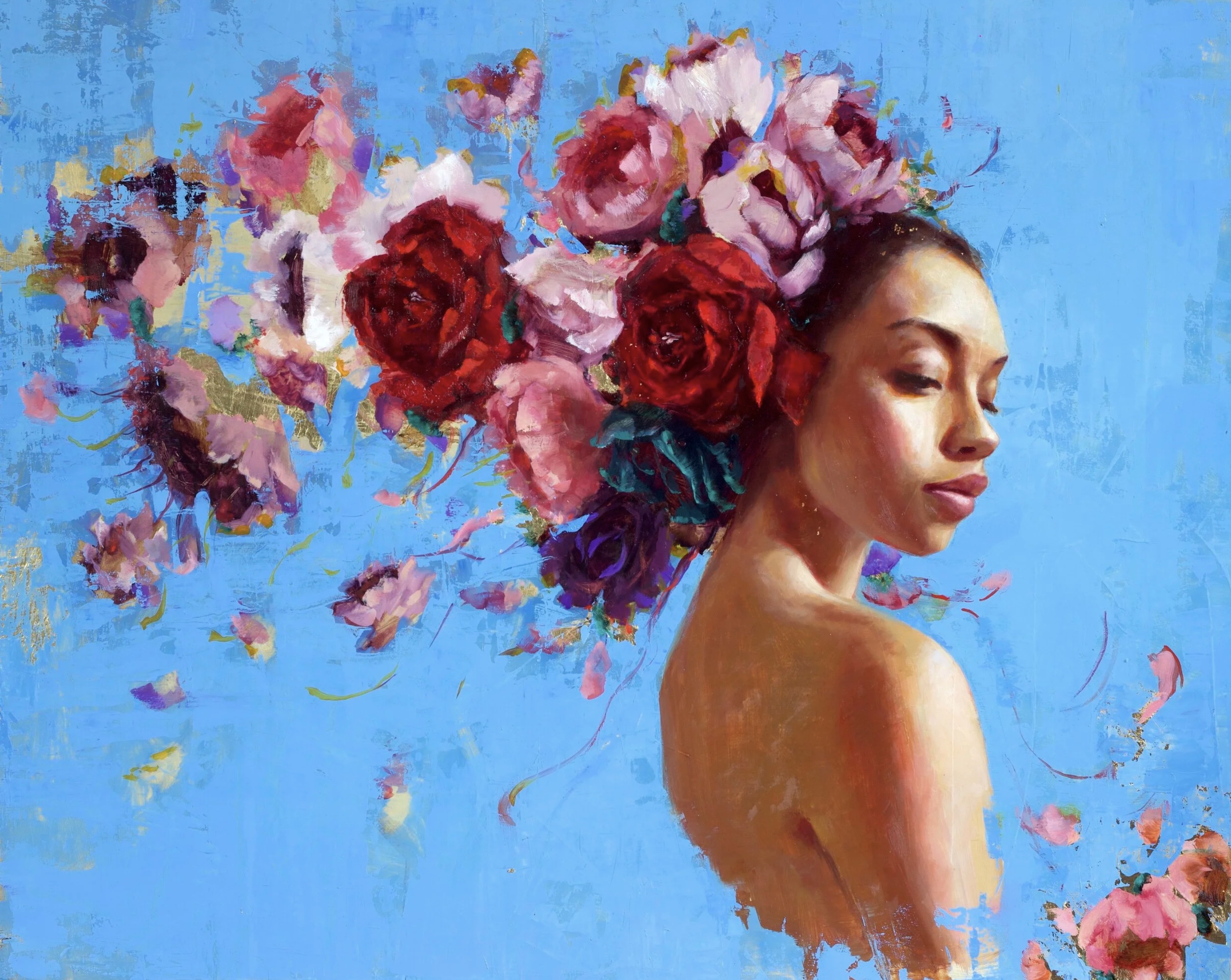
My first ever four-day in-person workshop was on painting abstract floral portraits.
Artists had seen my floral paintings online and fallen in love with the process. That is what they came for, and that is what I had planned to teach.
I started the week with skin tone mixing and portrait painting. I was explaining how planes that turn away from the light become cooler, how those facing the light are warmer, and how you use temperature to build volume.
Halfway through the demonstration I realised many of the artists were struggling to follow me.
Planes of the head? Three-dimensionality through temperature? Transitions?
The problem was not them. It was me. I had built the entire week on top of an assumption — that everyone in the room already had a foundation they had simply never been taught.
So I stopped, and started again.
Let us look at the skull. Let us see what is underneath the face, and where the eyes, nose and mouth actually sit on it. Let us turn the reference black and white and understand how light creates volume in greyscale, before we say a word about colour.
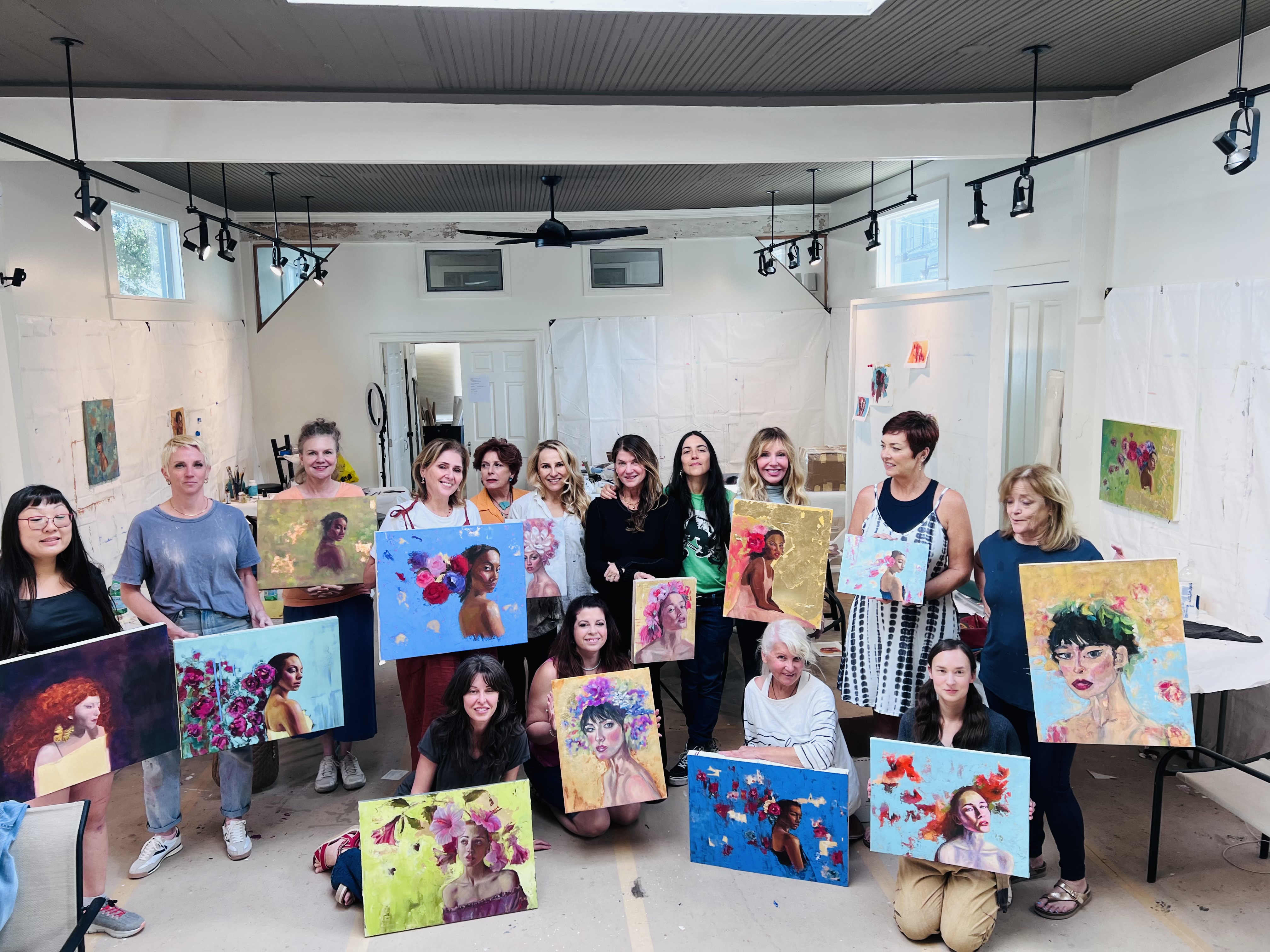
I had three hours — half a day — to save the workshop and make sure everyone left not only with a floral portrait they were proud of, but with something that had genuinely clicked.
It worked.
By day four, everyone was handling proportion, value and volume, and going wild with colourful abstract patterns at the same time.
What actually changed in those three hours
Nothing complicated. That is the part worth paying attention to.
We looked at the structure underneath. Not anatomy in a scientific sense. No Latin, no lists of muscles. Just the solid form the face sits on, and what that form does to everything laid over it.
We put the features on that structure, not on the surface. One line down the centre of the face, one across the eyes, both curving with the turn of the head. Most likeness problems are placement problems, and most placement problems disappear here.
We removed colour entirely. This is the one I would push you to try today, whatever your level. Take your reference photograph and turn it to greyscale. Then paint a small study of it in nothing but black and white.
Colour hides things. In greyscale you can see immediately whether the head has volume, or whether you have painted a flat shape with correct features on it.
Why this comes before everything else
Here is what that day taught me about my own teaching.
If artists could transform their work that quickly through one rushed, improvised lesson, what would happen if those same foundations were taught properly — clearly, concisely, and in the right order?
That is not a small question. Most people who want to paint expressive, contemporary, mixed-media work go straight for the surface, because the surface is what they fell in love with. It is what they saw online. And then they cannot work out why the painting does not hold together, and they assume the answer is more technique on top.
It is almost never more technique on top. It is the thing underneath that nobody showed them.
Understanding structure does not make your work more conservative. It does the opposite. The more I understood the principles behind realist painting, the more freedom I had to break them, and the more confident I felt developing my own way of working.
Classical tools are a trampoline, not a cage.
If you recognise yourself in this
If you have ever felt that gap — that there is something underneath your work you were never actually taught — you are in the same position as most of the room that week. Including the artists who had been painting for years.
It is a fixable gap, and it is fixable faster than you would think.
Start with the greyscale study. It costs you an afternoon, and it will tell you more about your own portraits than another month of painting them the way you already do.
This is why COMPLETE begins with a concentrated, easy-to-follow module on the structure and anatomy of the head — just the parts you need to give your portraits depth and make them look like the person in front of you. Then we move on to colour, mixed media and abstraction.
See what is inside COMPLETE
Enjoyed this article?
Subscribe here to receive practical painting advice and more arty news.
No spam. Only thoughtful, carefully written content.