How I Transfer My Drawings onto the Canvas
Oct 20, 2026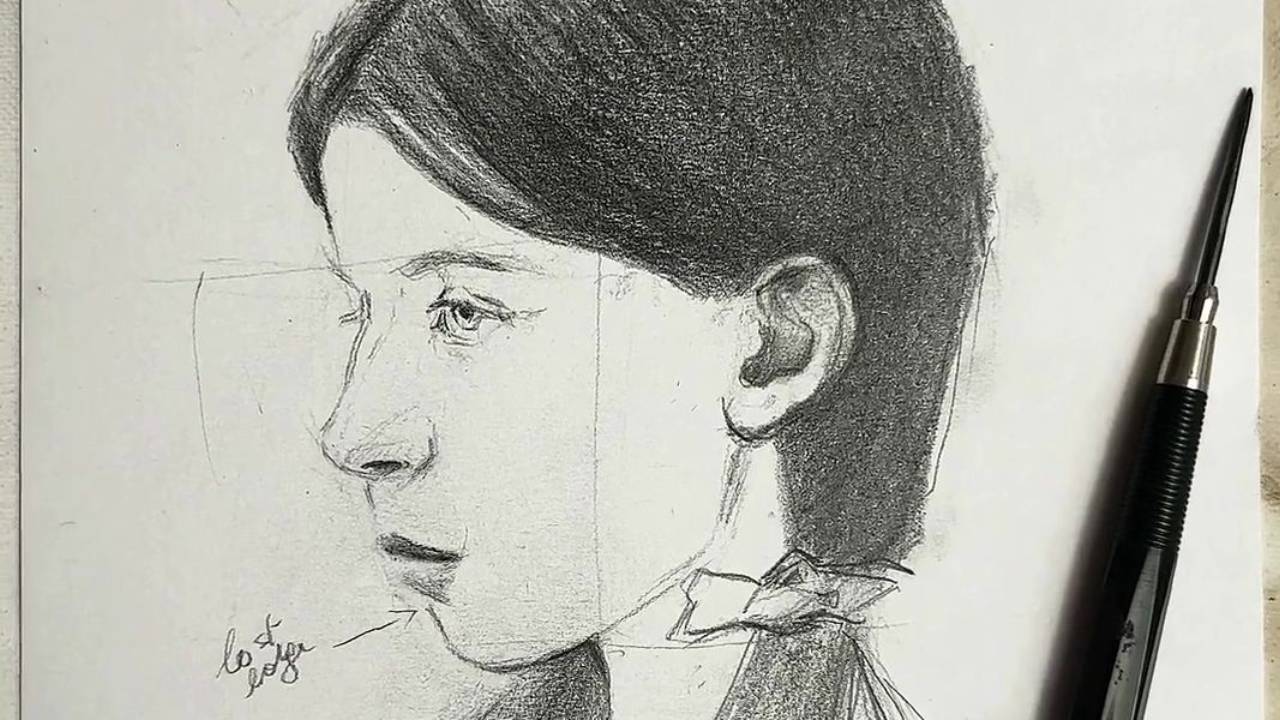
Portrait and figurative artists start their work in many different ways. Some use a grid. Some project the image. Some transfer the photograph directly. Others go fully freehand on the canvas.
Over the years I have tried all of these methods. I have transferred, projected, and drawn freehand, straight onto the canvas with paint or with charcoal.
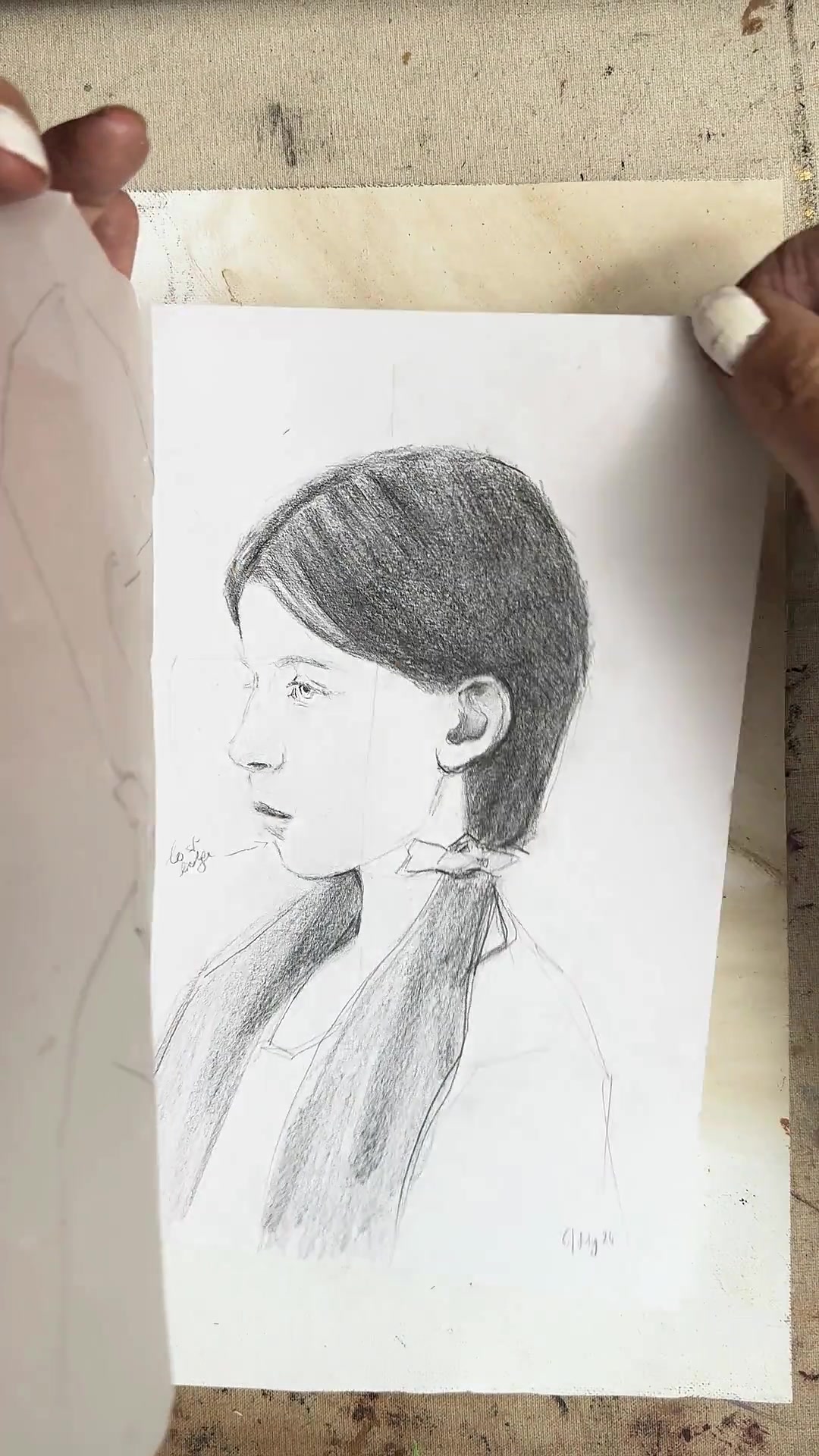
The method I share here is one of the nicest, gentlest ways to start a painting, and one I learned while I was training. You make your drawing on paper first, and then you transfer it onto the canvas.
Why I transfer my drawings
1. You can focus fully on colour
When you start with a drawing you are happy with, painting becomes much more enjoyable. The silhouette is already there, whether it is a portrait or a figure.
Composition, likeness and gesture are all solved in the drawing. So when you start to paint, you can give all your attention to colour, which is already a big challenge on its own. You can go deeper into it, and you improve much faster.
2. You control the composition
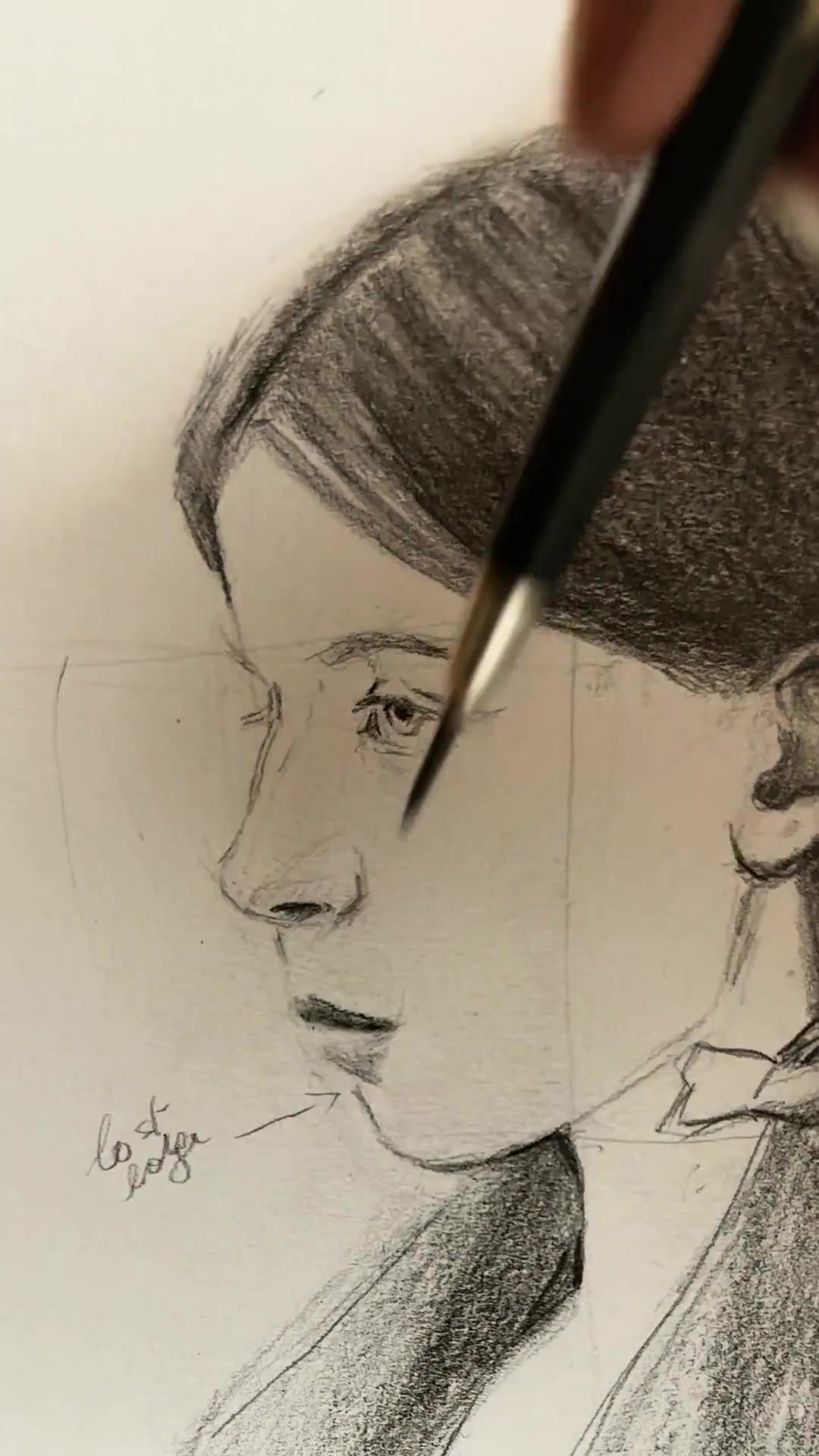
Once your drawing is on tracing paper, you can place it wherever you want on your support: upside down, vertical, at an angle. It is up to you. You can turn the tracing paper as much as you like before you commit.
This matters a lot to me. I often paint on richly textured grounds, and this method lets me play with my abstract backgrounds and find the right place for the figure.
3. You never lose your drawing
Sometimes a painting does not work. The figure is in the wrong place, or you simply do not want to continue.
If you drew straight on the canvas, you lose two, three or four days of work. With this method, your drawing is still there, safe on the side, and you can start again whenever you want.
And a good drawing is an artwork in itself. Why lose one artwork under another one?
What you need
- Your finished drawing
- Tracing paper
- Willow charcoal
- Masking tape
- A pencil or pen to trace with
- Fixative spray (optional)
The charcoal must be willow charcoal, because it is soft. A harder charcoal or a pencil will not pass onto the canvas so well.
How to transfer your drawing, step by step
1. Place a sheet of tracing paper on top of your drawing. Fix it with masking tape so it does not move.
2. Trace the silhouette of your drawing. Add the main shadow shapes too, if you have them.
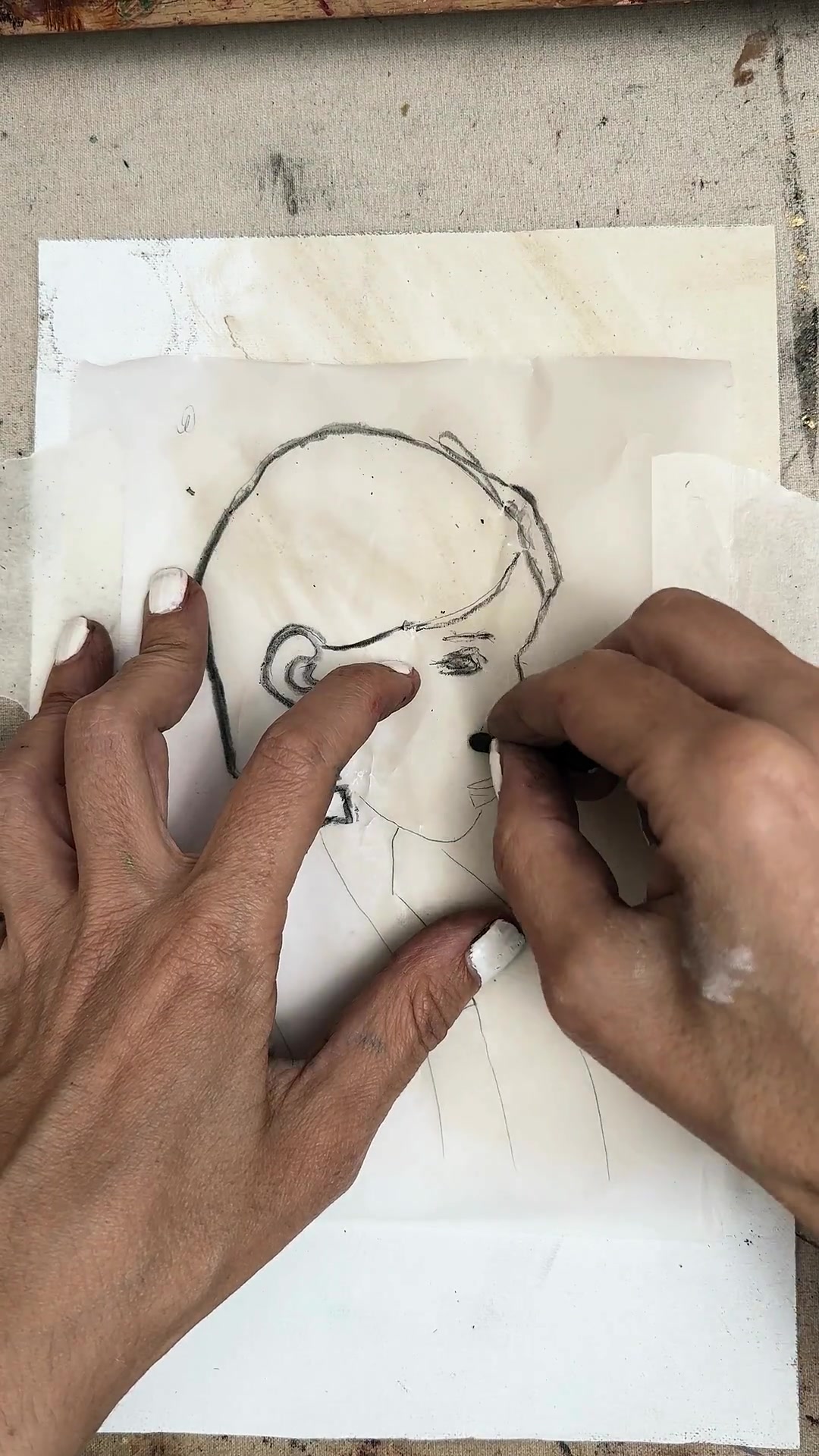
3. Turn the tracing paper over. On the back, go over all the lines with willow charcoal.
4. Turn the tracing paper back again, charcoal side down. Place it wherever you want on your canvas or panel, and fix it with tape.
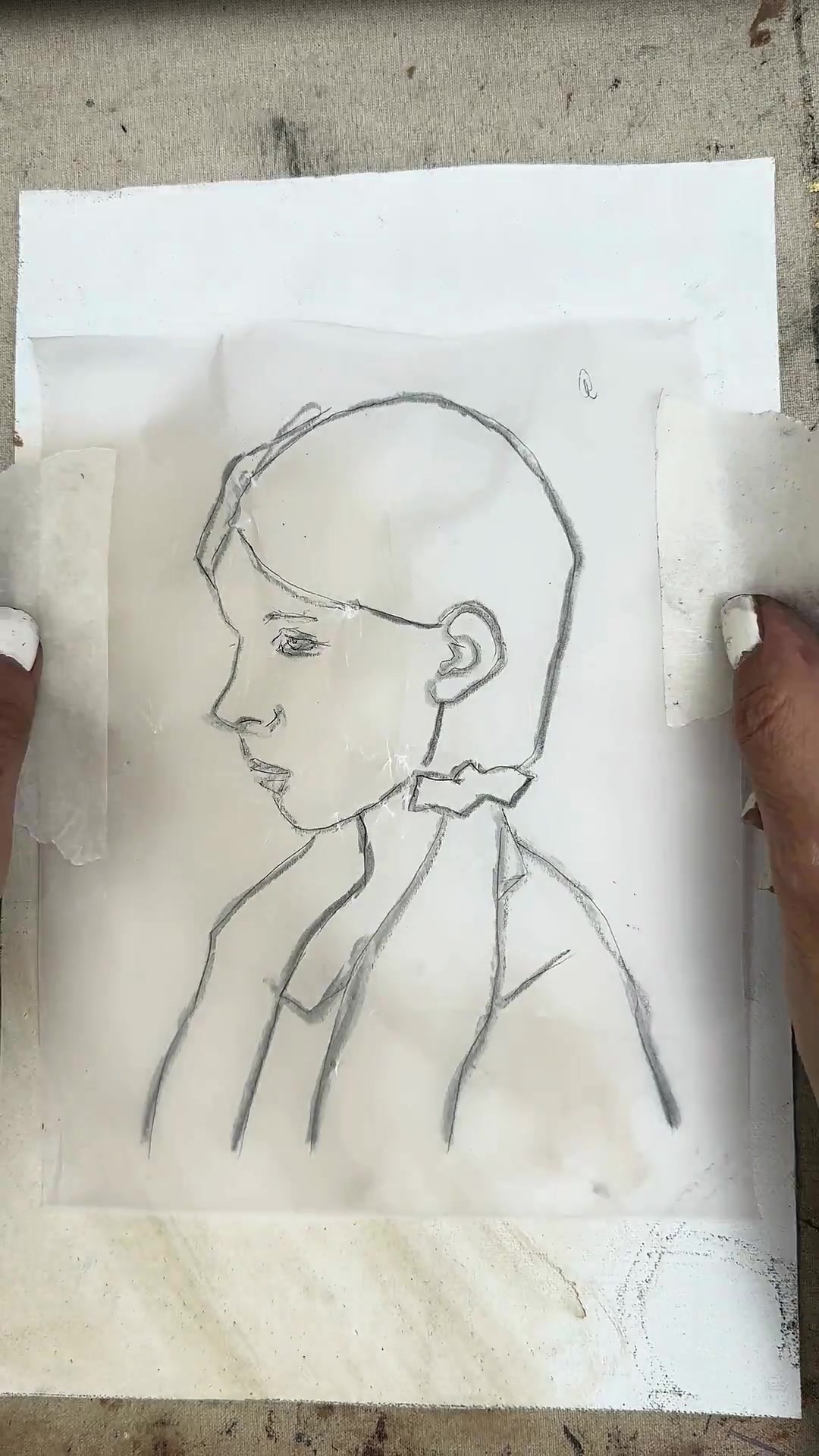
5. Trace over your original lines once more. The pressure passes the charcoal from the back of the paper onto the canvas.
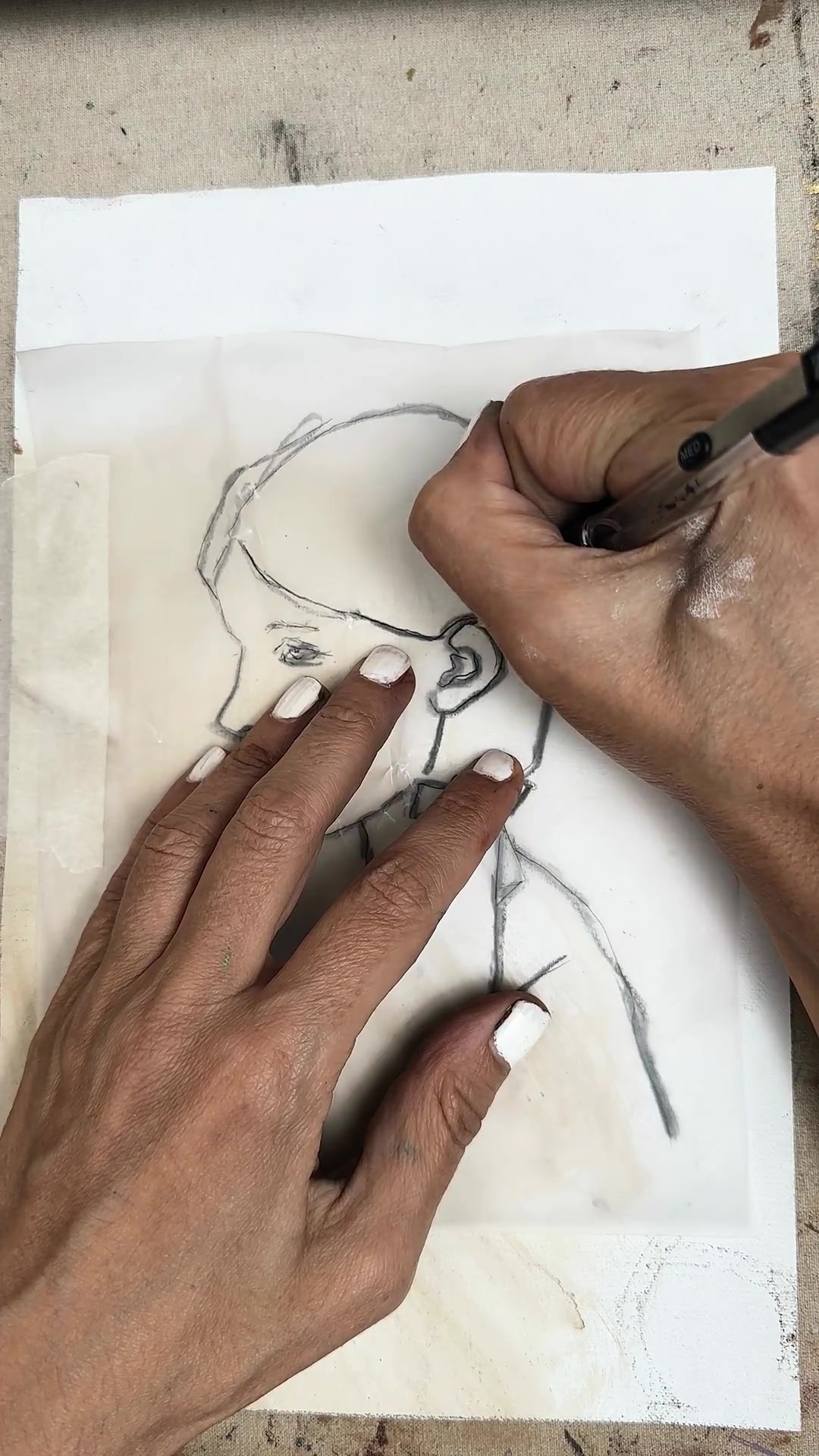
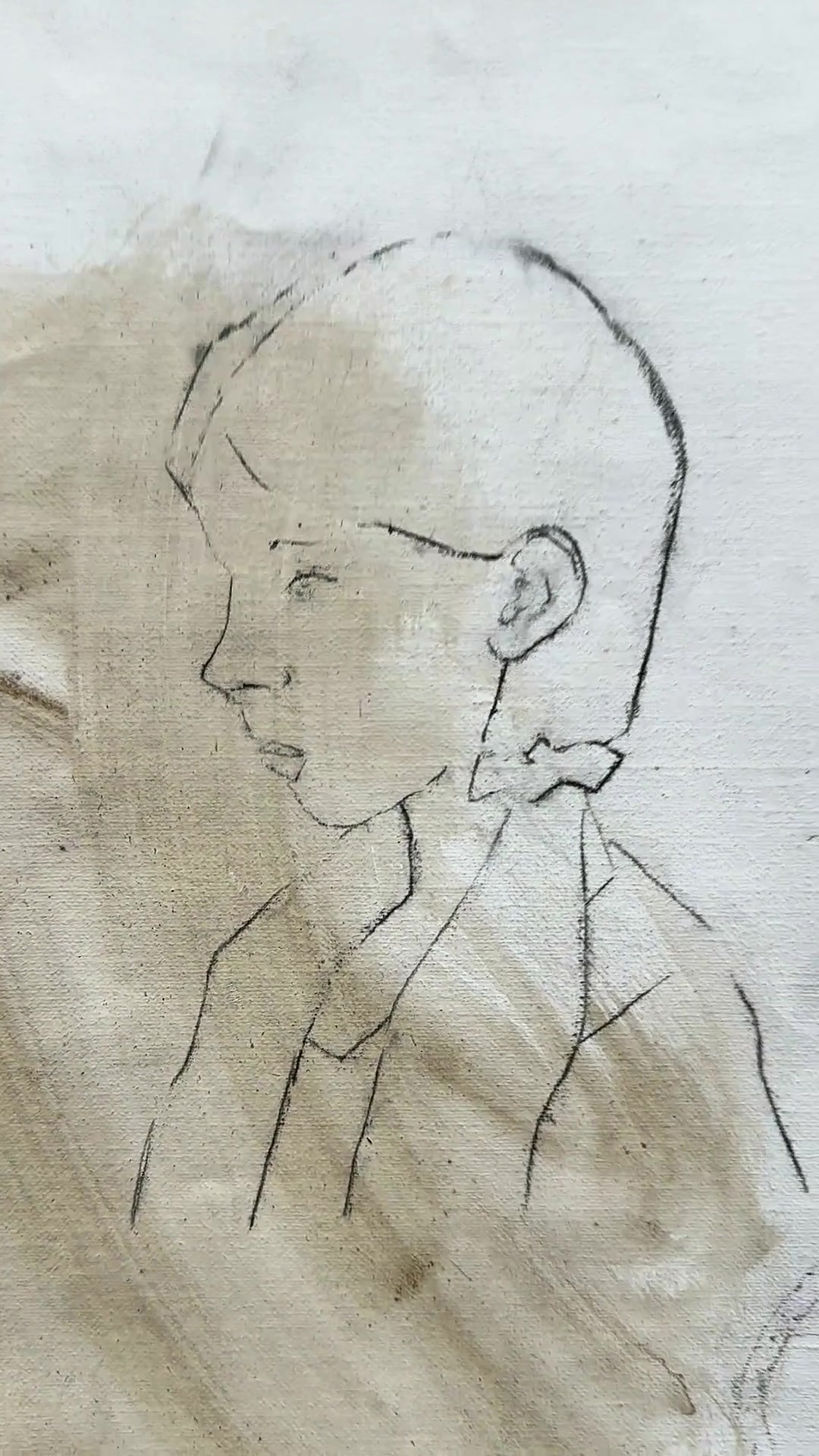
6. Lift the tracing paper. Your drawing is now on the canvas.
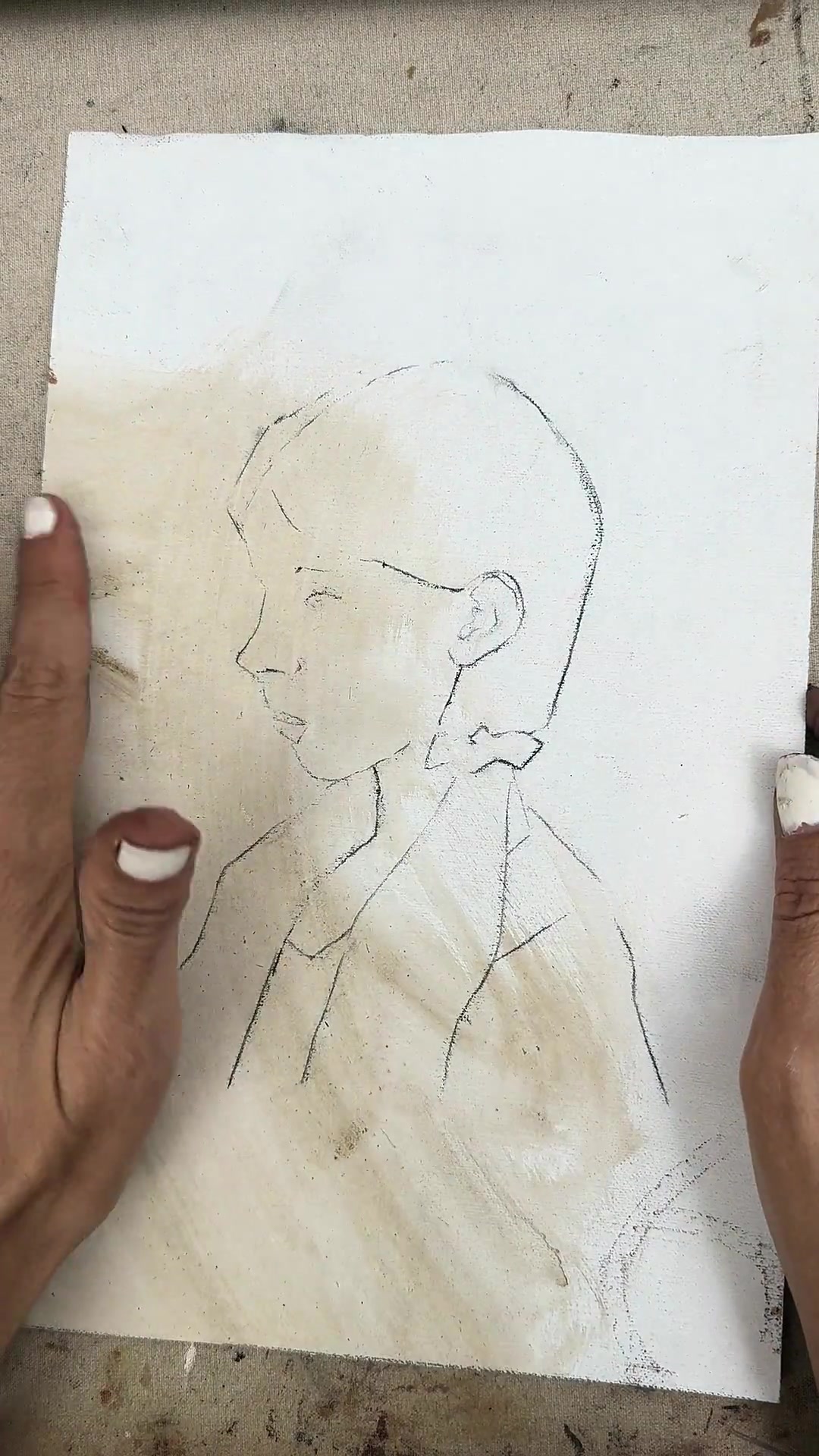
7. Fix the lines with a fixative spray, or simply start painting over them. The charcoal melts into the paint beautifully, and you will never see a trace of it.
Try it on your next portrait
If you have never transferred a drawing, try it on your next portrait. Spend your time on the drawing, then let the painting be about colour.
If you try it, share your results on Instagram or Facebook and tag me: @rossoartist on Instagram, or facebook.com/rossoart. I would love to see your work.
Learn the full method
In COMPLETE, I teach the method behind my work: how to build a strong drawing and likeness, how to prepare the grounds I paint on, and how to push realism in a contemporary direction.
If this way of painting speaks to you, this is where we work on it together.
Start with the free portrait guide
If you have not done so yet, download my free guide, What Makes a Portrait Convincing?
Enjoyed this article?
Subscribe here to receive practical painting advice and more arty news.
No spam. Only thoughtful, carefully written content.