Two Drawings, One Afternoon
Sep 02, 2026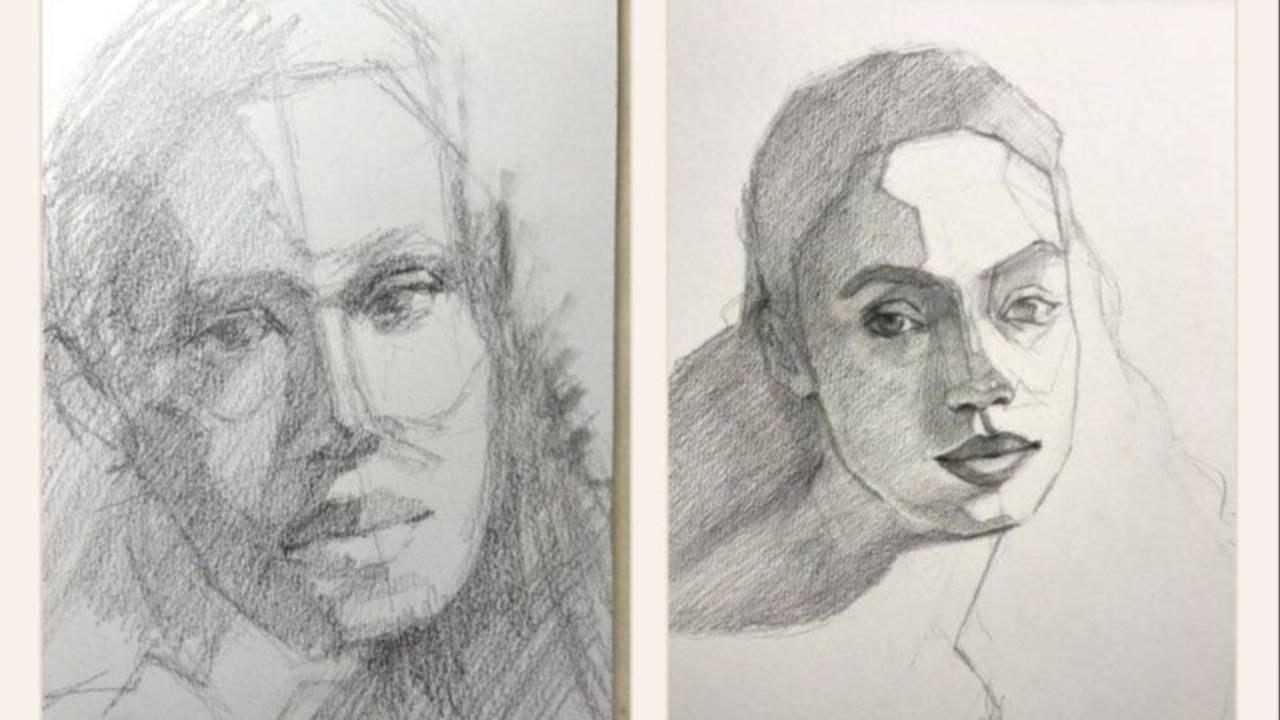
A student of mine sent me two drawings recently, and I have not stopped thinking about them.
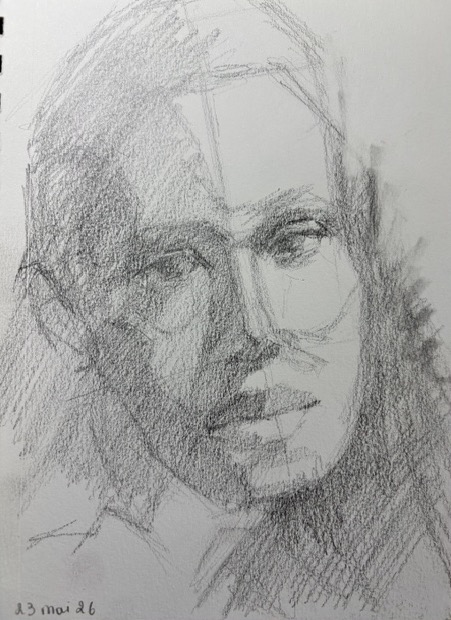
They are drawings of the same reference. Same person, same hands, same pencil, same paper. The one above she made before she followed the instructions in Module 2 (Drawing Realist Portraits). The one below she made after.
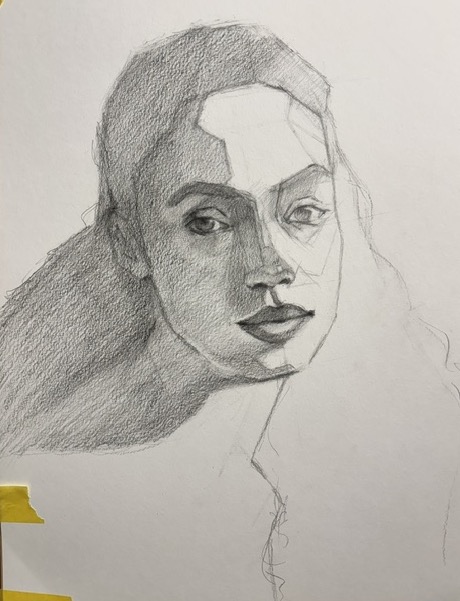
They were made in the same afternoon.
I want you to sit with that for a moment, because it is the part that matters. This was not months of practice. She did not become more gifted between the morning and the evening. She did not find more hours in her week. Nothing changed except what she was looking for, and how she started.
She had told me, before this, that she understood the importance of simplifying — of starting from the general masses and areas and working into the smaller ones. What she could not do was actually see those areas. The planes of the head. She knew the rule and she could not find the shapes.
You can see it in the two drawings. The first one is an attempt to apply that principle. It does follow the general-to-particular rule. But the shading, and the masses of light and shadow, look unintentional — almost random in places, and misaligned.
In the second drawing, those same shapes follow clear lines. Everything is aligned. Everything sits on the right axes. The proportions are sound. And above all, you can feel that every pencil mark is intentional. Nothing is guessed.
To make a strong realist portrait you must first be able to see, and then be able to translate what you see with your pencil — or your brush.
It takes very little to start seeing.
It takes a little longer to move into intentional execution of what you see.
But that is the beauty of practising. A clear path and a clear vision ahead are what lead, inevitably, to success.
Here is what she changed.
You can 'see' like this too: The planes
Instead of approaching a head — drawing or painting — as a smooth, rounded mass, try to see it in terms of planes: flat, geometrical shapes that divide it.
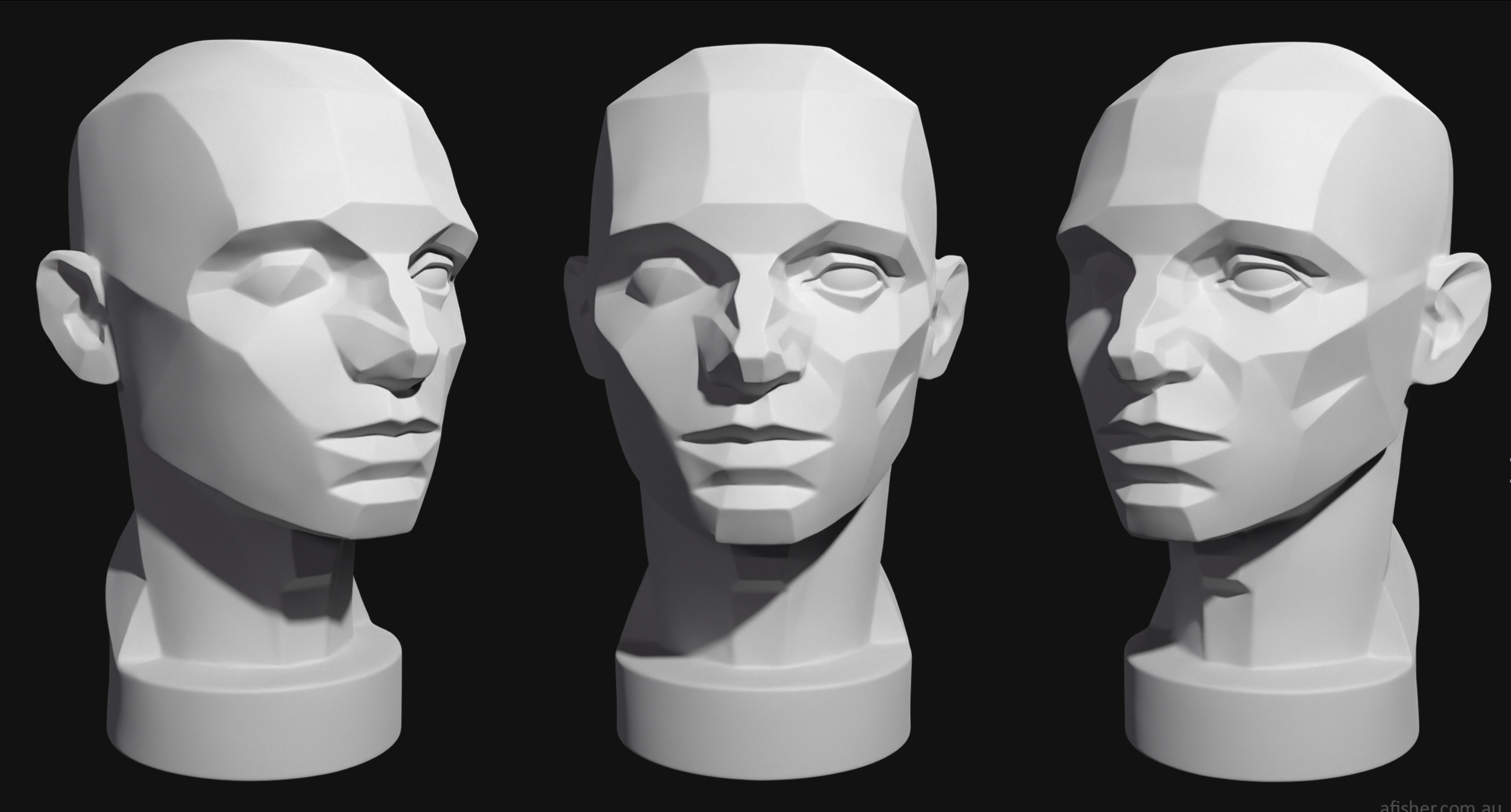
Once you simplify the head into these larger planes, understanding how the light travels across it, and how it builds the form, becomes much simpler.
The best known version of this planar model is the Asaro head — one of the most traditional tools used in realist academies.
These days you can do it yourself with any photo app: superimpose the planar description over your reference, as I have done here. And the skull too.
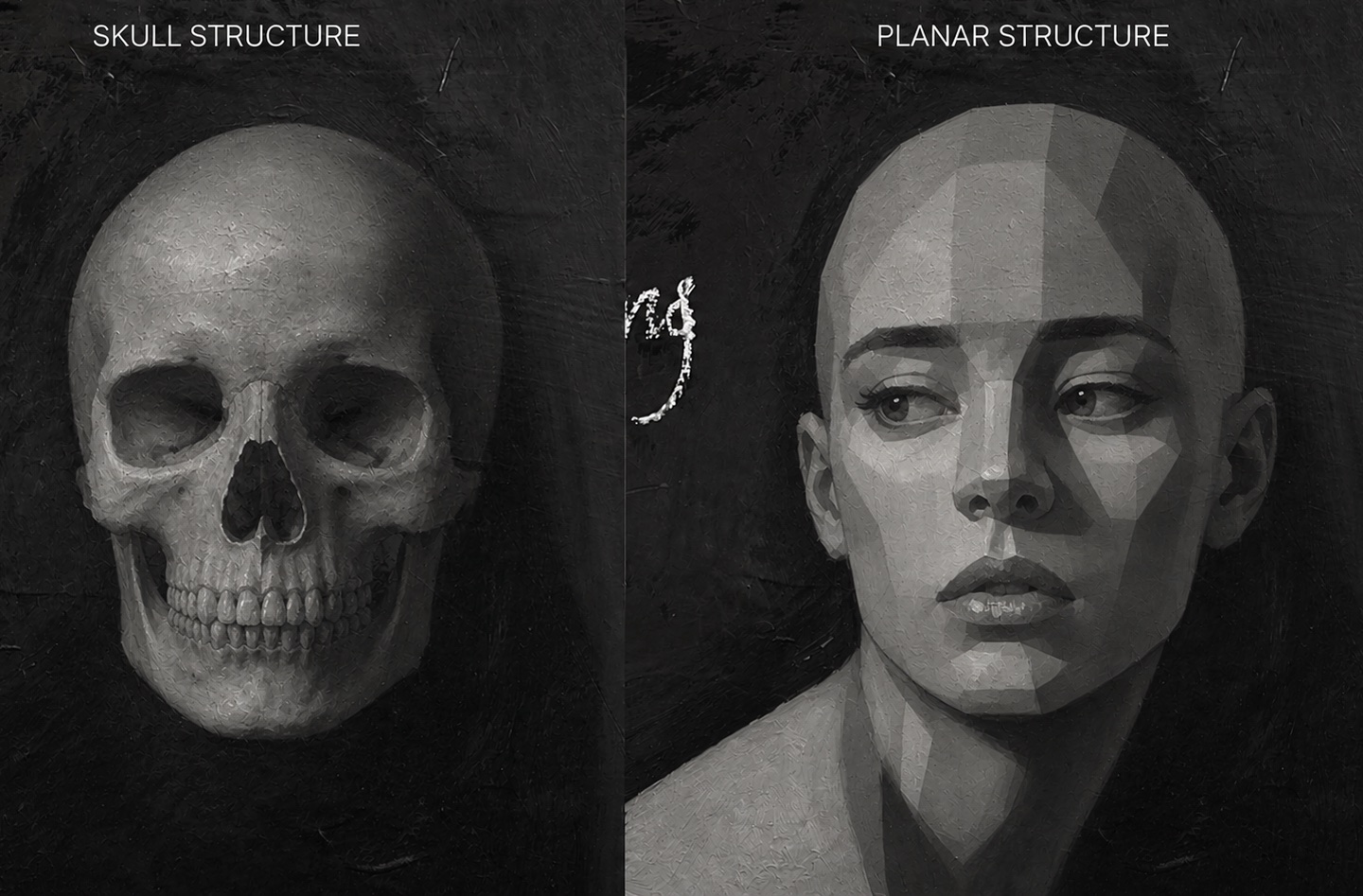
It is easier to see and to build a head simplified this way, because you can see clearly where the light travels and where the edges are, and follow them — far harder to do when everything is round.
Try it at home.
If you want to learn this properly, everything above is the beginning of what I teach.
COMPLETE is my full process. It begins with Realist Portraiture and then goes into Materials, Textured Grounds, Mixed Media, Abstraction, and the whole process behind a finished original body of work. You can enrol from $75 a month.
See COMPLETE →
If portraiture is the only part you want, check START. It does not include the mixed media or the abstraction — that work is only in COMPLETE. You can enrol from $59 a month.
See START →
Enjoyed this article?
Subscribe here to receive practical painting advice and more arty news.
No spam. Only thoughtful, carefully written content.