Painting in Oil on Aluminium: The Challenges, and Why It Is Worth It
Oct 27, 2026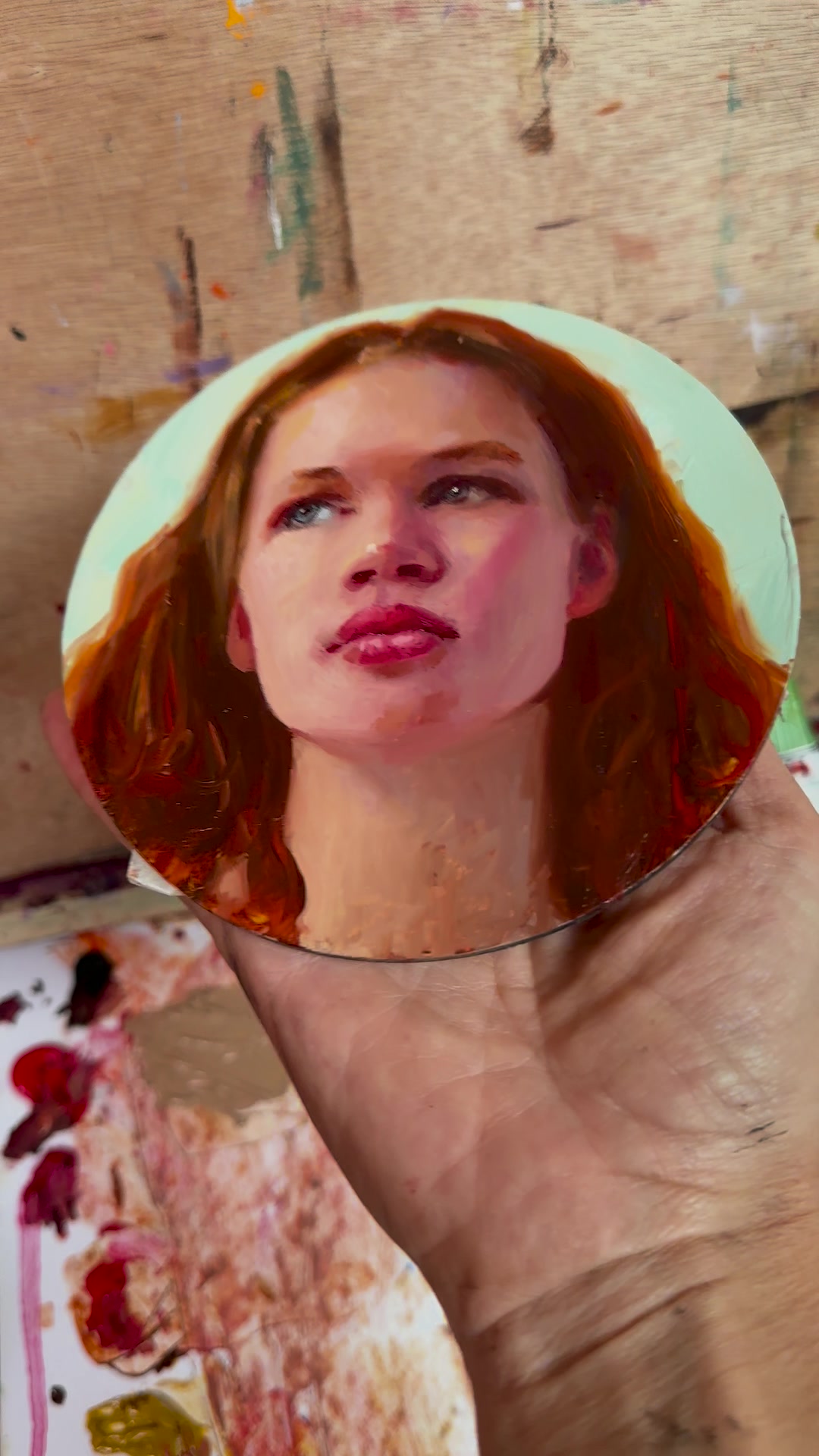
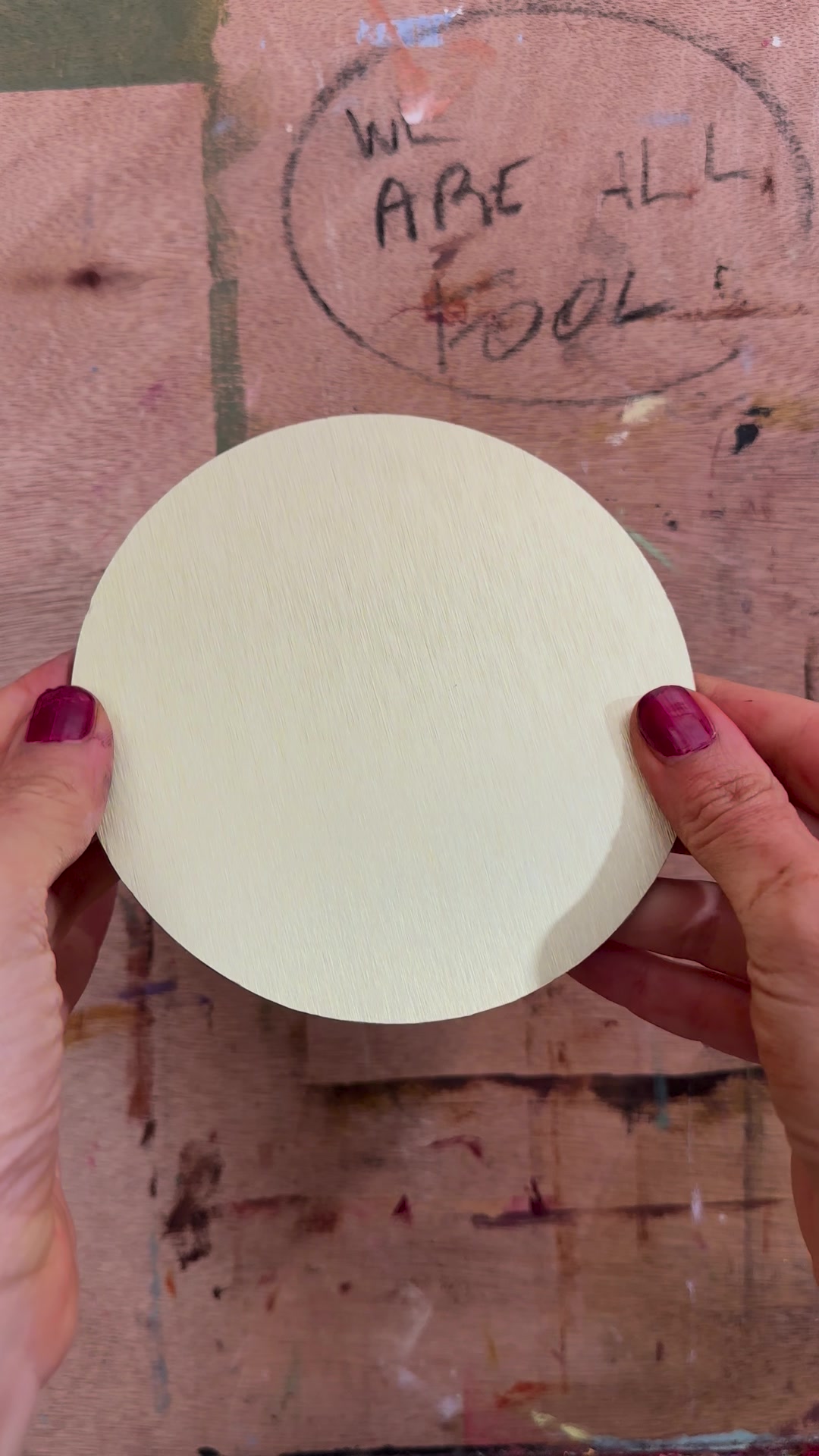
I have painted on many different surfaces over the years. For this small portrait, I painted on a round aluminium panel.
Metal is very different from canvas or wood. It is harder at the start. But it also gives you something no other surface can give you.
Why paint on metal
Aluminium is a naturally reflective surface. Painting on it is a bit like painting on glass, or on a mirror. Because the surface reflects the light, the paint itself shines much more. You can achieve more depth, and a very shiny quality.
Metal also gives you more freedom. The paint does not sink into the surface, so you can keep moving it around. It feels more sculptural. It is more flexible than canvas, and even more than wooden panels.
The challenge: a slippery surface
Metal is very slippery and does not absorb anything. When you start painting in oil, you will feel that you are fighting against the surface. The brush slides, and the paint moves.
This is normal. Two things help:
- Adjust the pressure of your hand.
- Use the right brushes. I use a mix of stiff and semi-soft brushes. For the first sketch, I use hog brushes, the hog brushes in my brush set.
I paint straight onto the bare aluminium. There is no primer and no preparation.
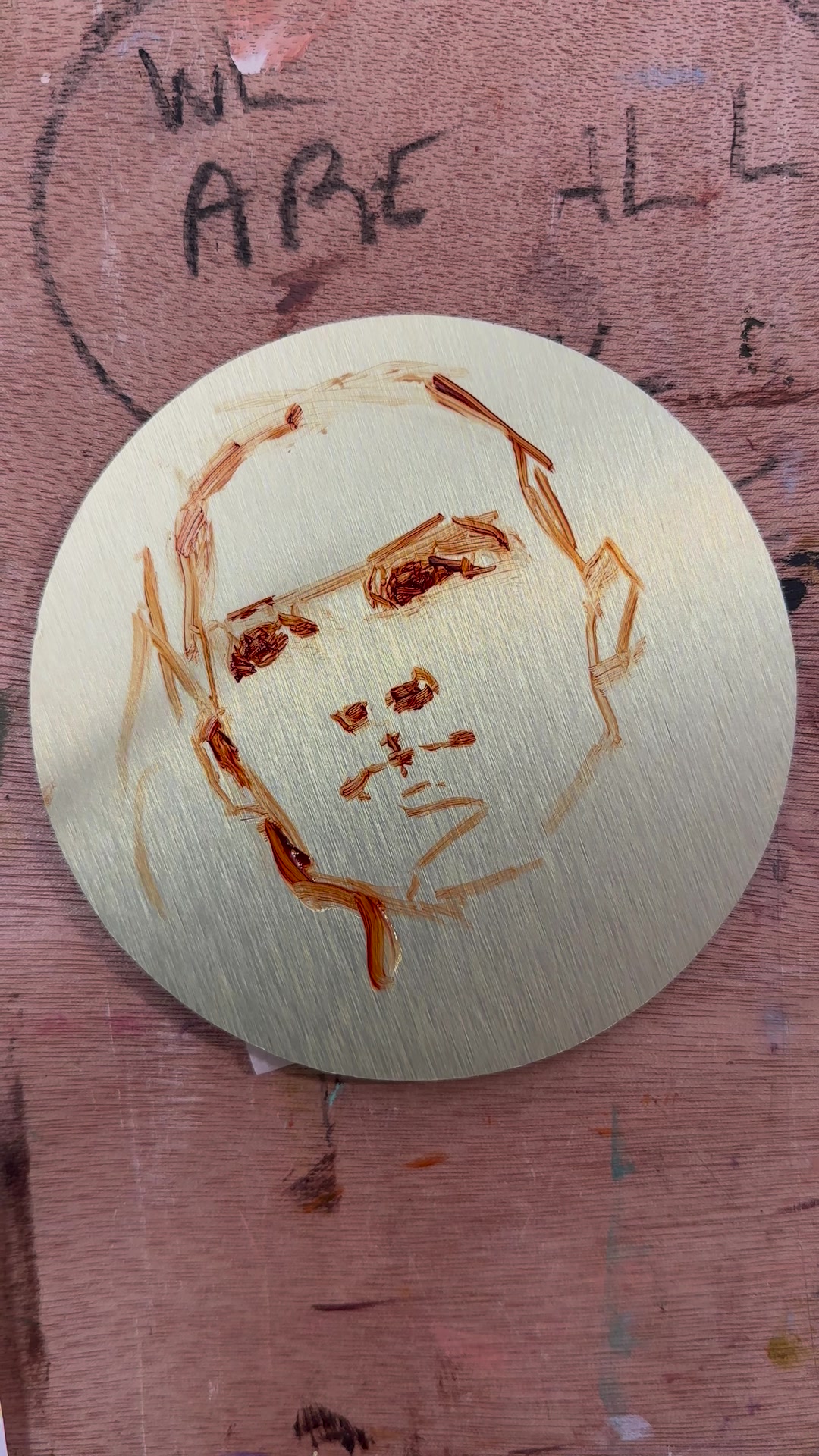
Step 1: a thin sketch
Start with an earth tone and a little medium. This lets you draw a thin, clean sketch line. Then build slowly on top.
Step 2: block in the shadows, and stay in this stage
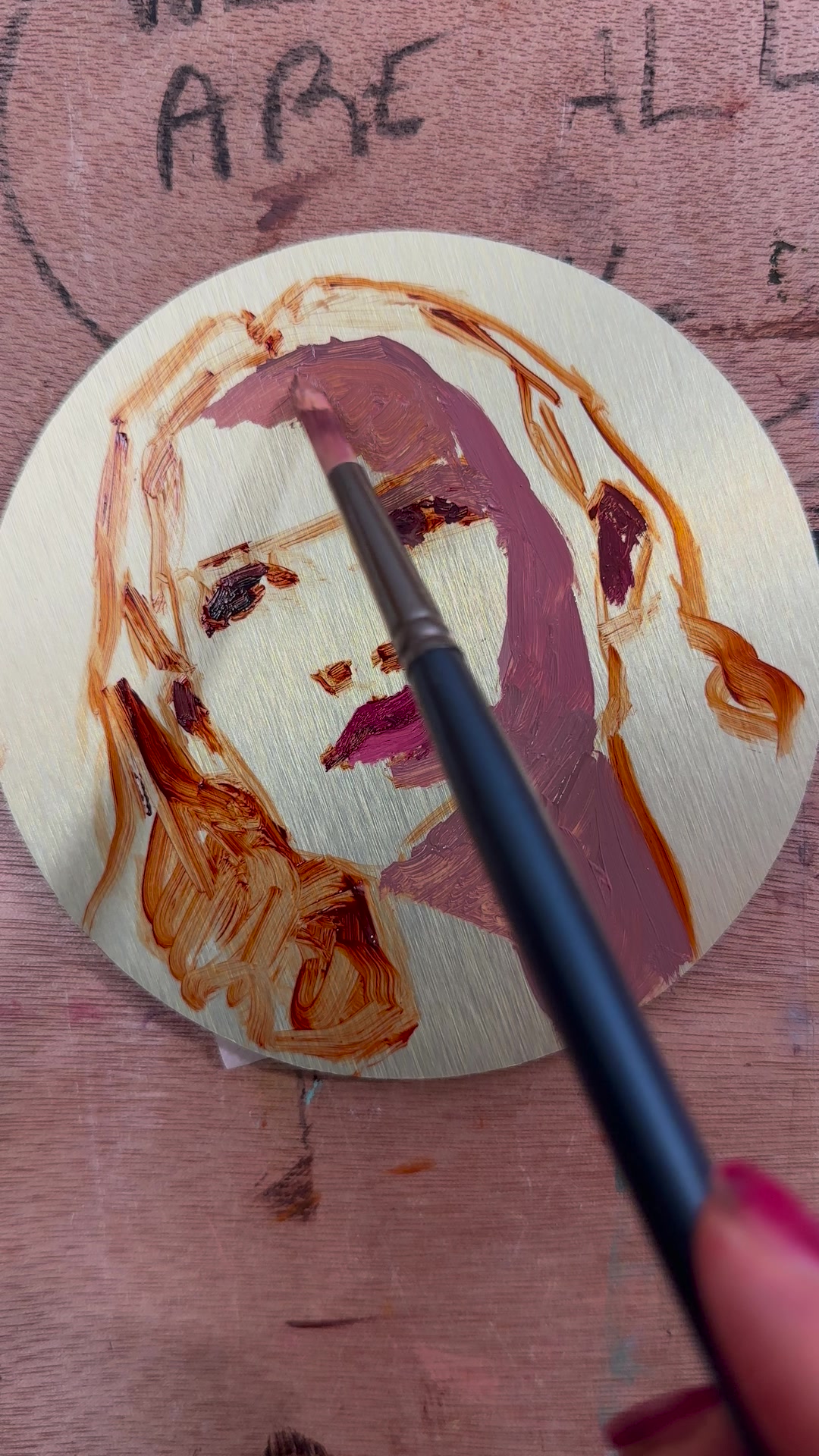
When you start to build on top, the surface is still slippery. In my video you can see that I slip a lot. It takes some time before the paint starts to build body.
The key is to stay in this stage. Do not rush to leave it. Use it to your advantage: the paint does not sink, so you can move it as much as you need.
Block in the darks first. Keep the shadows thin, so they are easy to move.
Step 3: check before you go opaque
Before you use full opaque paint, take some time to move things around. Be sure about the composition, the portrait itself and the shadow shapes.
Once you add white, yellow and the other opaque colours, the paint builds body, and it becomes difficult to move things.
Step 4: build up the opaque paint
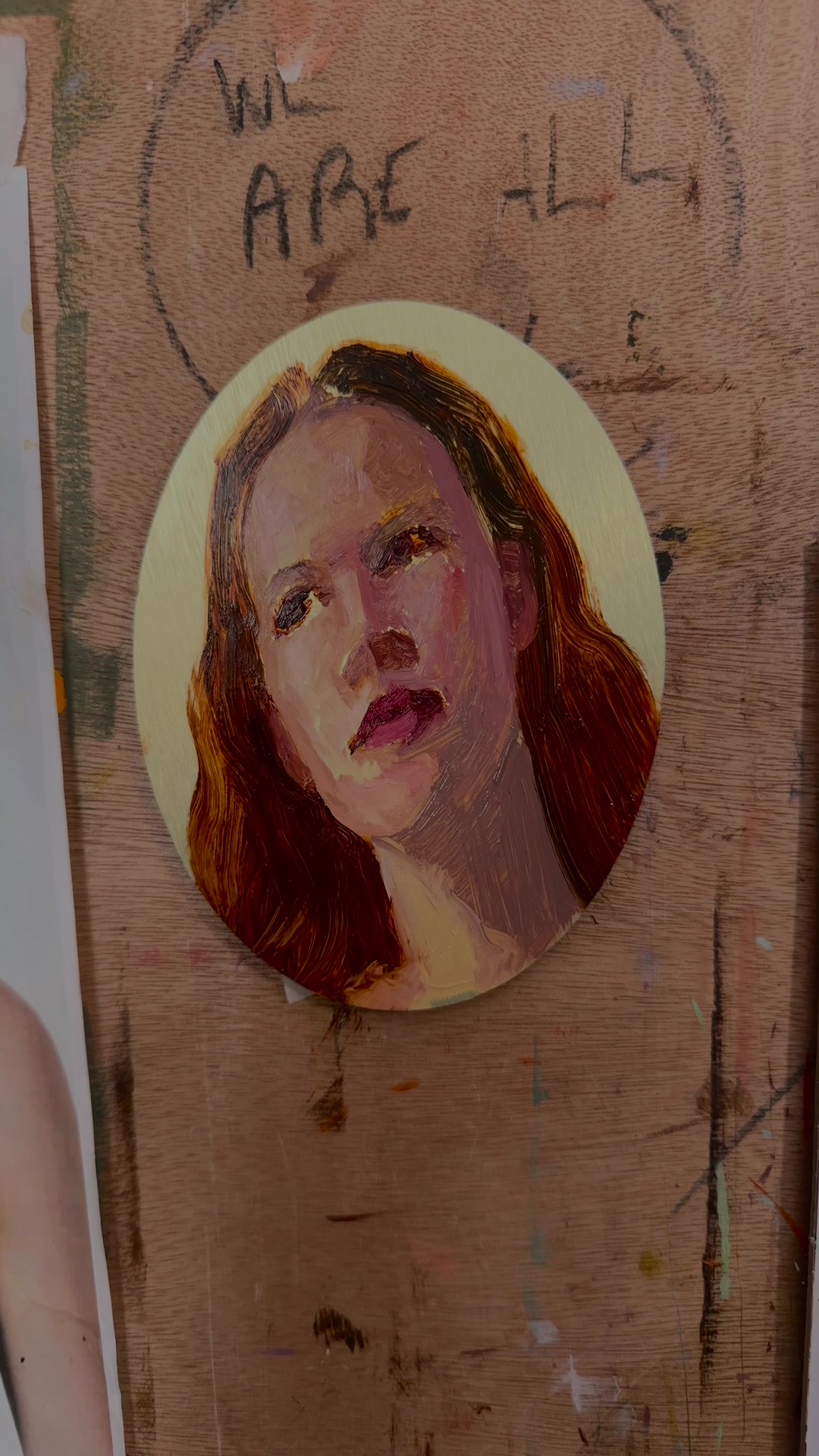
When you are happy with the shadows, start to add more opaque paint, slowly. This is when the picture really starts to appear on the surface.
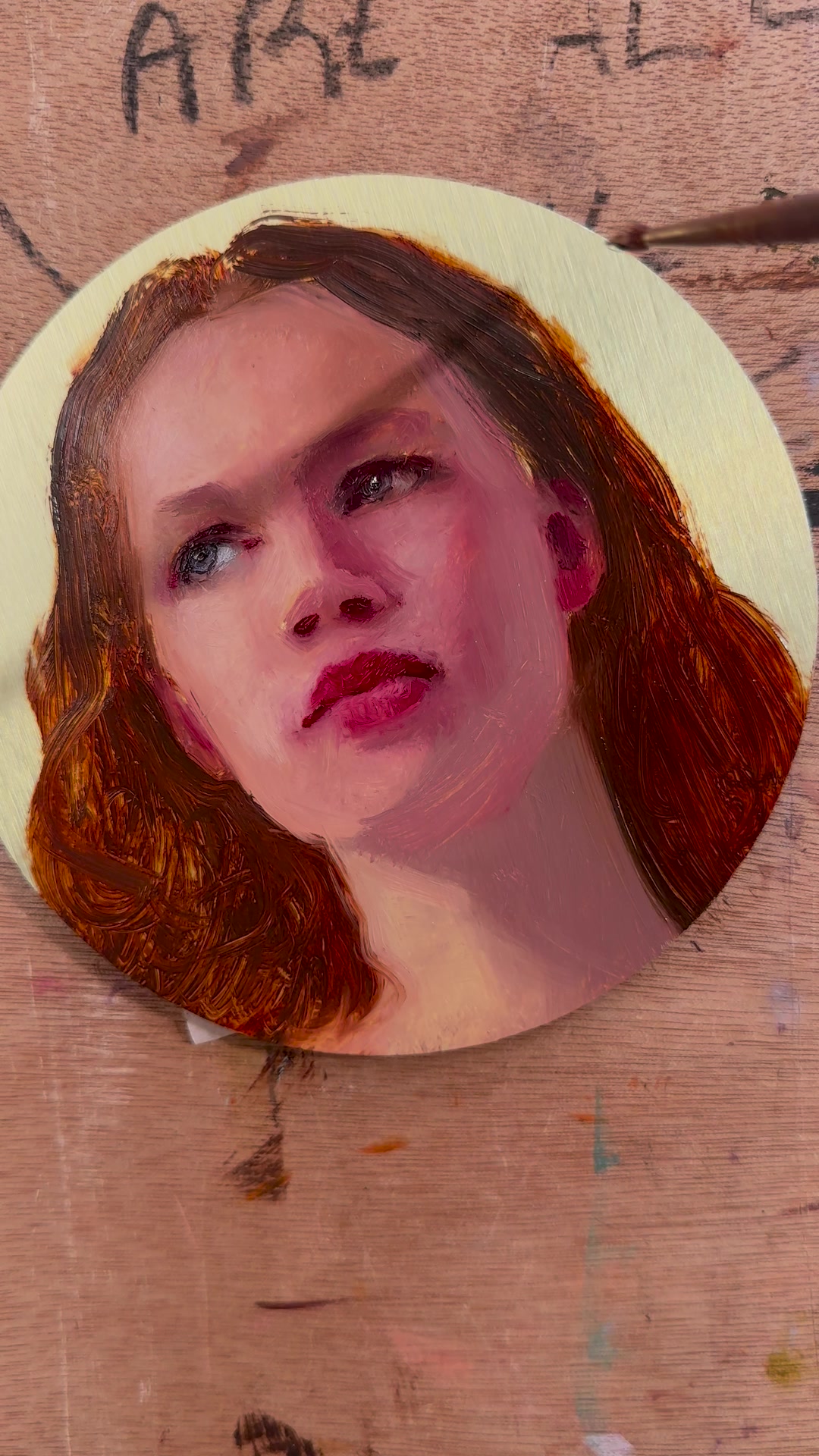
The background
For the background, I mixed Terre Verte with white. It becomes a soft green-blue that sits around the figure and stays in the back.
I wrote more about this colour here: Terre Verte: My Favourite Colour for Backgrounds.
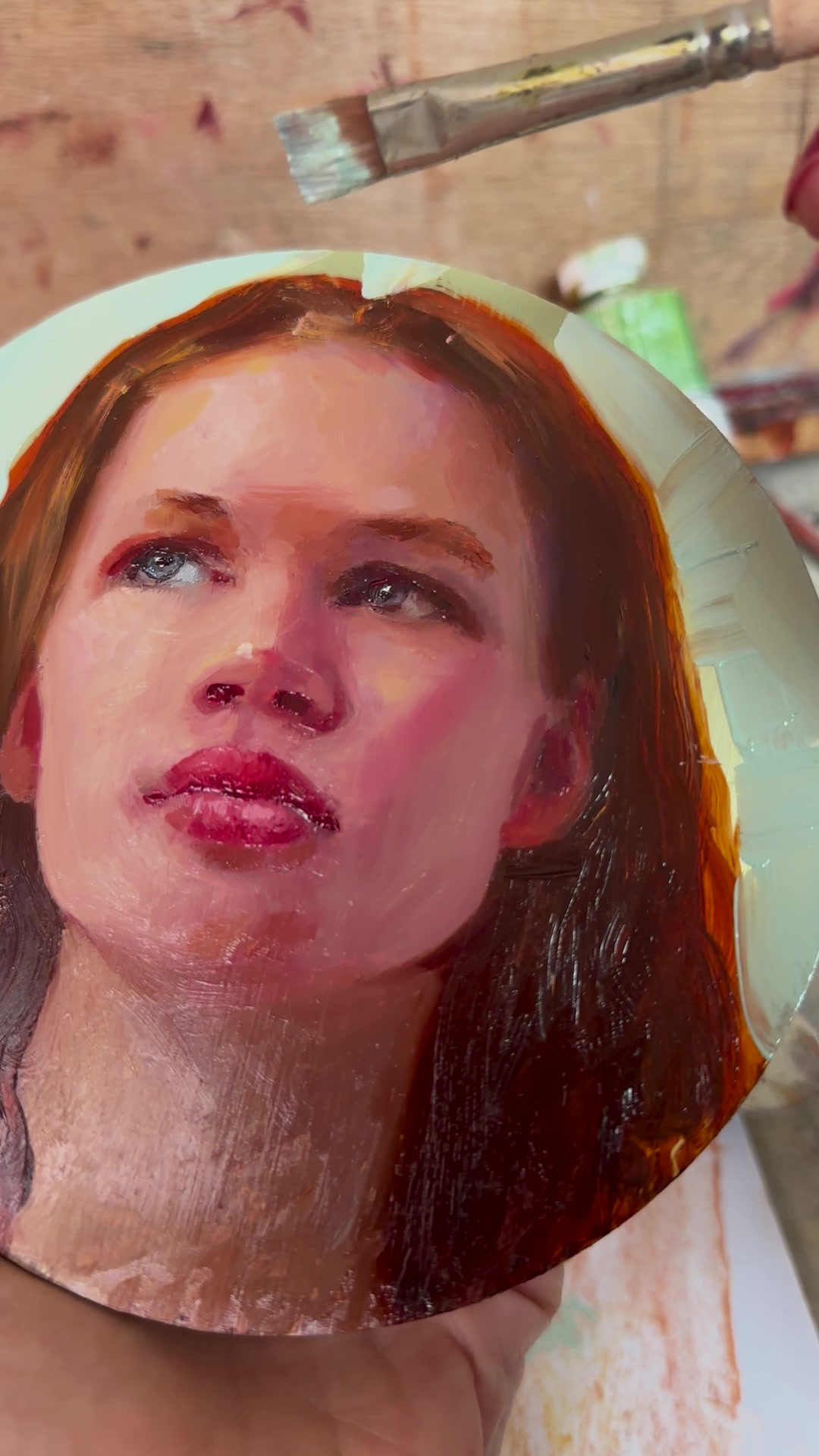
The result
The effect is very different from canvas or panels. The paint catches the light and moves with it as you tilt the panel.
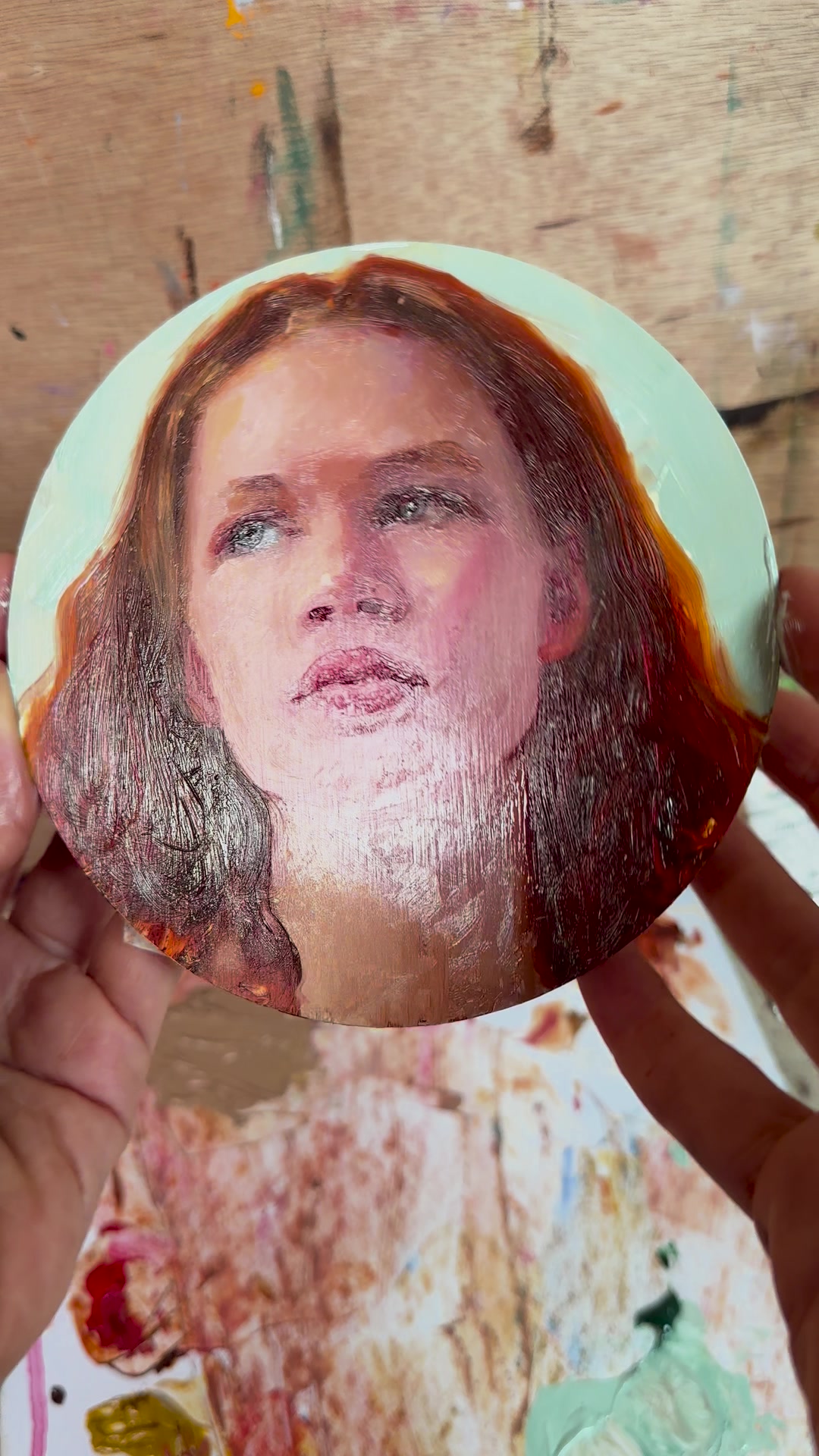
Where I find my aluminium panels
I buy my aluminium panels in custom sizes from metal suppliers. Search for metal sign suppliers: many of them cut panels to the size you need. They also offer different finishes, like copper or white.
Learn the full method
In COMPLETE, I teach the method behind my work: how to build a strong drawing and likeness, how to prepare the grounds I paint on, and how to push realism in a contemporary direction.
If this way of painting speaks to you, this is where we work on it together.
Start with the free portrait guide
If you have not done so yet, download my free guide, What Makes a Portrait Convincing?
Enjoyed this article?
Subscribe here to receive practical painting advice and more arty news.
No spam. Only thoughtful, carefully written content.