At the Edge of Realism: How edges describe form — and help us break it apart
Oct 06, 2026
When we learn portraiture, we usually focus first on proportion, likeness, the skull, planes, value and colour.
Edges often come later. For me, they certainly did.
I don't remember thinking about edges when I first started painting. I was too busy trying to get everything else right.
But eventually something changes. Once you understand the structure of the head, how the planes turn, how light travels across the form, and how value and temperature create volume, edges become another powerful language.
You can use edges to create depth. You can use them to describe form. You can use them to describe different materials. And eventually, you can use them to disrupt realism altogether.
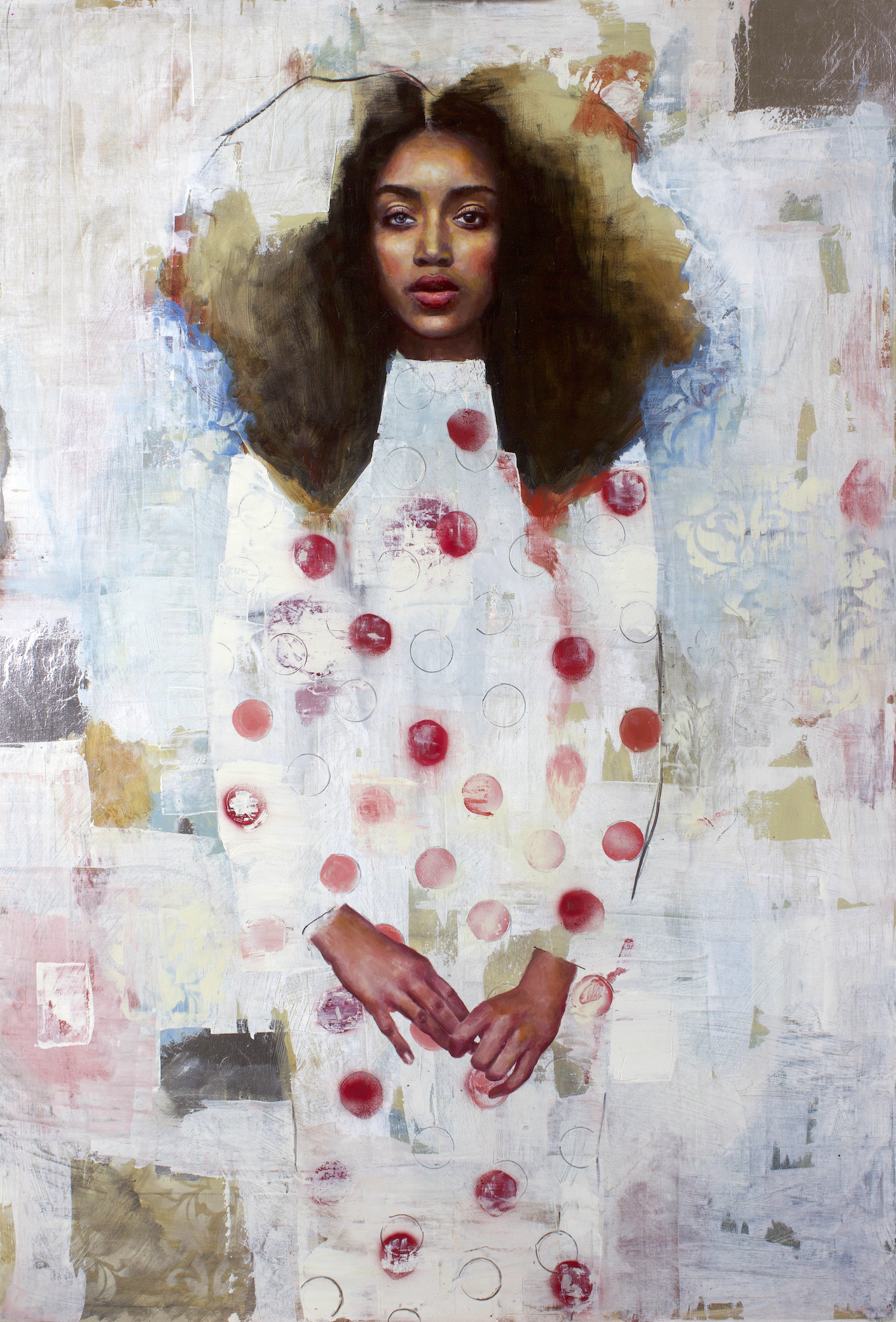
Edges can make or break a painting
What stays defined, and what disappears, changes everything.
Edges define volume, depth, space, form and focus, whether we think about them or not. At first, the important thing is simply to become aware of them.
Awareness comes first. Control comes with practice.
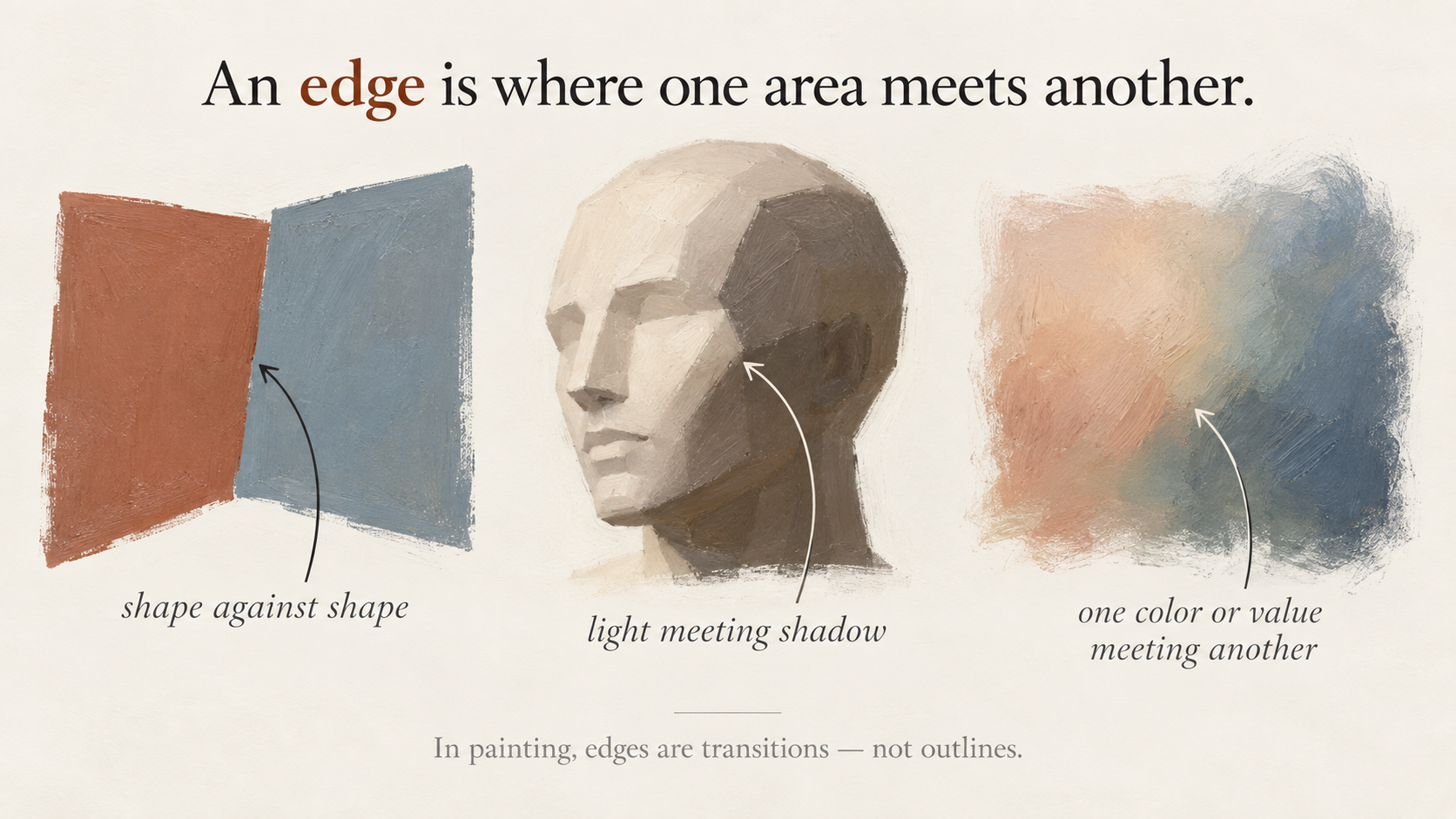
What is an edge?
Very simply, an edge is where one area meets another.
It can be where two shapes meet, where two planes change direction, where a light area meets a darker one, where one colour meets another, or where the figure meets the background.
In real life, we don't see outlines around everything. We see transitions. Some transitions are sharp. Some are soft. Some almost disappear.
The four edge qualities
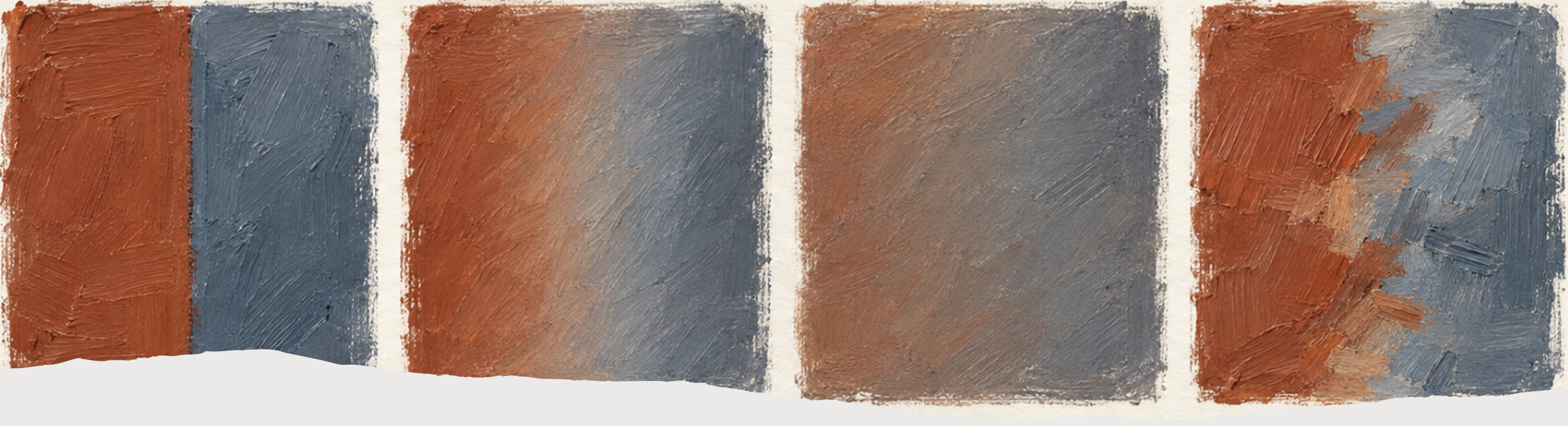
From left to right:
- Sharp: clearly defined and crisp.
- Soft: the transition is gradual.
- Lost: the boundary almost disappears. This happens when two areas have the same value.
- Broken: the edge appears, disappears, then comes back again.
Each one does a different job in the painting.
A convincing painting needs variety. If every edge has the same sharpness, everything starts to sit on the same level. You lose depth, focus and interest.
Lost edges: when two areas share the same value
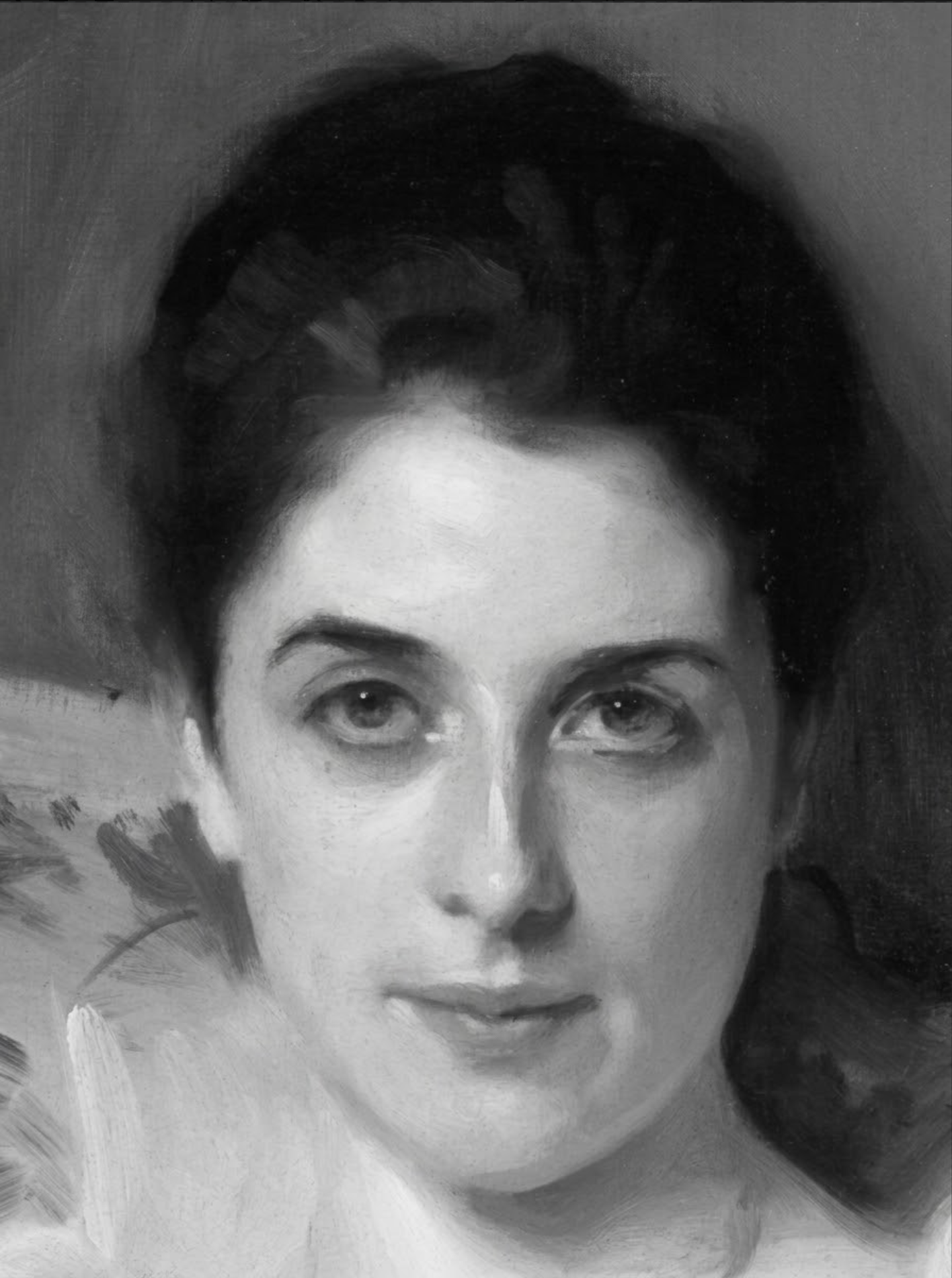
When two areas have the same value, the edge disappears.
Look at John Singer Sargent's Portrait of Lady Agnew (1892) and see if you can find any. In portraiture, lost edges often appear around the outer cheek, where the cheek meets the background.
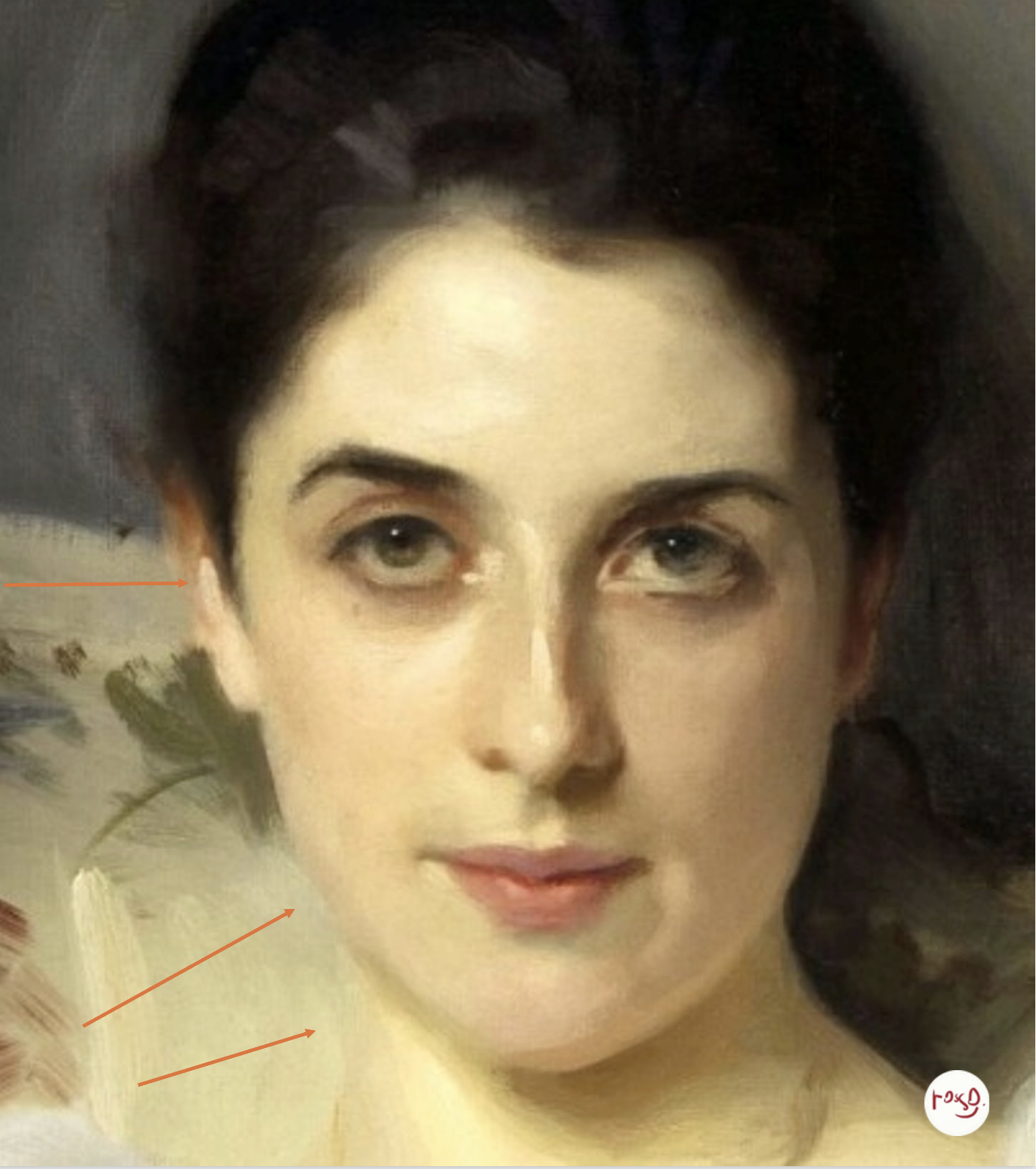
John Singer Sargent, Lady Agnew of Lochnaw (1892), detail
A simple trick: turn the image to greyscale. This removes colour and shows you only value. The lost edges become much easier to see.
Edges create depth
One of the simplest ways to understand edges is through depth.
Sharp edges bring focus. Soft edges suggest distance or atmosphere. So even if three objects are identical in colour, value and shape, changing only the edges can make one feel closer, one further away, and one somewhere in the middle.
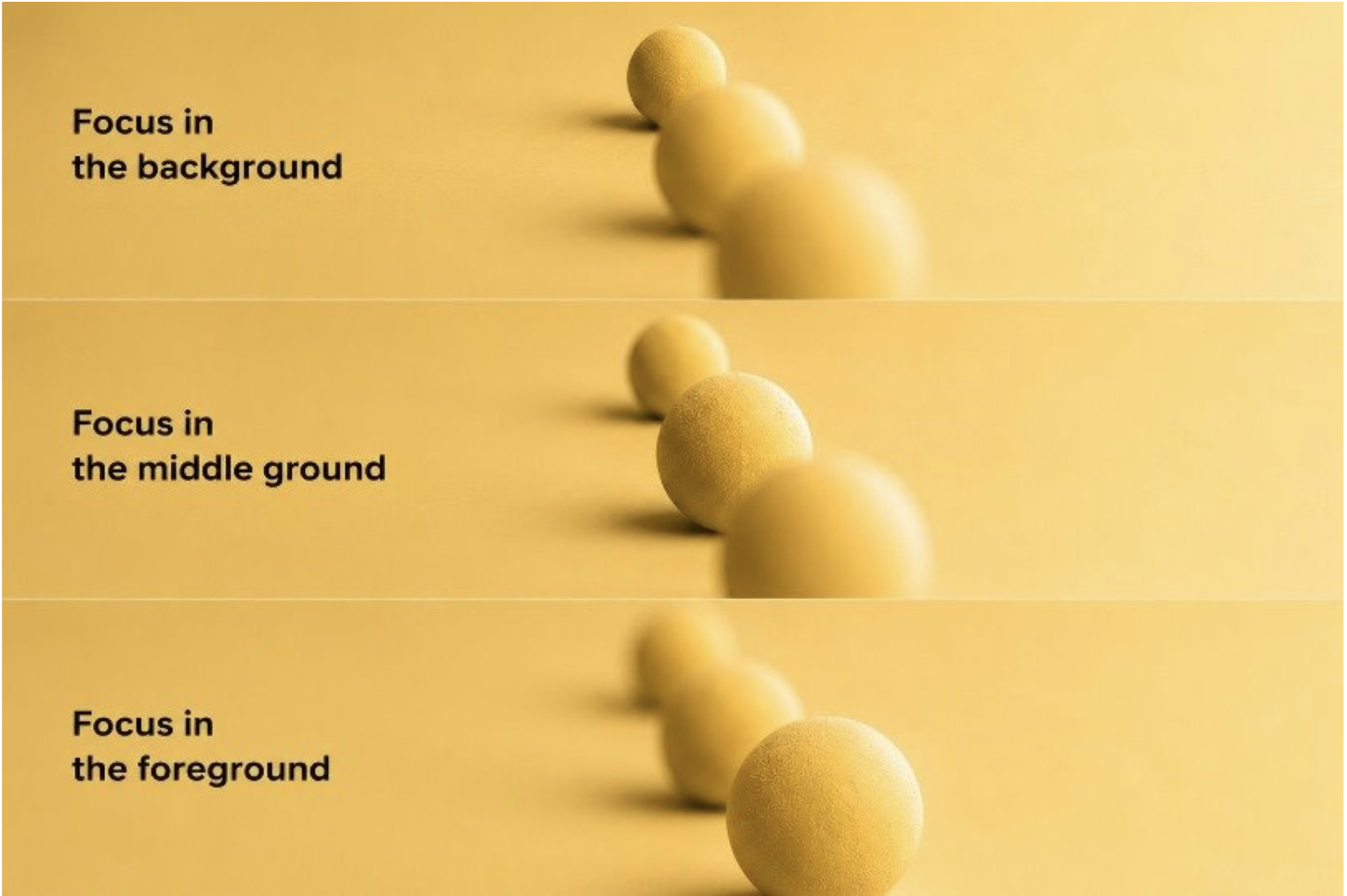
This matters because we work on a flat surface. Value helps create volume, but edges help us organise space.
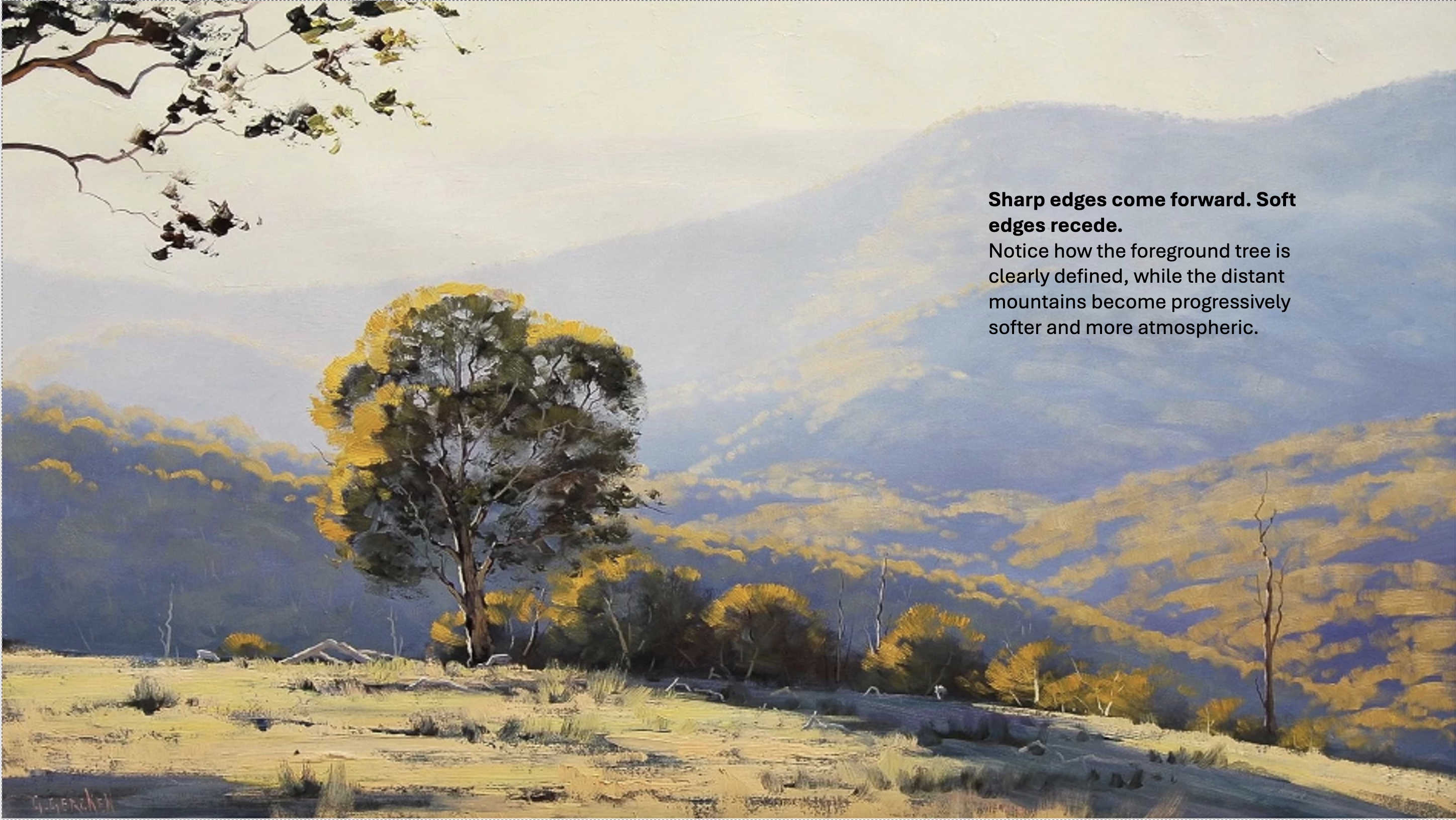
Sharp edges come forward. Soft edges go back. In this landscape, the tree in the foreground is clearly defined, while the distant mountains become softer and more atmospheric.
Edges describe form
Edges are not only about distance. They also tell us what kind of form we are looking at.
Think about the forehead. We often simplify it into planes, so we can understand how light moves across it. But the real forehead is rounded. The change from one plane to the next is gradual. If you make those transitions too sharp, the forehead looks cut into pieces.
Now compare it with an area where the direction changes suddenly: around the nose, under the nose, or where the nose meets the eye socket. There, a sharper edge helps to build the structure.
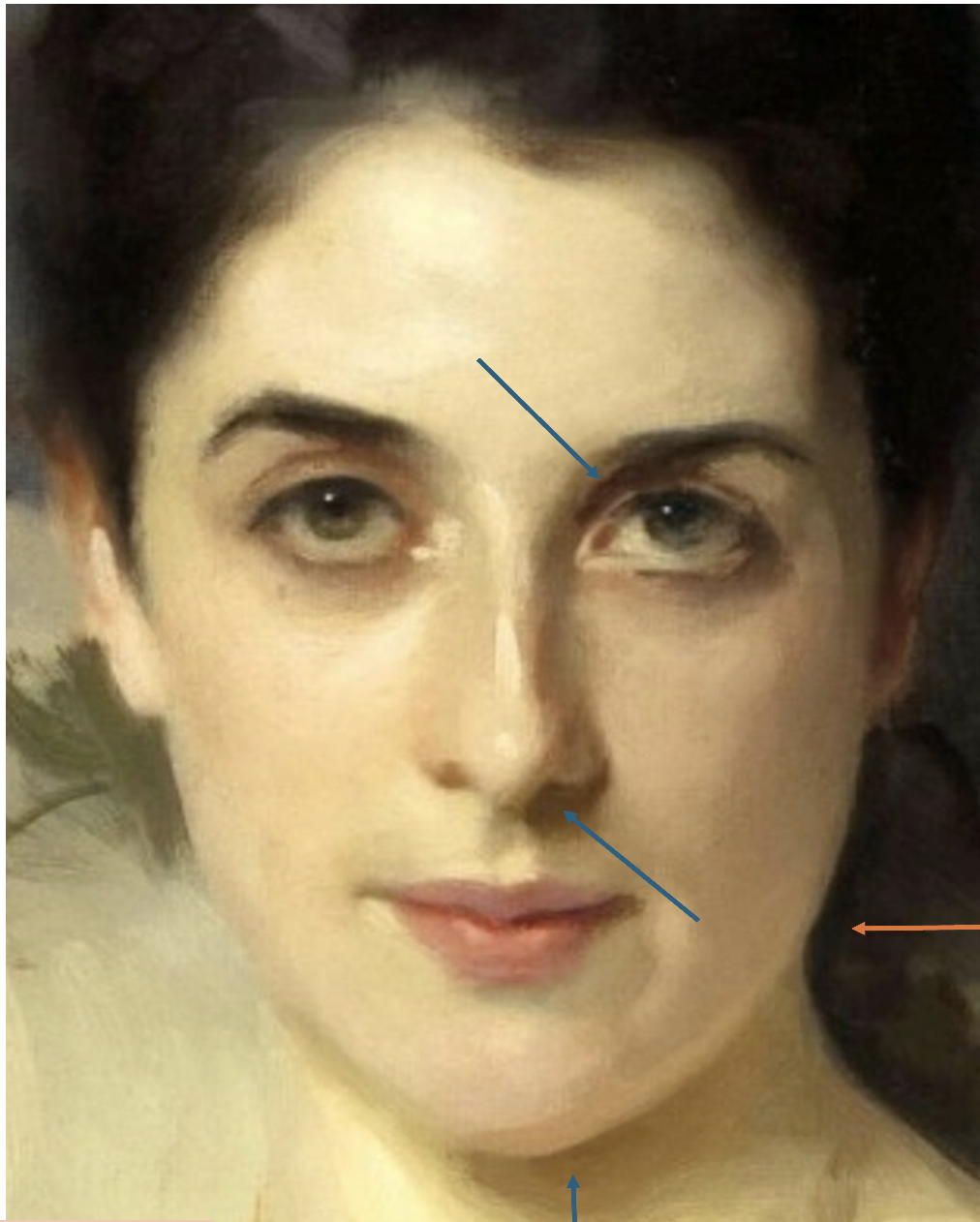
So a very useful question is: is the form turning gradually, or is the direction changing suddenly?
- Gradual turn: usually a softer transition.
- Sudden change: it can take a sharper edge.
Edges direct the eye
Edges also create visual hierarchy. When you sharpen something, you don't only bring it forward. You also tell the viewer: look here.
This means you don't need to describe everything equally. You can make one eye more defined and let the other stay quieter. You can sharpen a small area around the mouth, or under the nose, and soften what is around it.
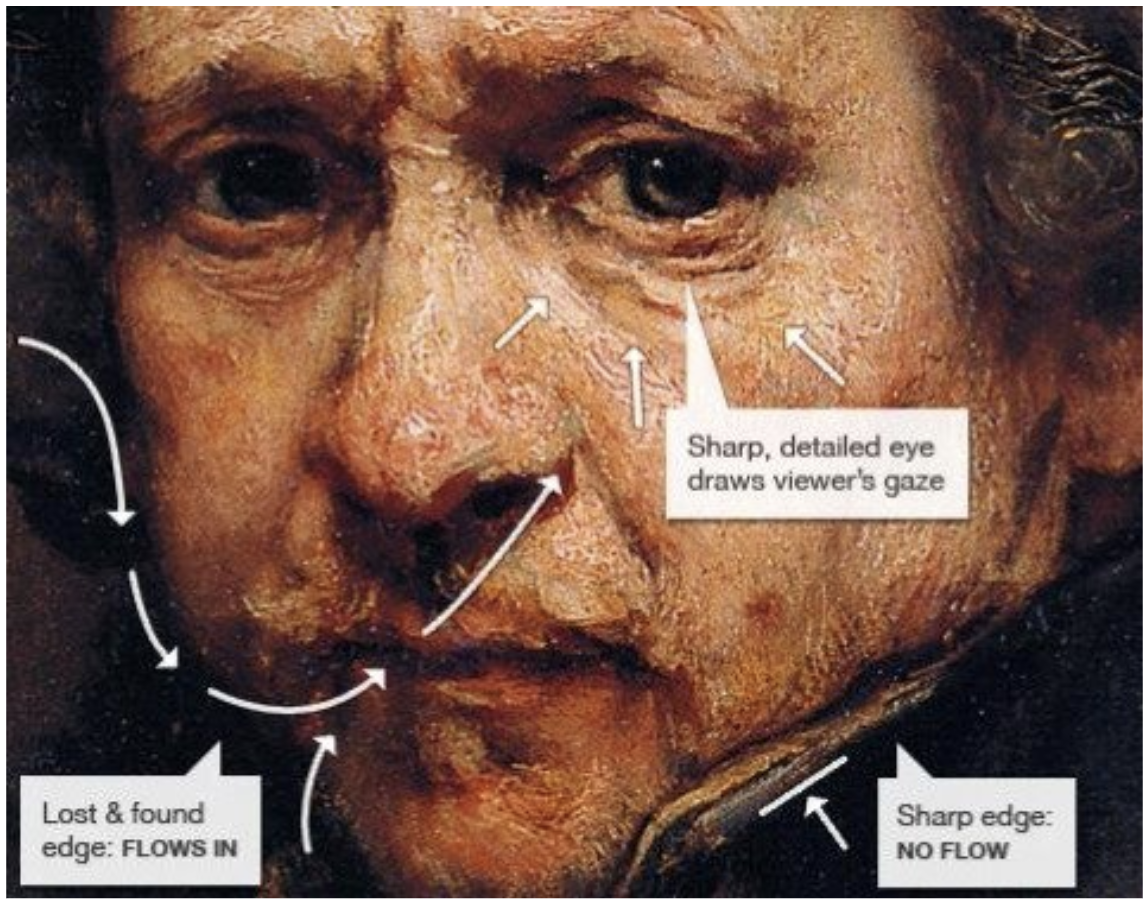
The balance between sharp and soft edges keeps the painting alive. Too many sharp edges, and the work becomes rigid. Too many soft edges, and everything becomes vague.
The point is not to blur the background and sharpen the face by habit. The point is to decide where you want attention.
Hair: the edge often tells you more than the detail
Hair shows clearly how much information sits in the silhouette. Very often, I understand the type of hair more from its outer edge than from all the detail inside it.
- Straight hair: the silhouette feels cleaner, longer and more linear.
- Curly hair: the edge changes direction more often. You may see sharper turns where a curl folds into shadow, and softer areas where it turns out and catches the light.
- Afro or tightly curled hair: the overall mass is very important. The silhouette can stay soft and broken, instead of becoming a collection of single painted hairs.
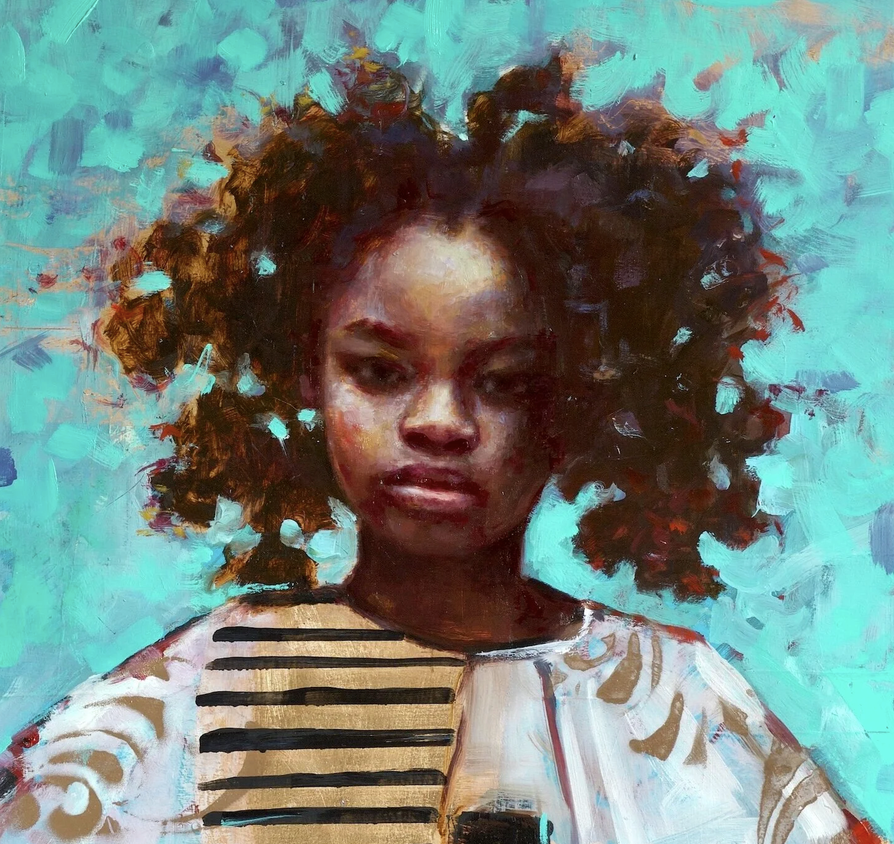
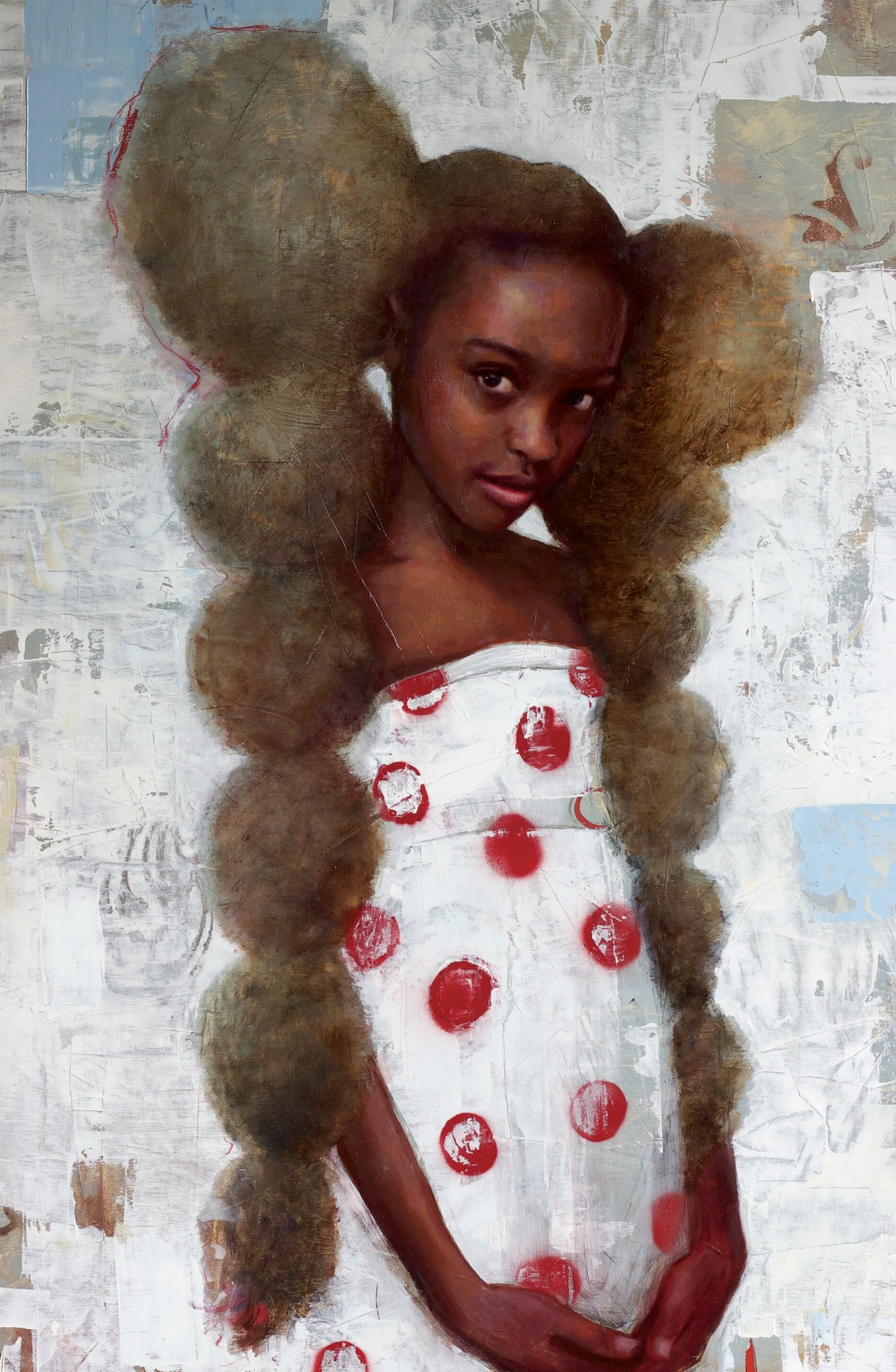
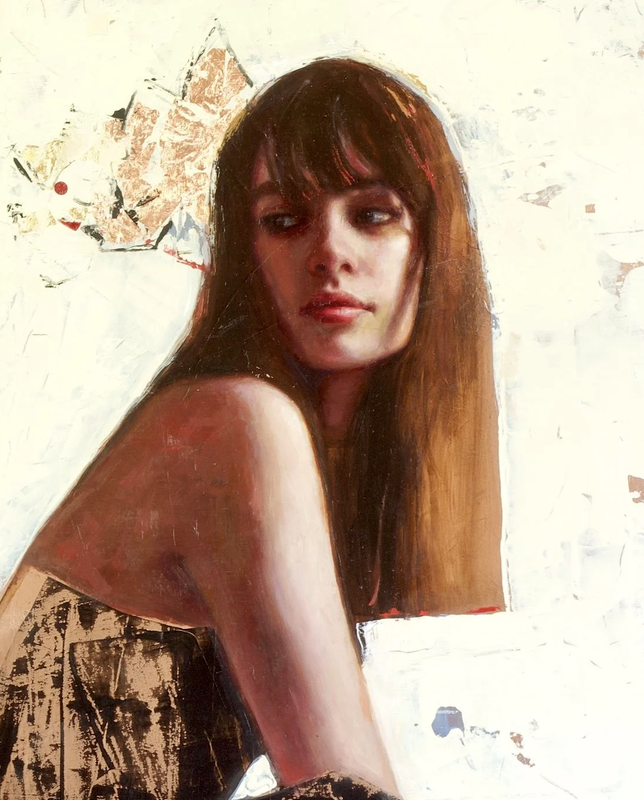
So before you paint the inside of the hair, look at the outside. What is the silhouette already telling you?
Edges describe material
Imagine two pieces of fabric in almost the same colour. One is silk. One is velvet. How do you make them feel different?
The answer is not only colour. It is also the way each material reacts to light, and that changes the edges.
- Silk, satin, taffeta: the reflections are more clearly defined. The highlights can be sharper, and the change from light to dark can be sudden.
- Velvet, wool and softer fabrics: the fibres absorb and spread the light. The transitions are quieter and softer.
Sargent is extraordinary at this. Look at Lady Agnew, especially the fabric around the hand. The silk is not convincing because he painted "silk colour". It is convincing because of the way the light breaks into clearly defined shapes and edges.
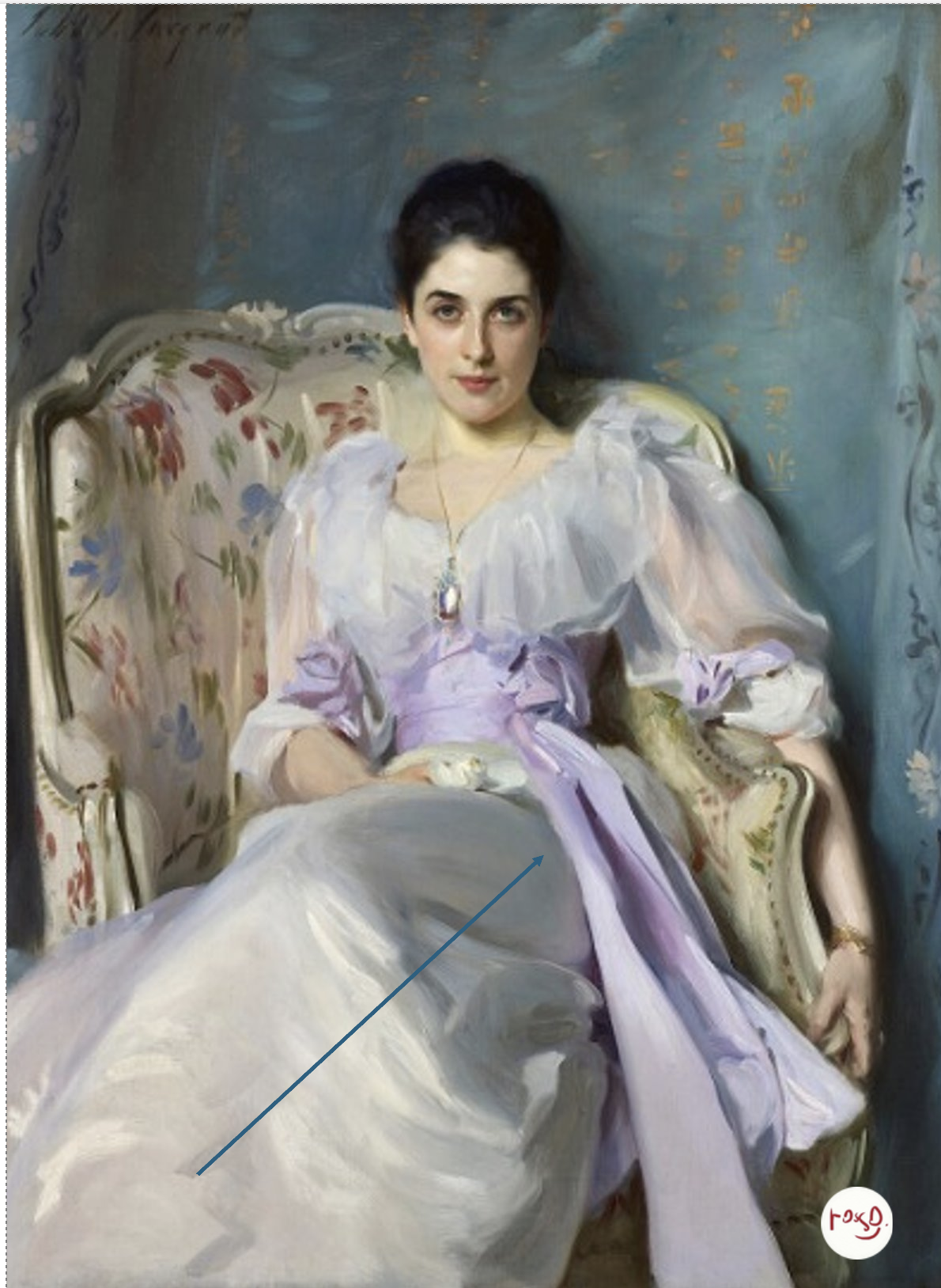
John Singer Sargent, Lady Agnew of Lochnaw (1892)
A personal experiment
I explored this on purpose in one of my self-portraits, Frippery (2015). It has taffeta, velvet, tights, feathers and skin, many of them in a similar colour family. The question was: how can similar colours still describe completely different surfaces?
That is where the edges become crucial:
- How defined is the reflection?
- How sharp is the highlight?
- How quickly does one value move into another?
- Does the surface absorb light, or reflect it?
At this stage, you no longer ask "What colour is this?" You ask "How does this surface behave?"
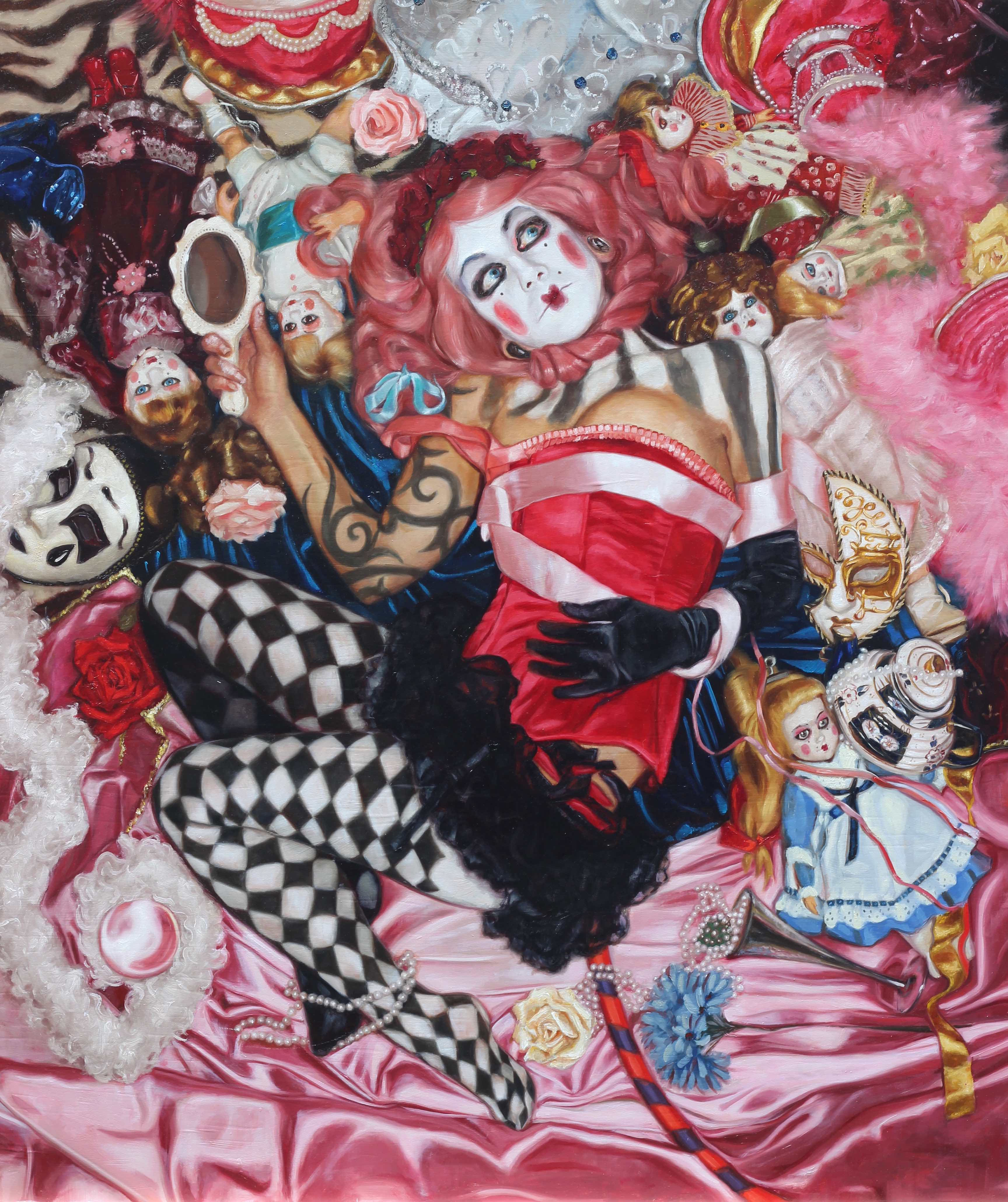
Frippery (2015), Rosso Emerald Crimson
When edges become something else
Up to this point, we have used edges to make realism more convincing. But this is where the subject becomes really interesting for me.
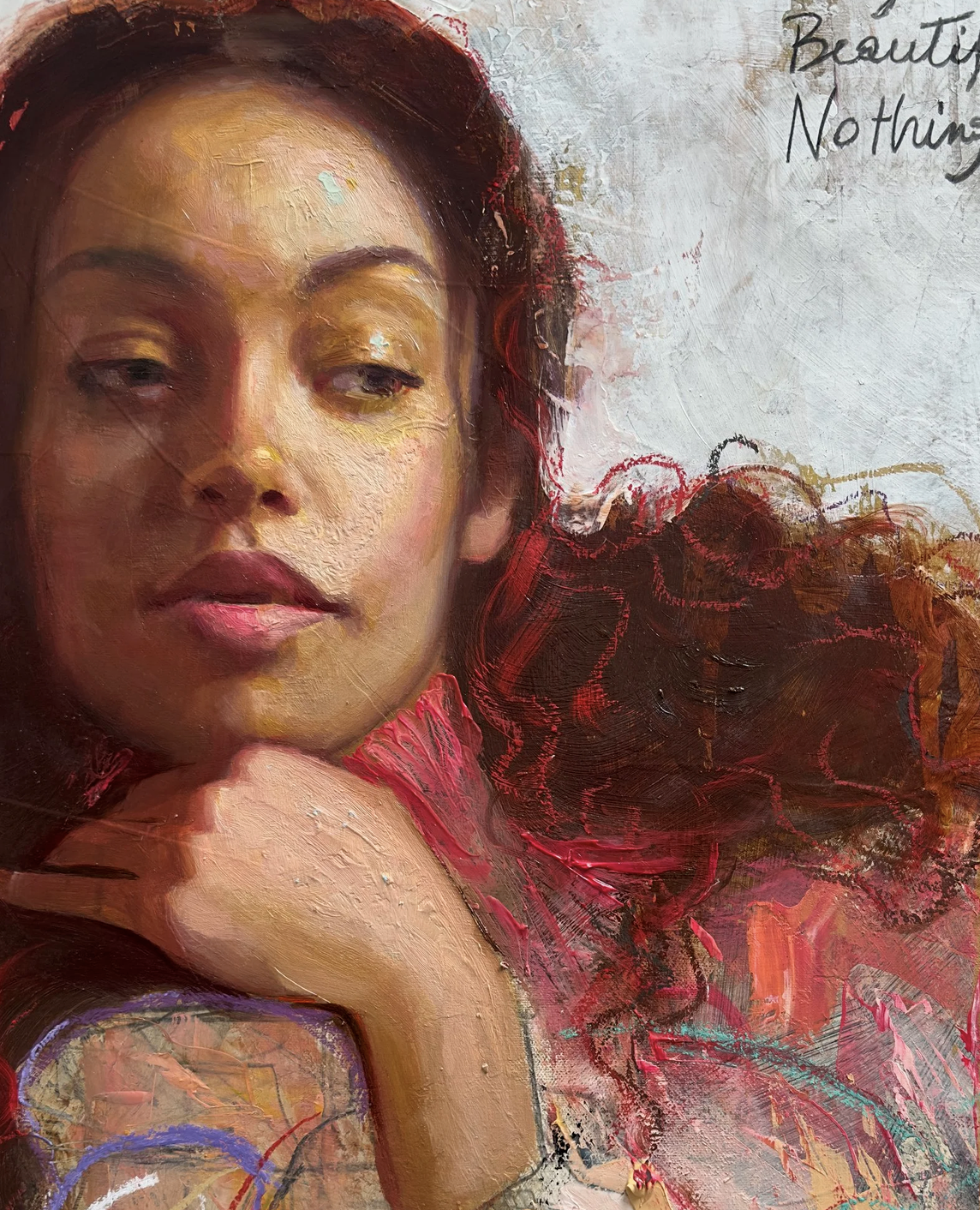
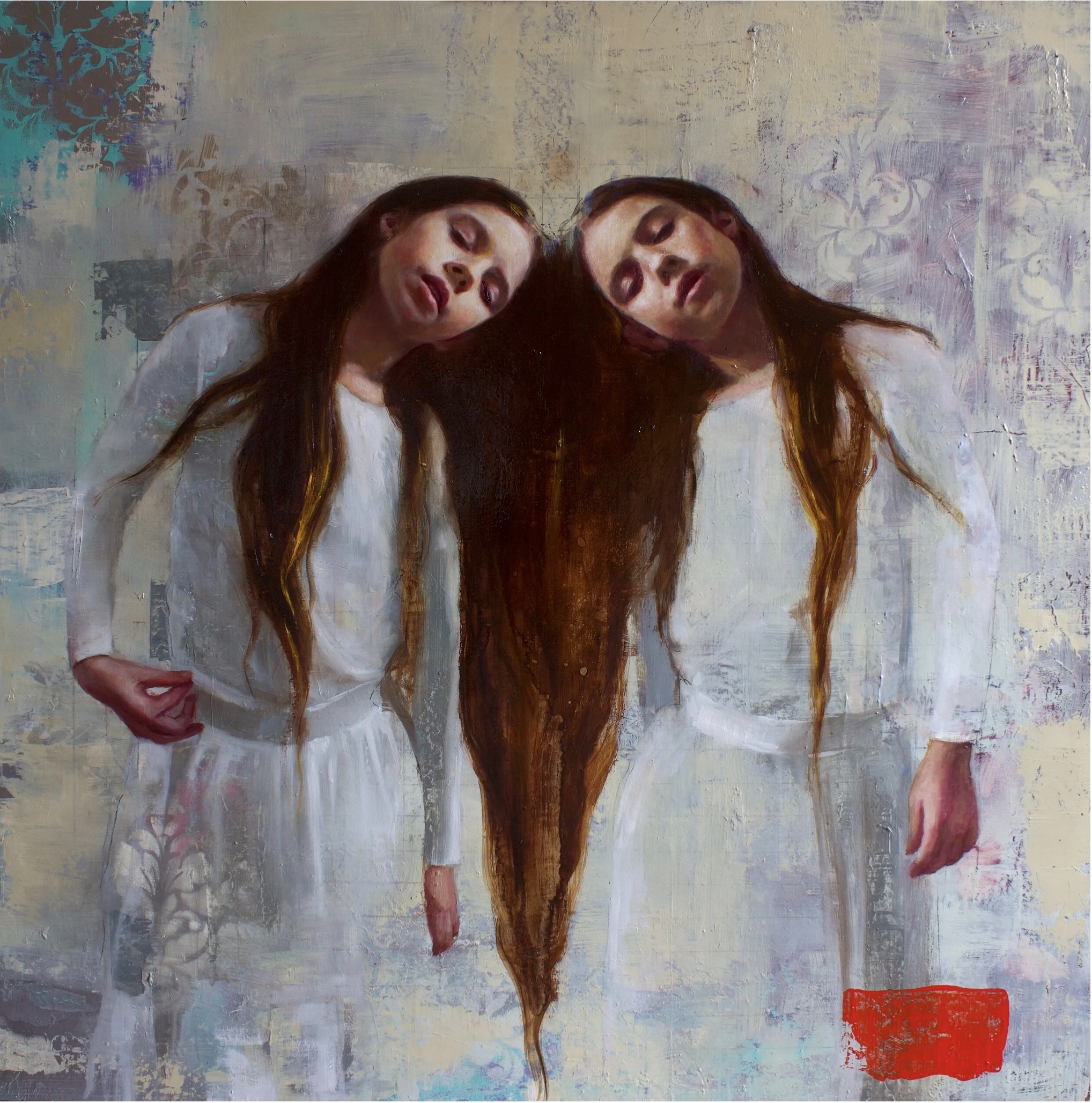
In contemporary figurative and abstract-figurative painting, the figure often stops behaving like a closed object. A shoulder dissolves into the background. A face stays highly resolved while the clothing breaks apart. The background comes into the figure.
Edges become lost, broken, blurred, scraped, interrupted and rebuilt. The painting is no longer a figure against a background. The whole surface starts to work together.
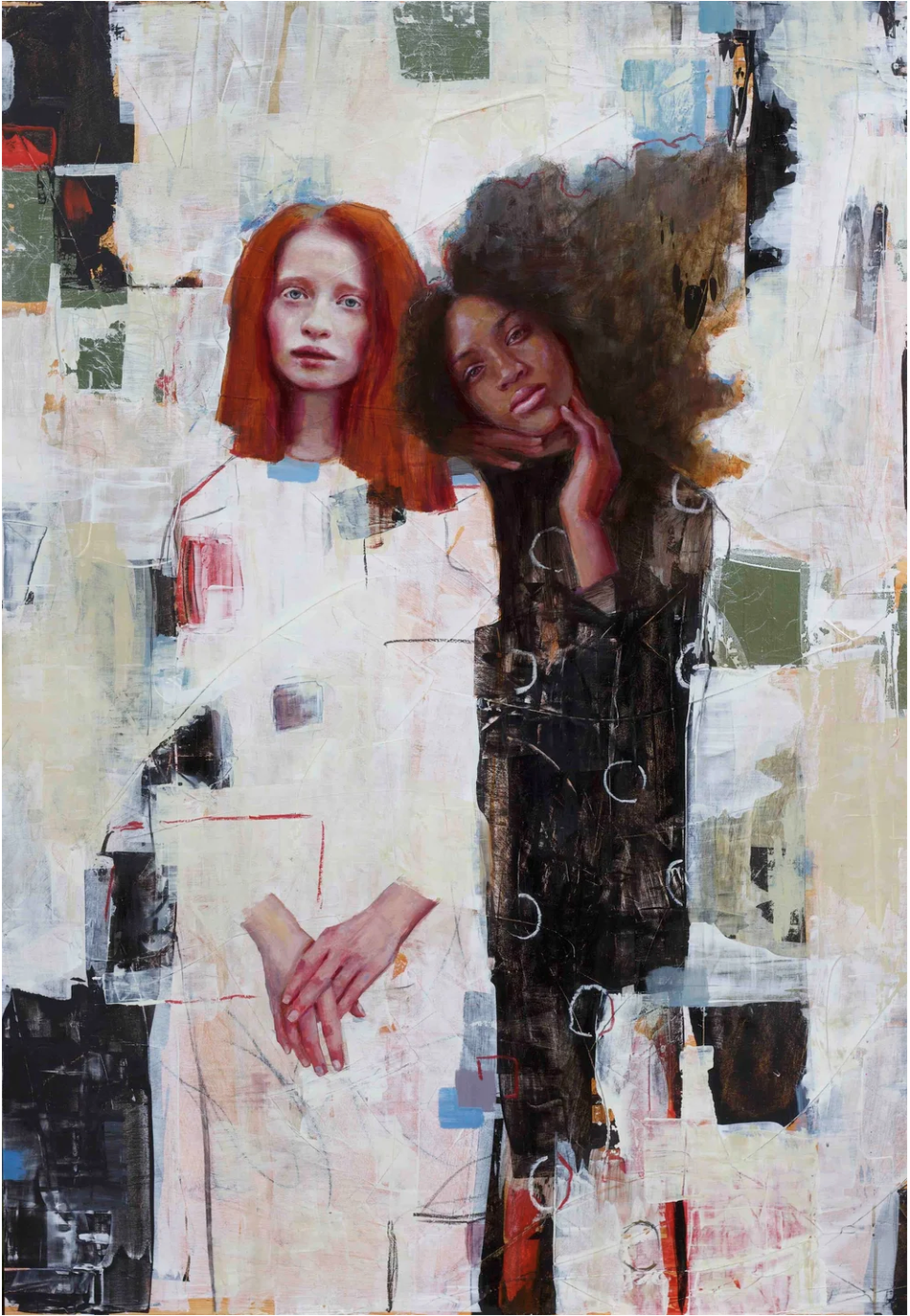
La Roja, La Morena (2021), Rosso Emerald Crimson
In La Roja, La Morena (2021), I was pushing the boundary between figure and background on purpose. The two figures merge with the surface, then separate again. The background starts to behave almost like clothing, while lines and marks move beyond the expected silhouette. It was an experiment in how far I could disrupt the figure without losing it.
This is the difficult part
This is the hardest part to teach as a formula. You can understand the principle, but at some point you have to feel it.
I have pushed disruption further in my own work many times. Sometimes it worked. Sometimes I lost something I liked and rebuilt the figure on top.
That negotiation is part of painting. You remove something. You look. You put something back. You sharpen one passage. You let another disappear.
At this level, edges stop being a technical trick. They become part of interpretation.
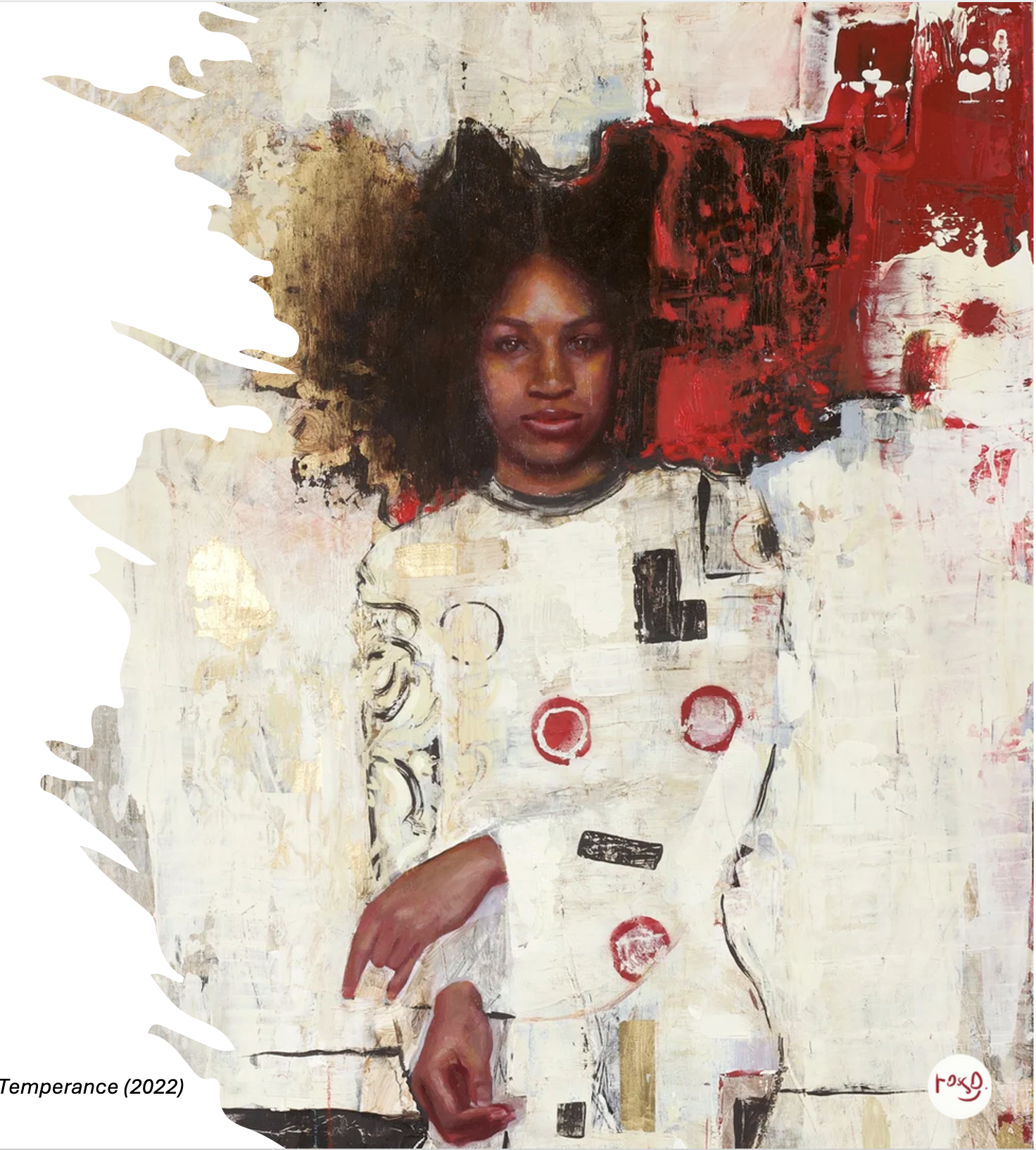
Temperance (2022), Rosso Emerald Crimson
Don't force it
I want to say this clearly: edges are not the first thing you need to master. For me, they came later.
First I had to understand proportion and likeness. Then the skull and the planes. Then value and light. Then colour and temperature. Only later did edges really click.
So if you understand this idea but you cannot yet see it in your painting, don't force yourself to paint mechanically. Keep painting. Keep looking. Start noticing. These decisions become natural with time.
And when you want to push realism towards abstraction, edges are a good place to start. Soften, lose, break or extend a boundary, and see what happens. That is often where the boundary between realism and abstraction begins to blur.
A quick way to check your own work
If a portrait feels lifeless, too cut-out, too rigid, or too much like a copy, check the edges. Ask yourself:
- Are all my edges equally sharp?
- Is the figure outlined against the background?
- Have I described every feature with the same attention?
- Could one area disappear more, without losing meaning?
- Could one small area become sharper?
- Are the edges helping the form, or fighting it?
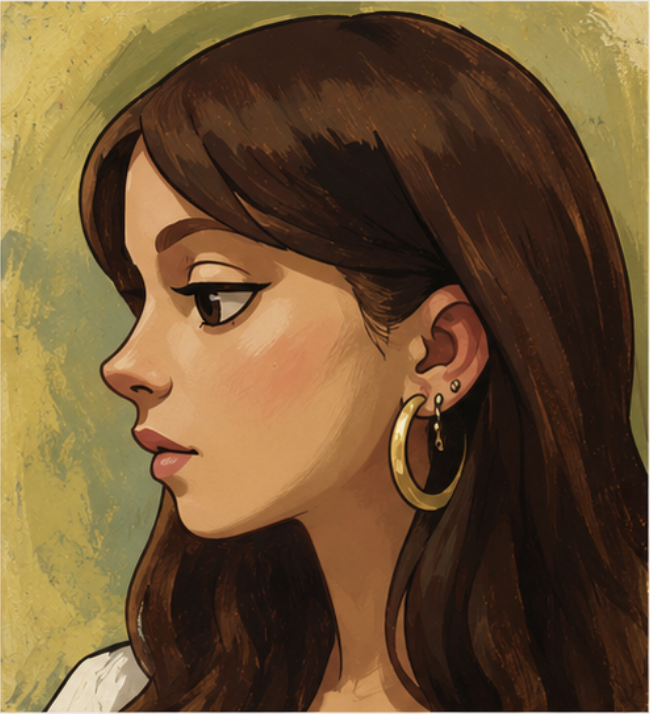
Varied edges create hierarchy. Equal edges flatten it.
Ideas for your practice: look only at the edges
Choose one painting. It can be your own work, a master painting, or a contemporary painting you admire. Do not analyse everything. Look only at the edges.
First, find where you see sharp edges, soft edges, lost edges, and broken or disrupted edges.
Then ask what those edges are doing:
- Are they creating depth?
- Describing a change of plane?
- Describing hair or another material?
- Directing attention?
- Separating forms?
- Connecting the figure to the background?
- Or disrupting realism?
Learn the full method
In COMPLETE, I teach the full path, from proportion, planes and value to the point where you start to break the figure apart on purpose.
If this way of painting speaks to you, this is where we work on it together.
Start with the free portrait guide
If you have not done so yet, download my free guide, What Makes a Portrait Convincing?
Enjoyed this article?
Subscribe here to receive practical painting advice and more arty news.
No spam. Only thoughtful, carefully written content.