The Painting That Forced Me Out of Traditional Realism
May 23, 2026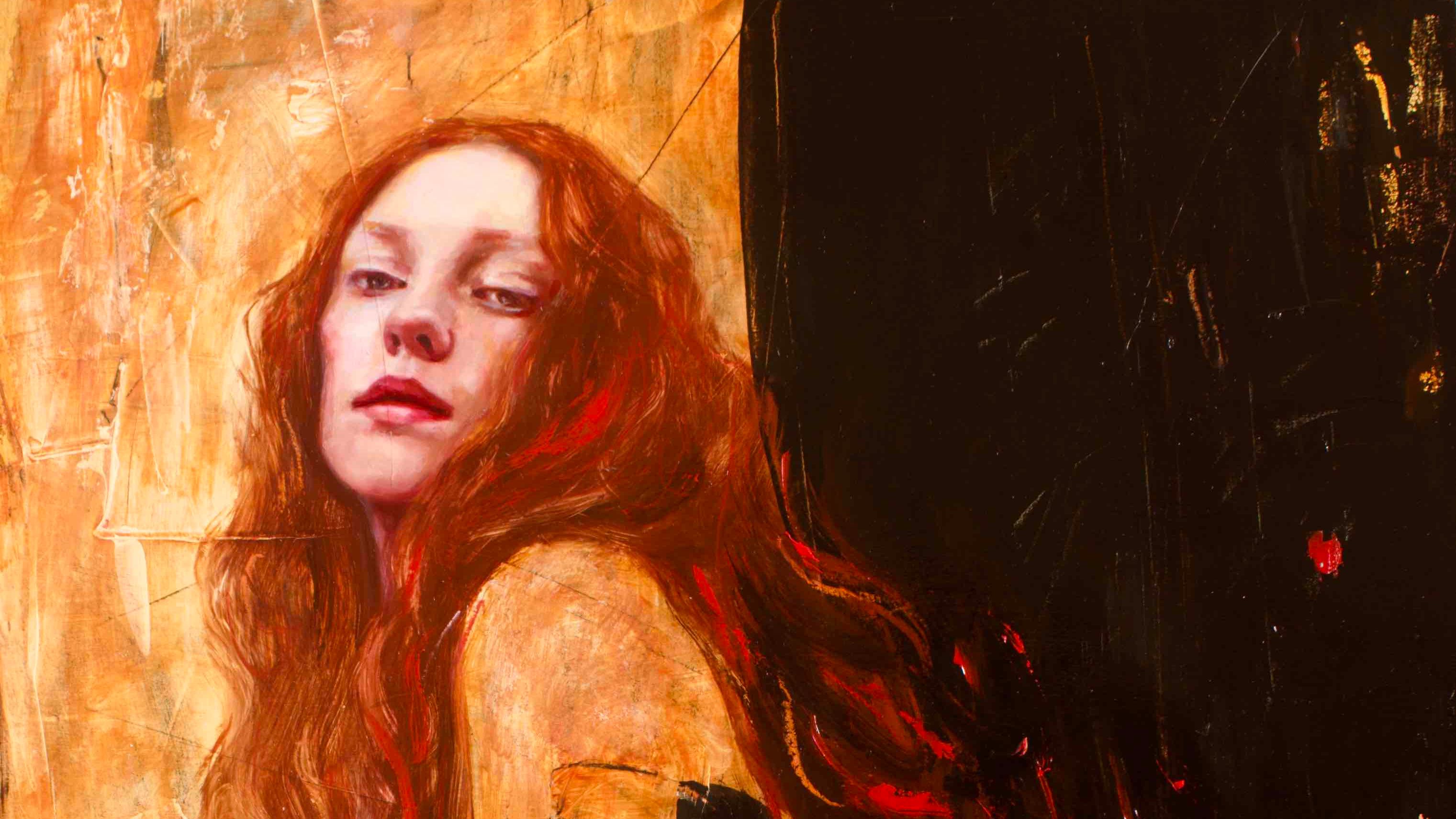
Breeze was created around six or seven years ago as part of my Redlock Series — a body of work where, for the first time, I consciously started pushing myself away from traditional portraiture and into a much more abstract and emotionally driven territory.
At that stage, I was trying to understand how far I could go with less.
The first painting of the series featured the same model looking directly forward, with the chin lifted upward in a pose that, without me fully realising it at the time, strongly echoed Klimt’s Judith.
I wasn’t intentionally trying to recreate Klimt, but unconsciously I had clearly absorbed some of that visual language — especially because I had also started experimenting with gold leaf for the first time.
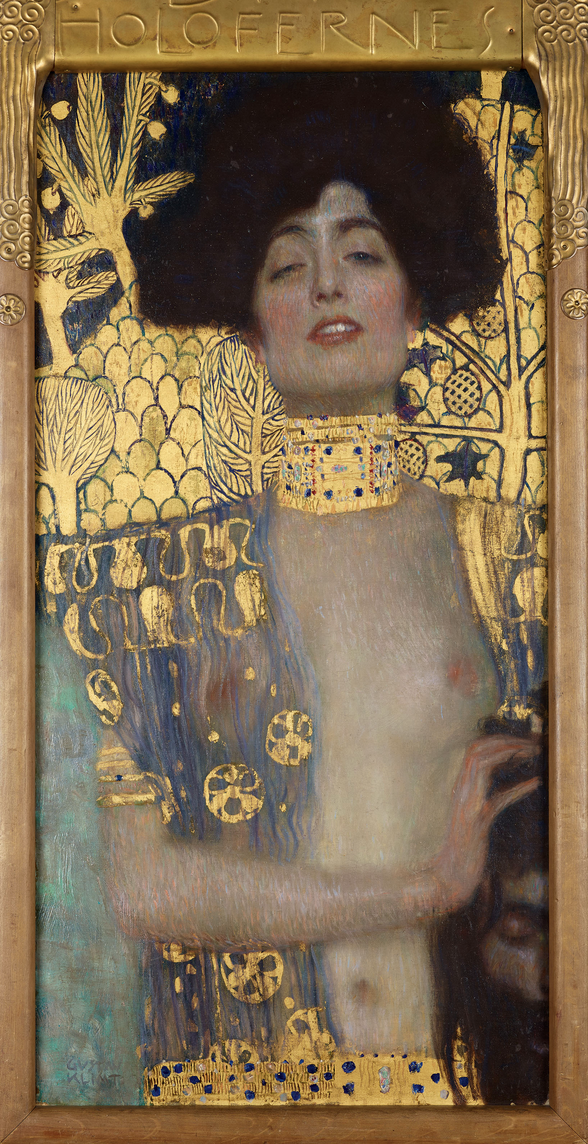
When I released the work, many people immediately described it as a contemporary version of Klimt. On one side, of course, I took it as a compliment because I deeply admire Klimt’s work. But on the other side, it also left me slightly puzzled because I realised that wasn’t entirely what I was searching for.
What fascinates me most in portraiture is presence.
And while I think Klimt created astonishingly beautiful paintings, I often feel that the women in his work become almost part of the decorative structure itself — flattened into the patterns and ornamentation surrounding them.
My own interest was different.
Because I had already spent years deeply studying classical realism and oil portraiture, what interested me was not flattening the figure completely, but testing how far I could push abstraction while still maintaining emotional and physical presence.
That became the real investigation behind the Redlock Series.
How far could I simplify the figure?
How much abstraction could enter the painting before the portrait itself collapsed?
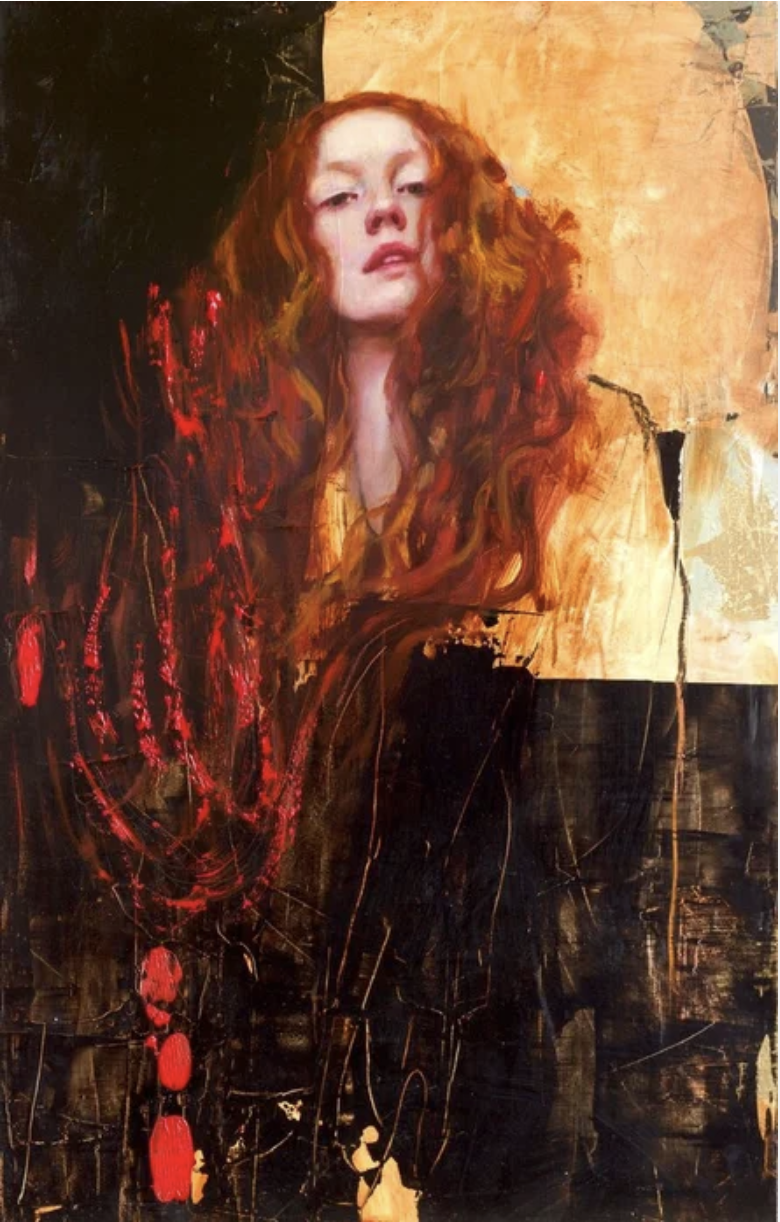
In Breeze, one of the biggest challenges for me was compositional and psychological. The figure is almost floating inside these large abstract blocks of orange and black. At the time, it felt like a huge leap for me mentally — allowing parts of the body to dissolve while still believing the portrait could hold emotional weight and presence. There was a lot of intuitive decision-making happening during these paintings. Colour relationships, composition, the balance between realism and abstraction — everything was happening almost instinctively.
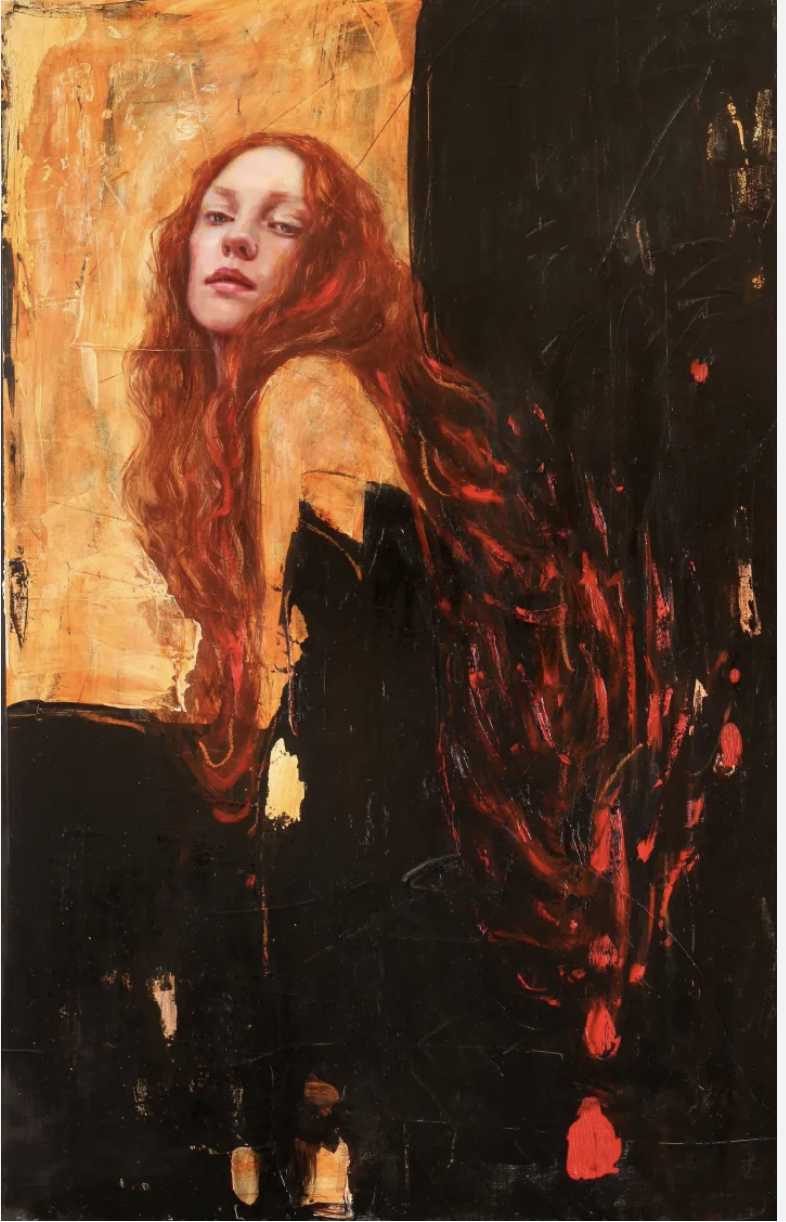
Nowadays, years later, I work much more intentionally, simply because I’ve crossed those territories many times already. But back then, these paintings genuinely felt like stepping into the unknown.
Breeze became one of the key works within that transition.
The painting has since travelled internationally and was exhibited in Canada as part of a women’s exhibition with the James Baird Gallery. After several years away, the work has now returned and is finally available again.
Here's a link to my shop - in case you want to welcome her to your home!
Enjoyed this article?
Subscribe here to receive practical painting advice and more arty news.
No spam. Only thoughtful, carefully written content.