The Most Experimental Portrait I’ve Painted Looks the Most Classical
May 23, 2026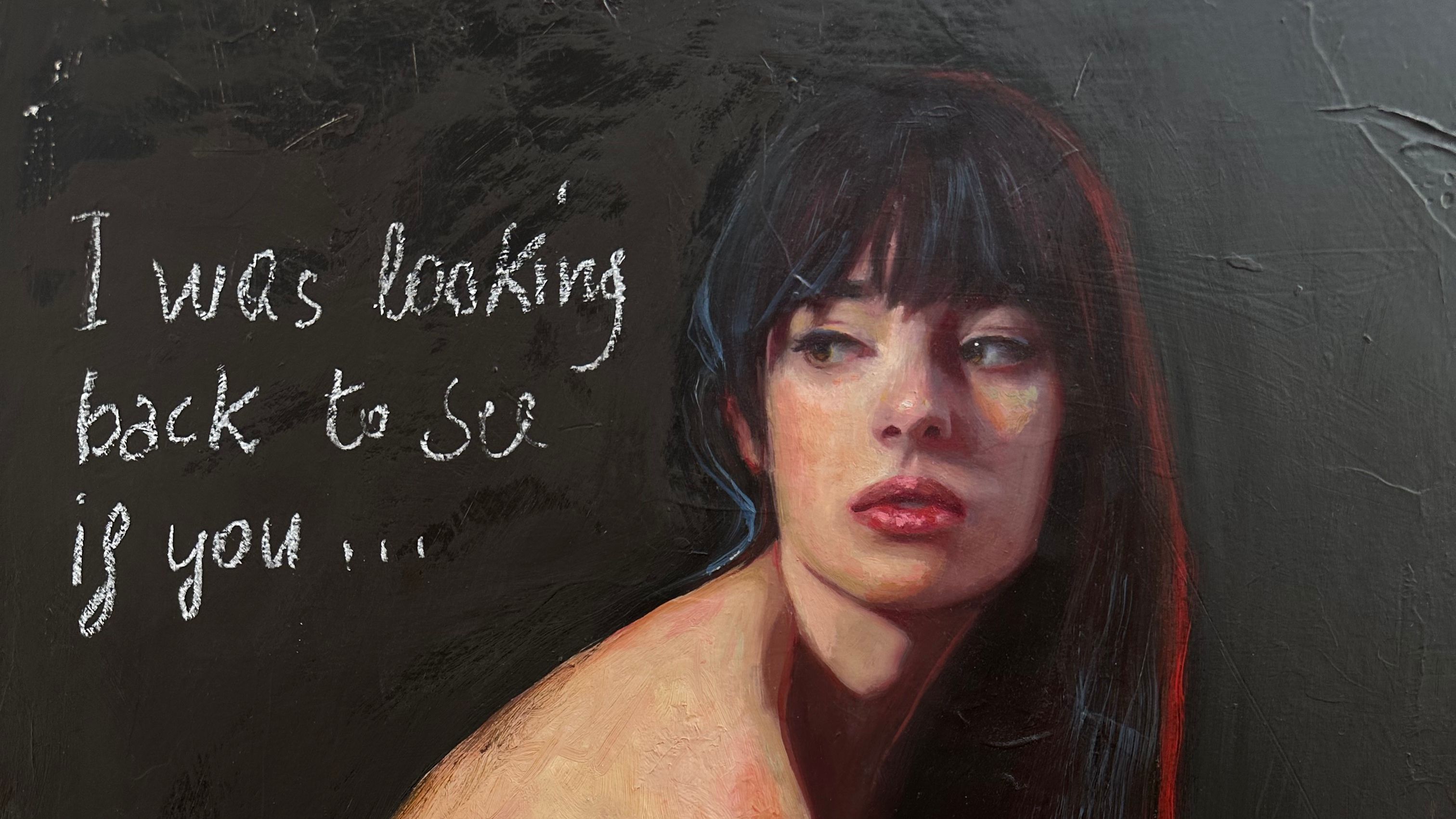
At first glance, you would probably never imagine how this painting actually started.
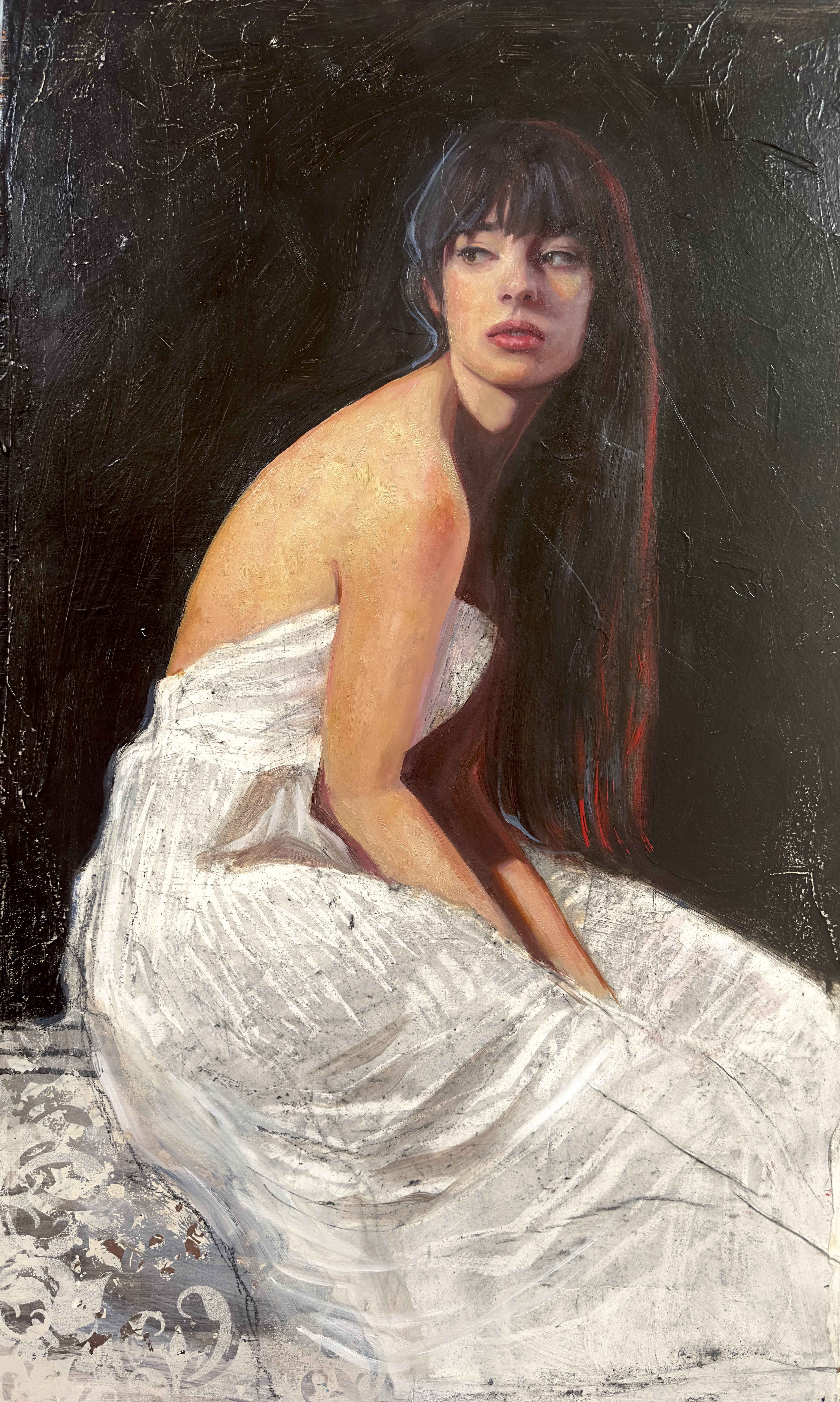
It looks almost like a Renaissance portrait — dark chiaroscuro, soft flesh, controlled atmosphere, a very classical feeling overall. And yet, technically, this has probably been one of the most experimental portraits I’ve made in years.
This painting has been sitting in my studio with me for over half a year now — possibly longer. That’s often what happens with certain paintings. I go back and forward with them, looking at them from different perspectives, waiting to understand whether there is still something unresolved or unsaid.
People often ask me if I feel bad when I sell my paintings. Most of the time, honestly, I don’t. Quite the opposite. I feel happy, rewarded, understood. A person connecting with my language, a painting finding its home usually feels ecstatic to me.
But there are a few pieces that I become particularly attached to, and this is one of them.
Sometimes the attachment is emotional, sometimes technical. Certain works represent a breakthrough, either in the process itself or in what they carry narratively. These are the paintings I keep around me for longer. I might reveal them now and then in the studio or online, but I don’t necessarily make them available until I feel genuinely ready to let them go.
This piece stayed with me partly because of the technical experimentation behind it.
The painting is executed in oil on distressed paper mounted onto panel. Before even beginning the figure itself, I spent months researching and testing materials — understanding how to roll and mount the paper properly, how to stabilise the surface, and how to prepare it so that it could support oil paint while remaining archival and durable over time.
I also wanted to observe how the surface would react naturally with time. The painting has now been sitting in the studio for months, and the surface has remained completely stable, which made me finally feel confident enough to release it.
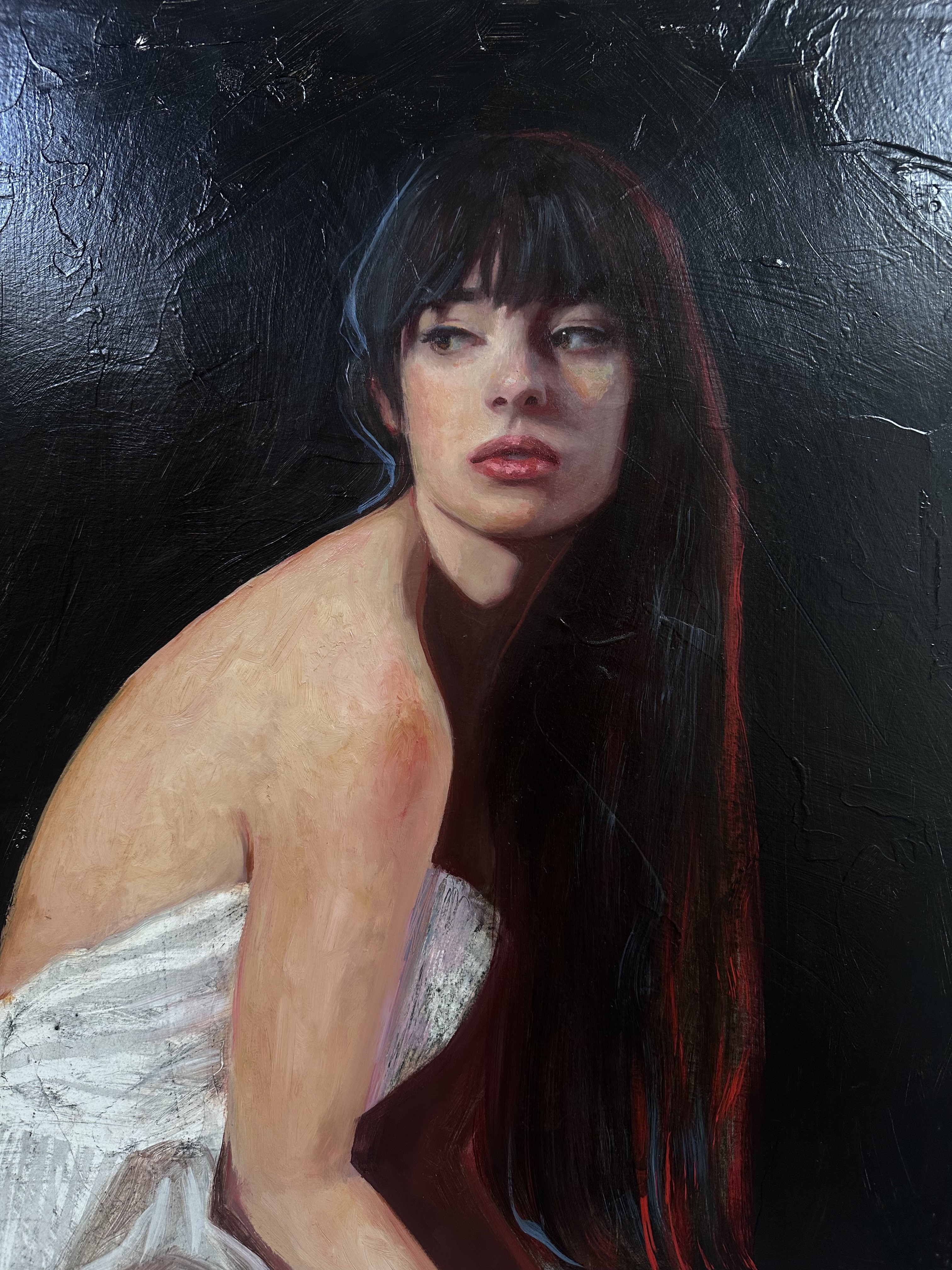
What interested me technically was the contrast between fragility and structure.
The dress still reveals the paper beneath, exposing charcoal marks, sketch lines, raw textures, and the physical construction of the surface itself. In contrast, the flesh is rendered entirely in oil. For me, nothing quite achieves the same depth and body as oil paint when painting skin — that particular luminosity and softness belongs uniquely to the medium.
The title came much later.
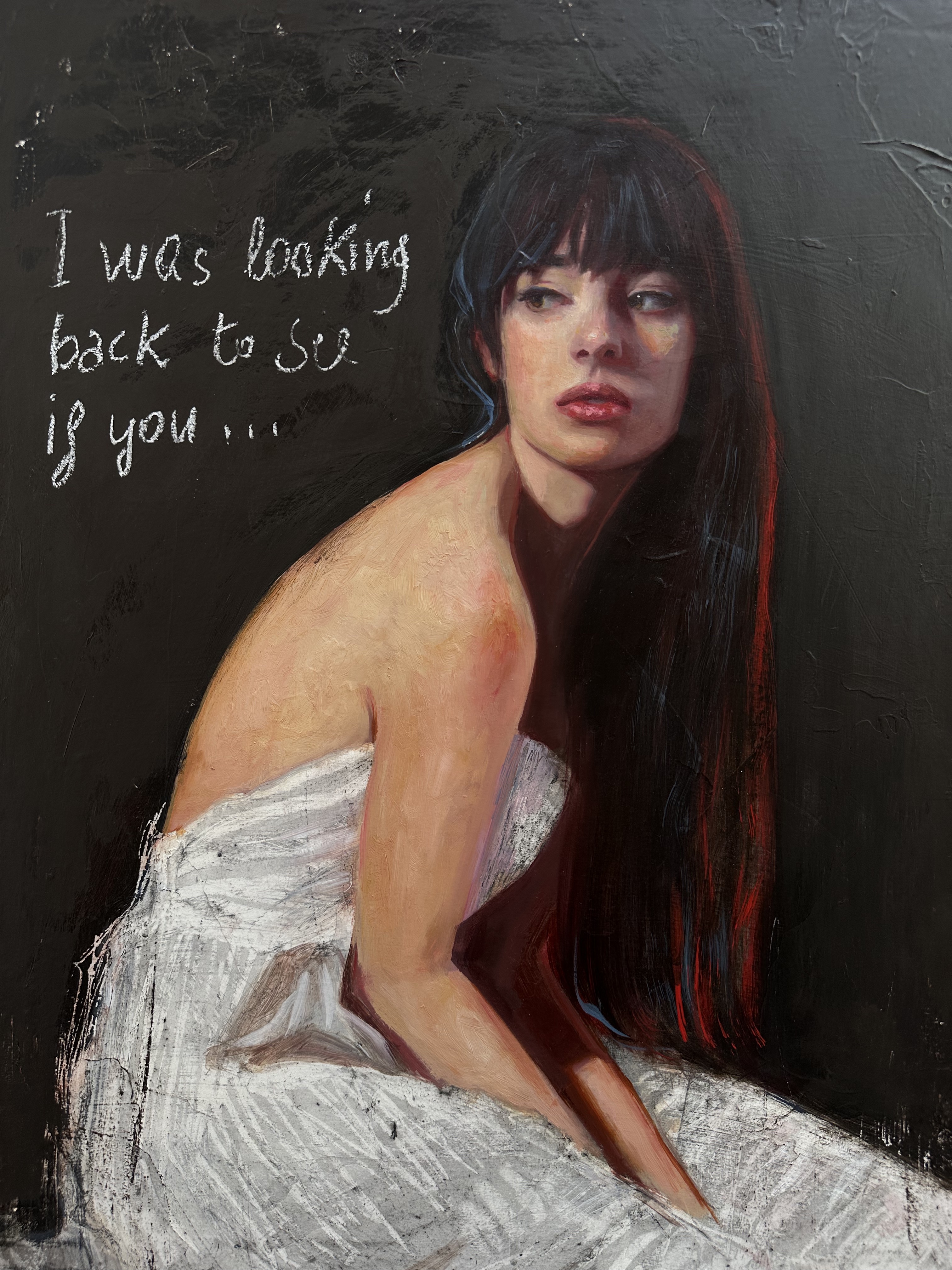
It was inspired by Massive Attack — music that immediately brings me back to a very specific period of life: meeting people, leaving people behind, carrying memories with you while wondering whether certain moments would ever return again.
“I was looking back to see if you were looking back at me.”
There is something incredibly nostalgic and romantic about that line. The feeling of emotionally turning around one last time.
The final intervention on the painting happened only recently, when I decided to write fragments of the sentence directly onto the finished surface in chalk. I intentionally left it incomplete and broken. I didn’t want to impose a fixed narrative onto the viewer, but simply leave a trace — a small indication of what was happening in my mind while creating the piece.
And now, finally, it feels ready.
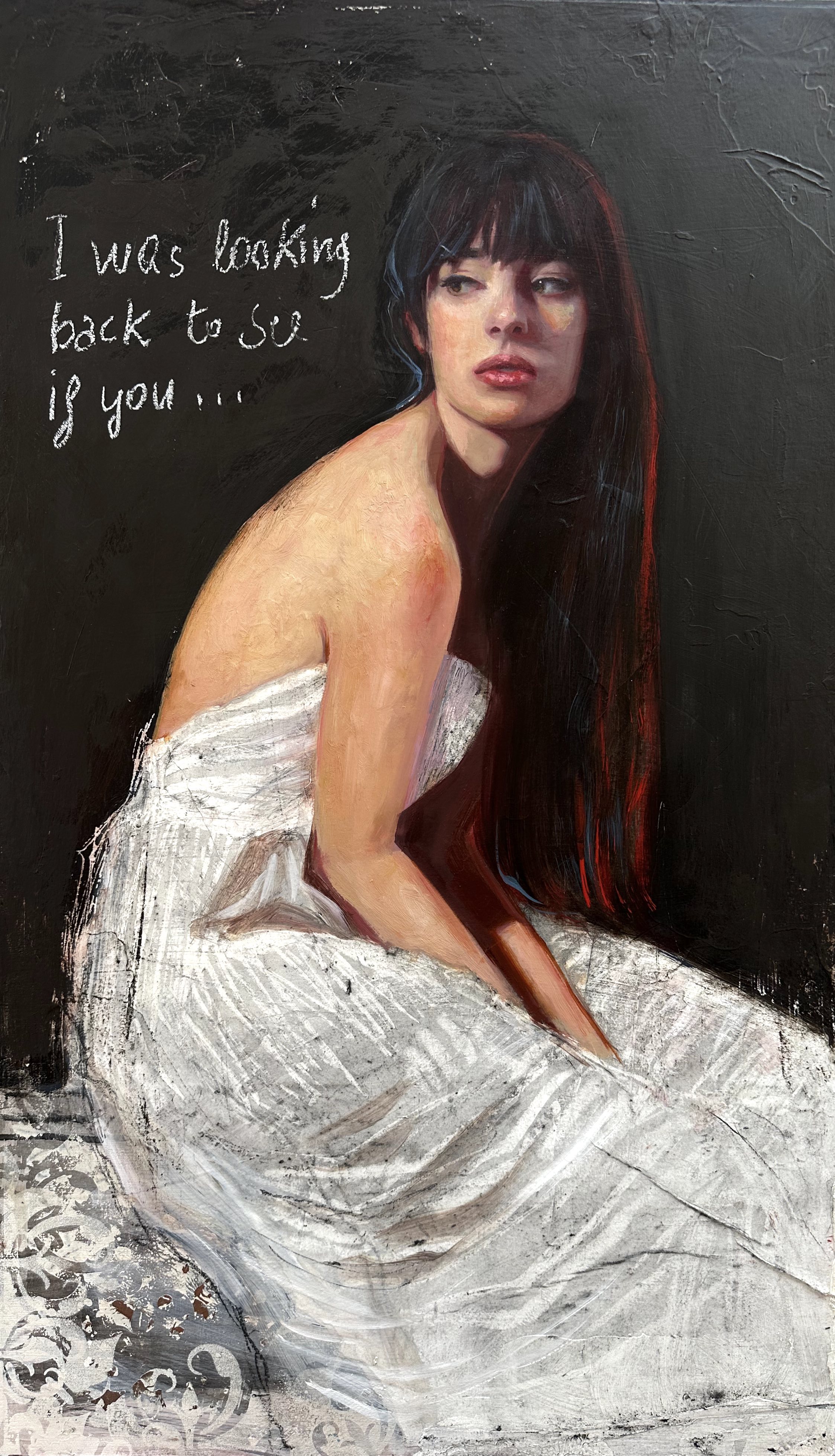
I Was Looking Back to See ...
Oil and charcoal on distressed paper mounted on panel, 83 × 50 cm.
If you'd like to take this piece home, you can find out more in my shop here.
Enjoyed this article?
Subscribe here to receive practical painting advice and more arty news.
No spam. Only thoughtful, carefully written content.