Twenty Minutes in Lucian Freud’s Studio
Feb 19, 2026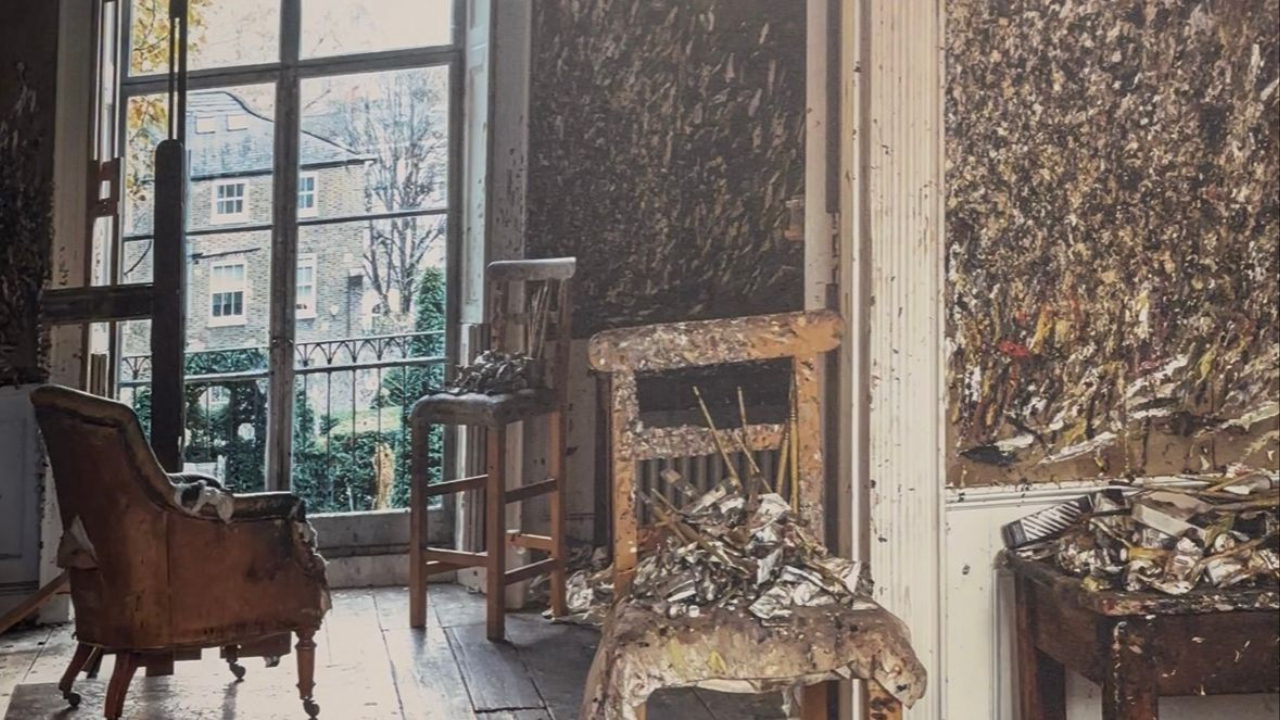
My friend Patsy invited me to see the latest exhibition of Lucian Freud at the National Portrait Gallery. I always get excited whenever I have the chance to view up close the work of painters I deeply love — painters who have entered my own work, in one way or another.
The show is brilliant. There is so much to take in. Four rooms that follow Freud’s artistic evolution from start to finish — sketchbooks, doodles, scribbles, etchings, accomplished drawings, studies for paintings, egg tempera paintings, unfinished work, and of course those fully sculptural, intense oil paintings and portraits of his later years.
I dare to call him “Lucian” now. After the show, I feel I know more about him than before.
But let me start from the place where I stood the longest.
You might be surprised what captured me most — surely very different from what captured my friend Patsy, a great art connoisseur and collector.
I stood for twenty minutes in front of the gigantic photograph of Freud’s studio in Holland Park.
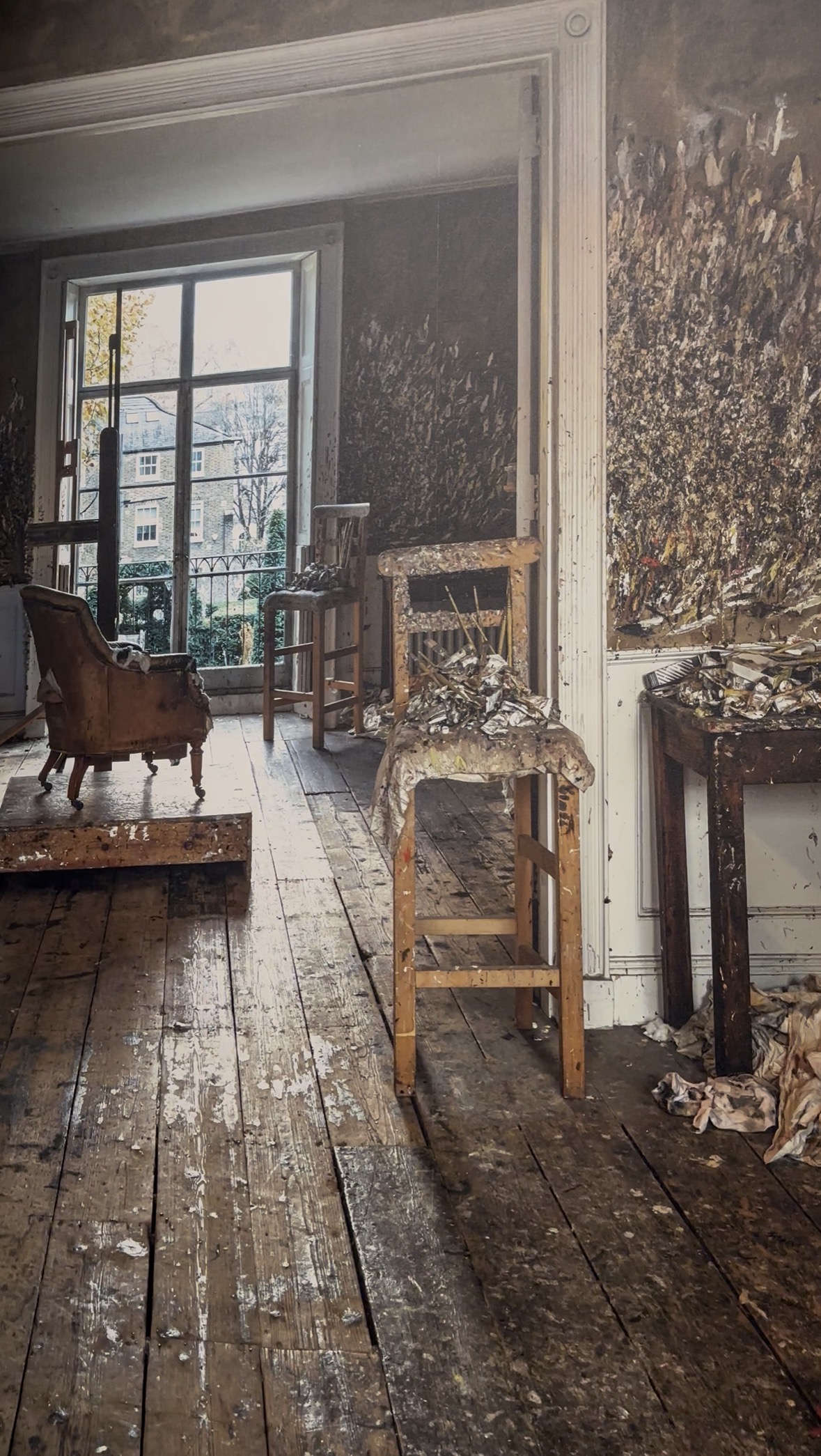
I know this image is placed there deliberately — a monumental invitation into his world, literally the space where he worked for decades. The studio is full of paint. Everywhere. The walls appear layered with years of palette scrapings — chaotic, yet somehow intentional — forming a one-of-a-kind wallpaper of accumulated colour. A pile of old tubes and dirty rags sits near the entrance. A chair and an easel stand on the other side. A tall Victorian glass door opens to let in that beautiful natural light, and beyond it you can glimpse the roofs and brick façades of Holland Park houses.
Interestingly, by coincidence, I had just passed through Holland Park on my way to the National Portrait Gallery. For a moment I felt overwhelmed by the irresistible elegance and artistic atmosphere of that area. I thought to myself: if I ever could, I would want a studio right there.
Back at the exhibition, Patsy didn’t quite understand why I stood so long in front of that photograph. She is not a painter, after all.
Every time one of my paint tubes finishes, I feel strangely reluctant to throw it away. How odd. Apparently, I’m not the only one. Perhaps I should start collecting them.
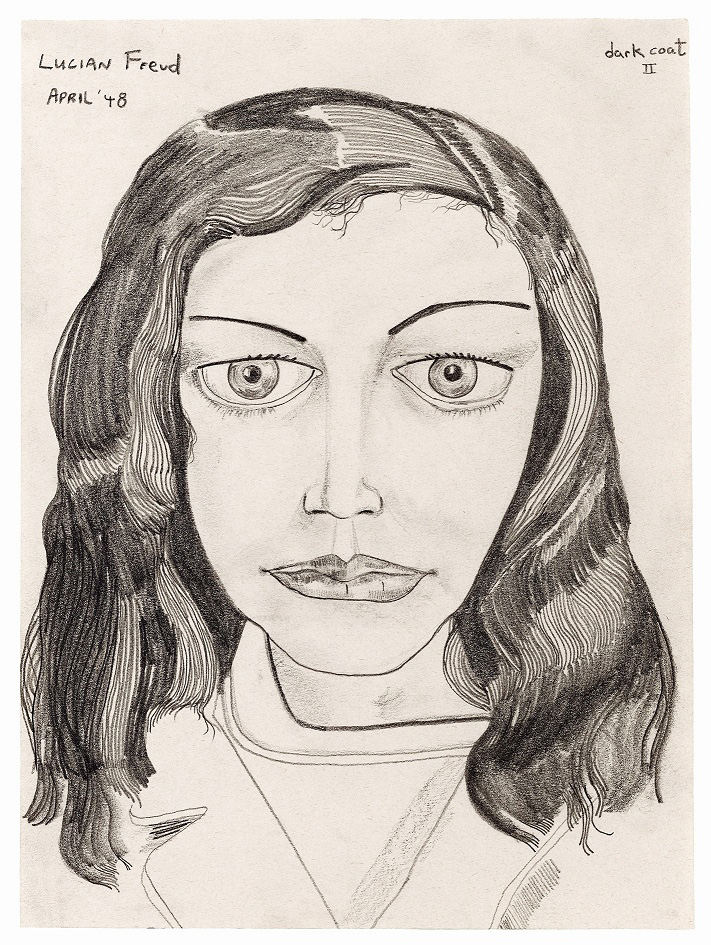
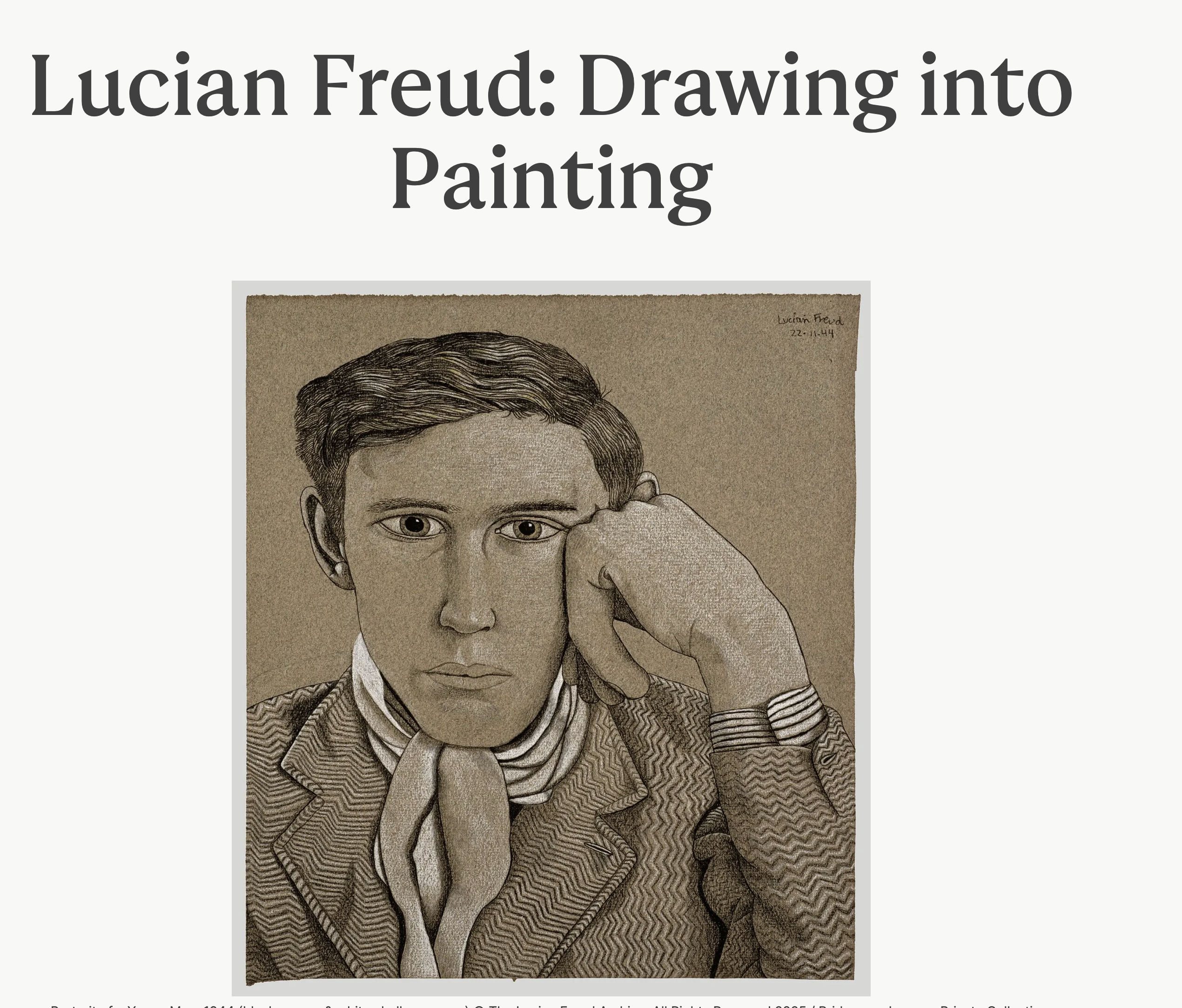
The first room begins with Freud’s early sketches and drawings, including that beautiful tempera painting with the egg. I love those big eyes. I love how flat and minimal, yet completely confrontational, those early works feel. And I love witnessing the evolution — from those stylised, almost naïve beginnings into the thick, layered, sculptural paint of his later years.
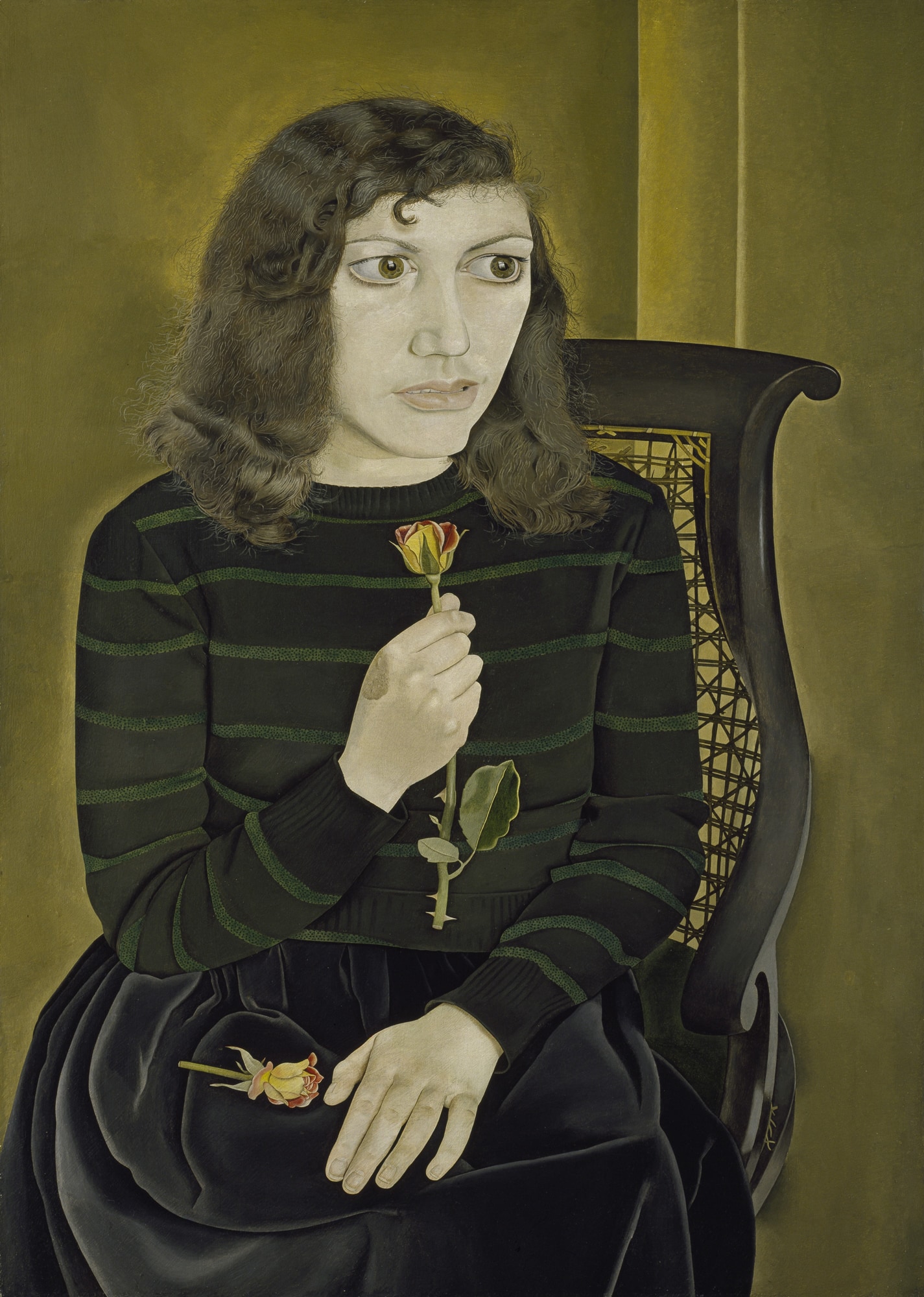
Those eyes became iconic. And so did those heavy, dull skin tones that literally sculpt the bodies in his work. Almost muddy, one could say — yet always punctuated by strategic touches of warmth that suddenly bring everything to life.
The sketches and scribbles captivated me as well. Patsy asked whether I thought Freud would have wanted those to be shown publicly. I stepped into his shoes for a moment and thought: perhaps not, especially the scribbles. Maybe they were never meant for anyone else’s eyes.
But then again — a mature, confident painter might feel it is almost a moral duty to show the entire creative process. Because if anything, those sketches and scribbles reveal the truth: the process.
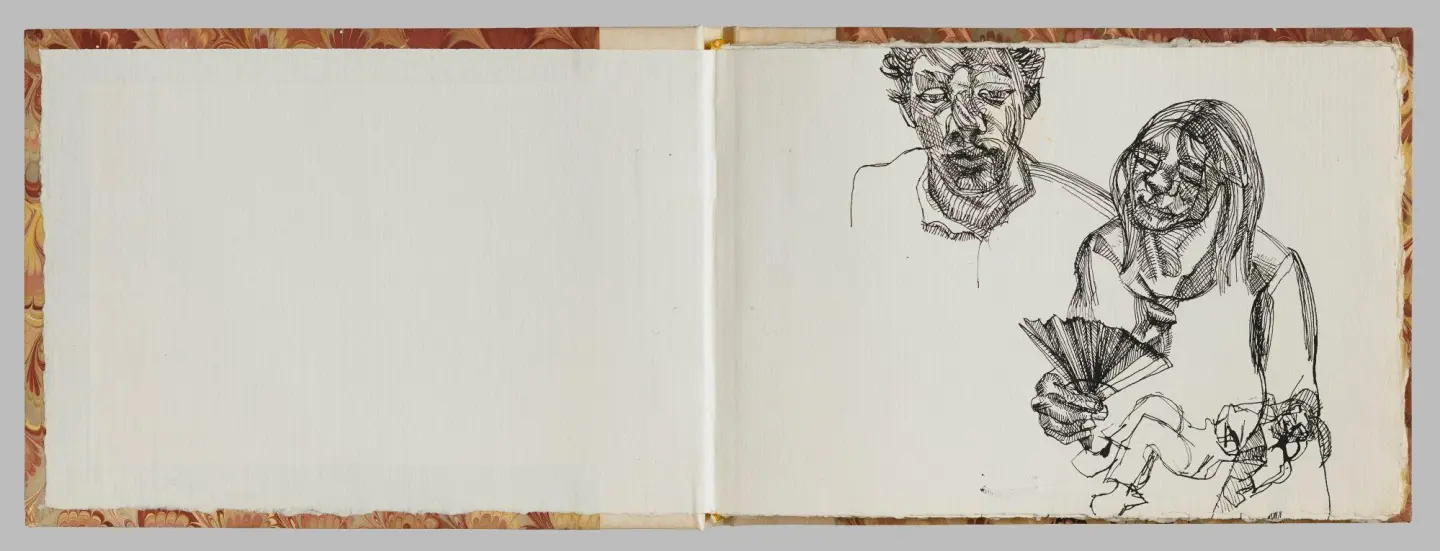
How often do we believe that the final painting defines the artist?
When in reality, it is years of trying, experimenting, taking notes, deleting, retrying — that form our identity far more profoundly than any single successful painting.
I learned something from that.
I won’t throw away my scribbles, my sketches, my diary notes. If nothing else, perhaps one day my grandchildren will look at them with curiosity and admiration.
The sketches and portraits of Bella — Freud’s daughter — stood out to me in particular. Maybe because I often see her on Instagram, it felt especially captivating to encounter her through her father’s eyes.
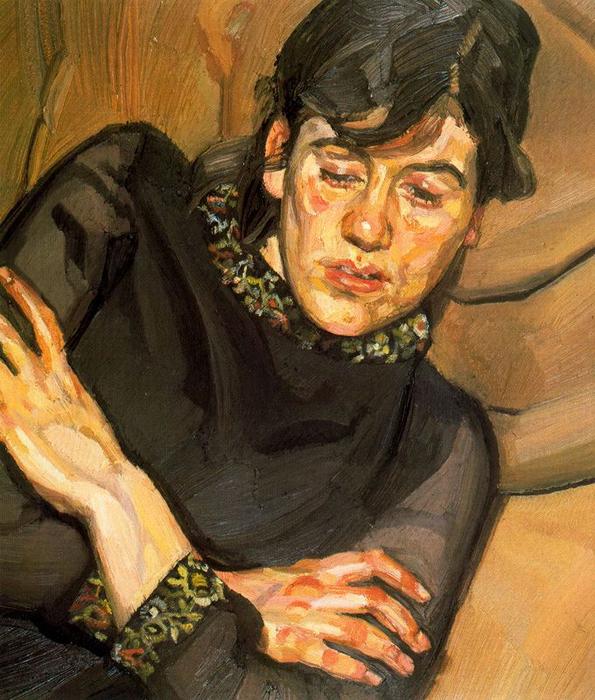
Two unfinished self-portraits articulate his process more honestly than any polished retrospective text ever could. They are, for me, the most invaluable encounters — moments where you stand not before a finished image, but inside the painter’s thinking. As powerful as entering his studio and seeing him in action.
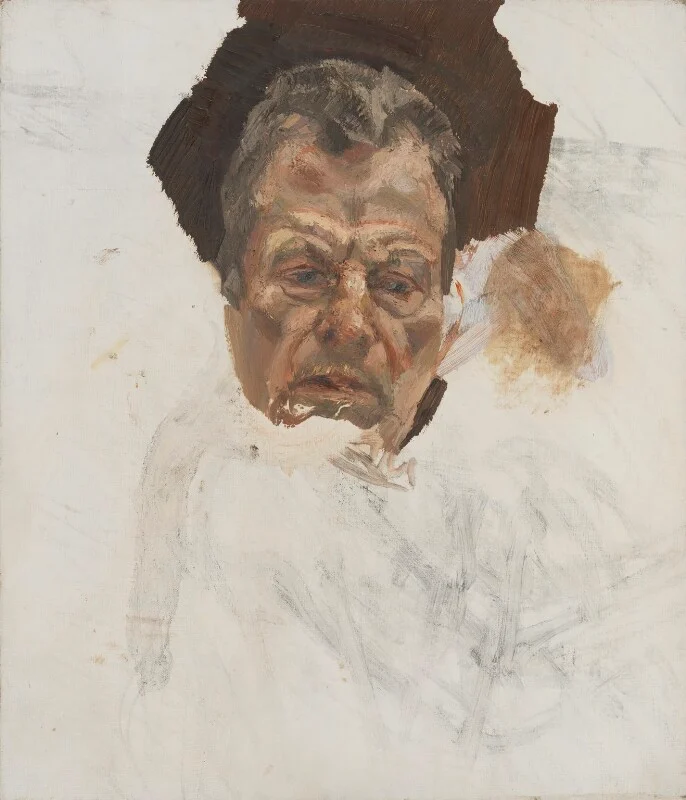
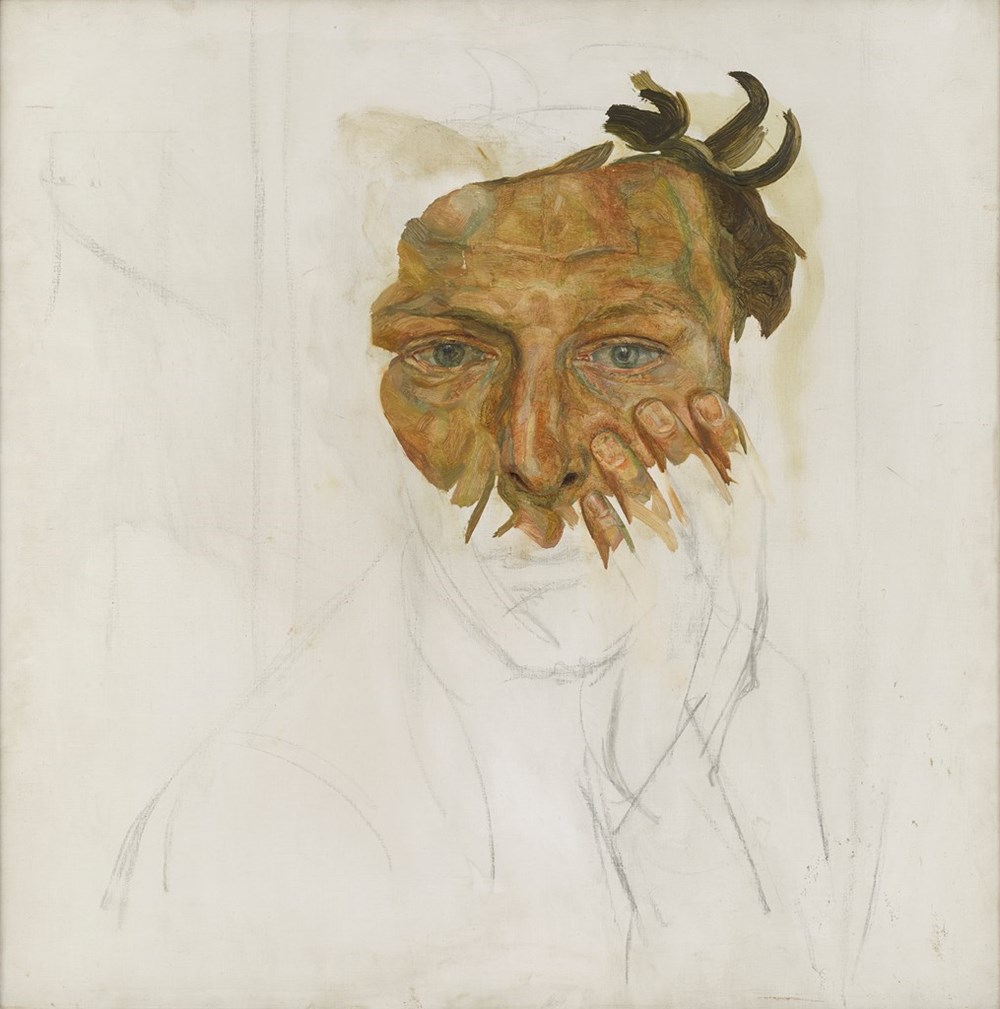
The generosity of displaying both early work and naïve sketches alongside mature masterpieces — together with that corner of his temple, the studio — is what I appreciated most.
If you happen to be in London, go and see it.
It will inspire you, for sure.
Did you know you can learn with me both online and in person?
Enjoyed this article?
Subscribe here to receive practical painting advice and more arty news.
No spam. Only thoughtful, carefully written content.